
China’s $137 Billion Medog Dam: The Mega Project India Cannot Stop
China is preparing to build the world’s largest hydropower project in one of the most geographically challenging regions on Earth. Located at the Great Bend of the Yarlung Tsangpo River in Tibet, the proposed Medog Hydropower Station is expected to have an installed capacity nearly three times greater than the Three Gorges Dam. With an estimated investment of $137 billion to $168 billion, the project could transform China’s energy infrastructure while reshaping the future of one of South Asia’s most important rivers.
But the project extends far beyond electricity generation. The Yarlung Tsangpo flows out of Tibet and enters India, where it becomes the Brahmaputra, a vital waterway supporting millions of people before continuing into Bangladesh. China’s decision to develop such an enormous hydropower system upstream has raised serious concerns about water security, environmental risks, and regional stability.
For India, the central problem is straightforward: China controls the river’s upper reaches, and there is no binding bilateral treaty giving India the authority to prevent the project. What China is building could therefore become one of the most consequential infrastructure developments in the relationship between the two countries.
The Great Bend: Why This River Has Extraordinary Hydropower Potential
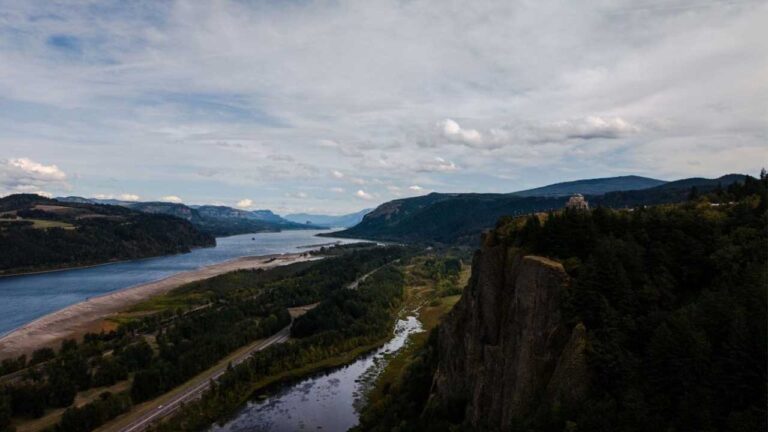
The Yarlung Tsangpo originates from glaciers near Mount Kailash on the Tibetan Plateau, forming one of the highest river systems on Earth. Across much of Tibet, it flows eastward through a broad landscape at elevations exceeding 3,000 meters.
Its geography changes dramatically when it reaches the eastern Himalayas. Near a location known as the Great Bend, the river makes a sharp turn southward and descends approximately 2,000 meters over a distance of just 50 kilometers.
This dramatic drop takes it through the Yarlung Tsangpo Grand Canyon, widely recognized as the deepest canyon system on Earth. The combination of enormous water volume and extreme elevation differences creates an exceptional opportunity for hydropower generation.
Also Read: The $1M/Day Plan to Bypass the Bab el-Mandeb
Engineers have recognized the site’s potential for decades, but its difficult geography has made development extraordinarily challenging. The canyon is surrounded by unstable mountain terrain and is vulnerable to landslides, earthquakes, and flooding. Its geological complexity makes construction particularly dangerous, even by modern engineering standards.
The proposed dam site is also located approximately 30 kilometers from the contested border between China and India, adding a geopolitical dimension to an already complicated engineering challenge.
The risks became especially apparent in December 2024, when a magnitude 6.8 earthquake struck Tibet just two weeks after the project received official approval. The earthquake killed 126 people and occurred only a few kilometers from the construction zone.
Despite these dangers, China has continued developing the infrastructure needed to access the Great Bend’s enormous hydropower potential.
Inside the $137 Billion Medog Hydropower Project
An engineering system unlike a conventional dam
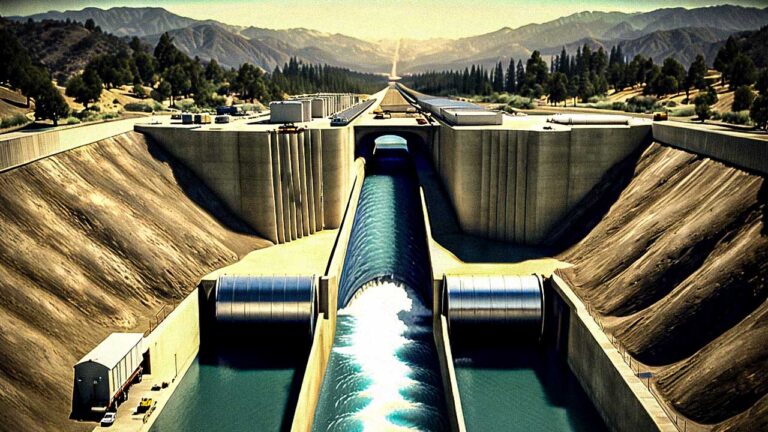
China’s Medog Hydropower Station is not designed as a single conventional dam. Instead, the project will use a series of hydropower facilities developed across a 50-kilometer stretch of the canyon.
The central engineering challenge is the river’s unusual geography. Because the Yarlung Tsangpo makes a sharp turn at the Great Bend, engineers cannot simply construct a traditional dam and allow water to descend through a standard generating system.
Their solution involves an extensive network of underground tunnels.
Four tunnels, each approximately 20 kilometers long, are planned through Namcha Barwa, one of the highest peaks in the Eastern Himalayas. These tunnels will divert river water through the mountain before releasing it through a vertical drop of approximately 2,000 meters to drive turbines on the other side.
The scale of this underground construction is extraordinary. Engineers must excavate through a mountainous region characterized by intense seismic activity, unstable geological formations, and difficult construction conditions.
The project also faces a separate natural hazard upstream: the Sedongpu glacial lake.
Scientists have described this lake as an enormous reservoir held behind a natural landslide dam. If the barrier collapses because of an earthquake, glacial melting, or another landslide, a massive volume of water could surge directly toward the Medog construction area.
Such an event could threaten the hydropower infrastructure and create severe downstream consequences. Chinese scientists have not publicly announced a definitive solution to this particular risk, while construction continues.
A Hydropower Station Nearly Three Times Larger Than Three Gorges
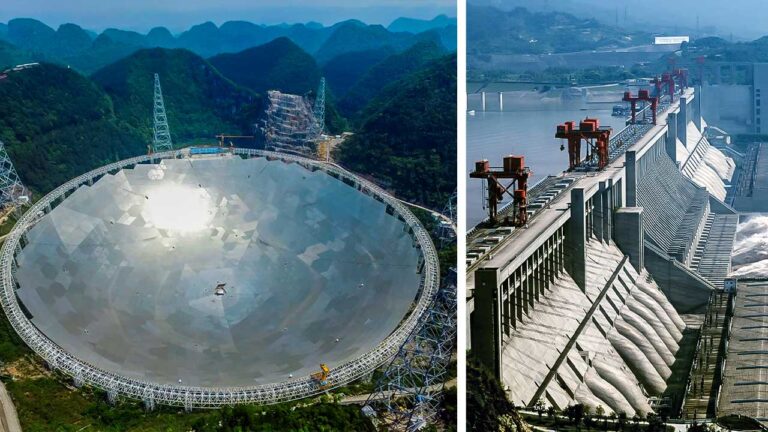
The proposed installation capacity of the Medog project is approximately 60 gigawatts, compared with 22.5 gigawatts at China’s Three Gorges Dam, currently the world’s largest operating hydropower station by installed capacity.
That would make Medog nearly three times as powerful.
Its projected annual electricity generation is approximately 300 billion kilowatt-hours, enough to meet the annual electricity needs of an estimated 300 million people. Such an enormous supply could also reduce China’s dependence on numerous coal-fired power plants.
The project is targeted for completion by 2033, although its extraordinary engineering requirements and geological risks make the construction schedule particularly ambitious.
The estimated cost ranges from $137 billion to $168 billion, potentially making it one of the most expensive infrastructure investments ever undertaken.
Why China Is Building the World’s Largest Dam
China’s decision to develop the Medog hydropower system is driven by more than the opportunity to generate enormous amounts of electricity. The project addresses several long-term strategic priorities, including energy security, industrial development, and China’s position in the Himalayan region.
Despite being the world’s largest producer of solar and wind energy, China continues to rely heavily on coal, which accounts for more than half of its electricity generation. Renewable sources such as solar and wind are increasingly important, but their output depends on weather conditions and varies throughout the day.
Hydropower offers a different advantage. Unlike solar and wind installations, large hydropower facilities can generate electricity continuously, provided sufficient water is available. This makes the Yarlung Tsangpo’s Great Bend particularly attractive to Chinese planners.
Its combination of substantial river flow and an extraordinary elevation drop represents one of the largest untapped hydropower opportunities on Earth. By developing it, China could secure a major source of low-carbon electricity while reducing its dependence on coal.
However, energy production is only one part of the strategic calculation.
The Geopolitical Significance of the Location
The Medog project is being developed approximately 30 kilometers from the Line of Actual Control, the disputed boundary separating Chinese- and Indian-controlled territories.
The wider region is politically sensitive. China refers to the area it claims as Zangnan, or South Tibet, while India administers Arunachal Pradesh as one of its northeastern states.
Building permanent industrial infrastructure on this scale so close to a disputed border carries significance beyond its economic value. The project establishes a substantial Chinese presence in a strategically sensitive region and creates infrastructure that would be difficult to reverse through future political negotiations.
The dam also raises questions about China’s long-term control over the Brahmaputra’s water resources.
Some Chinese scholars have explicitly advocated diverting water from the Brahmaputra northward toward China’s arid interior. The Chinese government has officially denied that such a diversion is part of the project.
Nevertheless, the proposed infrastructure would give China considerable capacity to regulate the timing and volume of water released downstream.
This does not necessarily mean Beijing intends to use water as a political weapon. However, the ability to influence a river’s flow creates strategic leverage, particularly when millions of people in another country depend on that river for agriculture, fisheries, and other essential activities.
Why India Cannot Stop the Medog Project
For India, the Medog hydropower project presents a difficult combination of geographical dependence and limited diplomatic leverage.
The Yarlung Tsangpo originates entirely within Chinese-controlled territory. China therefore has considerable authority over how it develops the river’s upper reaches.
More importantly, there is no comprehensive, legally binding water-sharing treaty between China and India governing the Brahmaputra. India has no formal veto over China’s construction plans, and there is no established international mechanism through which it can automatically prevent the project.
This leaves New Delhi with limited options beyond diplomatic engagement, technical cooperation, and developing its own infrastructure downstream.
The Breakdown of Flood Warning Cooperation
One of India’s major concerns involves access to hydrological information from upstream China.
For years, China voluntarily provided India with flood-related data that helped authorities monitor river conditions and prepare for seasonal flooding. Such information is particularly important during the monsoon, when rising water levels can threaten communities and infrastructure downstream.
However, China suspended this data-sharing arrangement in 2017, and the cooperation has not been fully restored.
India has continued requesting the information because timely flood warnings can save lives. The uncertainty surrounding future data-sharing arrangements becomes even more significant as China develops infrastructure capable of regulating the river.
Without reliable information about upstream water conditions and dam operations, Indian authorities could face greater difficulties preparing for sudden changes in river flow.
India’s Own Control Over the Brahmaputra
Despite China’s geographical advantage in controlling the river’s source, India is not entirely dependent on water originating in Tibet.
An estimated 65 to 70 percent of the Brahmaputra’s annual flow is generated within Indian territory through monsoon rainfall and tributaries.
This creates an important distinction between controlling the river’s upper reaches and controlling its entire water supply.
China cannot simply turn off the Brahmaputra because a substantial share of its water originates farther downstream.
However, China’s upstream position still gives it the ability to influence the river’s flow patterns. The timing of water releases, seasonal variations, and sediment movement can all have consequences for downstream regions.
Changes in these conditions could affect agriculture, fisheries, ecosystems, and the livelihoods of millions of people across northeastern India and Bangladesh.
The issue is therefore not simply whether China can stop the river. It is whether its ability to regulate upstream water flows could create significant risks for the countries downstream.
The Environmental and Cultural Stakes of the Brahmaputra
The engineering and geopolitical implications of the Medog project are enormous, but the region’s environmental and cultural significance adds another dimension to the controversy.
The Yarlung Tsangpo Grand Canyon remains one of the world’s most ecologically distinctive and relatively untouched landscapes. Its surrounding region is also considered an important stronghold of Tibetan ecological and cultural heritage.
For local communities, the river represents more than a source of water or potential electricity. It is deeply connected to the spiritual traditions of Tibetan Buddhism.
The region is associated with Pemako, a sacred landscape regarded in Tibetan Buddhist tradition as a hidden sanctuary. According to religious prophecy, this landscape is believed to offer refuge to humanity during times of catastrophe.
Large-scale hydropower development in such an environment raises concerns about the consequences of altering the natural river system.
The construction of underground tunnels, hydropower facilities, and associated infrastructure could affect a landscape already vulnerable to earthquakes, landslides, and other geological hazards.
The potential consequences also extend beyond Tibet. Because the Yarlung Tsangpo becomes the Brahmaputra after entering India, changes to its natural flow could influence ecosystems and communities across international borders.
The scale of the project makes these concerns particularly important. Its long-term effects will depend not only on how the facilities are constructed but also on how the river is managed once they become operational.
Also Read: Turkey Is Building a Bridge to Nowhere
China’s Medog Hydropower Station represents an extraordinary engineering ambition. With a proposed capacity of 60 gigawatts, an estimated cost reaching $168 billion, and a planned completion date of 2033, it could become the largest hydropower development ever constructed.
For Beijing, the project promises enormous quantities of electricity, reduced dependence on coal, and a major expansion of infrastructure in a strategically important region.
For India, however, the same development creates serious questions about water security, flood management, and the future of the Brahmaputra. Although India generates much of the river’s downstream water through its own rainfall and tributaries, China retains significant influence over its upper reaches.
The two countries therefore see the project through fundamentally different perspectives. China views it as a major clean-energy achievement and an engineering milestone. India sees a strategic infrastructure development upstream of a river on which millions of people depend.
The tunnels through Namcha Barwa and the proposed hydropower facilities represent more than an attempt to harness one of the world’s greatest natural elevation drops. They also mark the beginning of a new chapter in the relationship between China’s energy ambitions and South Asia’s water security.
Ultimately, the Medog project will be judged not only by how much electricity it generates, but also by how responsibly the Brahmaputra is managed for the millions of people who depend on it downstream.