The Canal That Could Bypass the Strait of Hormuz
The World’s Most Dangerous Chokepoint
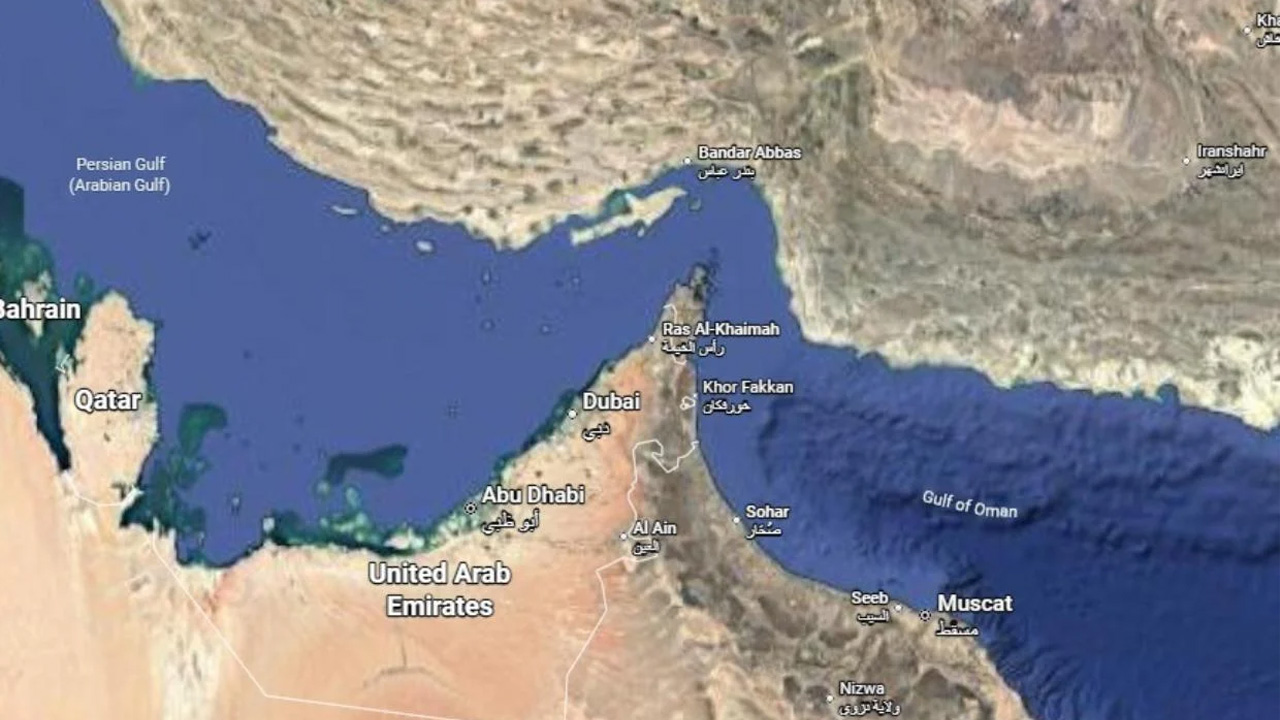
Every single day, the global economy leans on a narrow strip of water between Iran and Oman. This passage, known as the Strait of Hormuz, carries close to 20 percent of the world’s oil supply. At its tightest point, the strait measures only 21 miles across. The actual shipping lanes shrink even further to just two miles in each direction. That is all the space the world gives to one of its most critical energy routes.
Oil tankers move through this corridor nonstop. Many of them are Very Large Crude Carriers, each capable of transporting up to 2 million barrels of oil. When you stack these numbers together, the scale becomes hard to ignore. Roughly 20 million barrels pass through this chokepoint every day, according to the U.S. Energy Information Administration. That single flow keeps industries running, powers transport systems, and stabilizes economies across continents.
The risk here feels immediate. Naval forces patrol the waters. Oil companies track every movement. Insurance rates for tankers spike during periods of tension. Shipping firms quietly adjust routes and prepare backup plans. Recent incidents, including tanker seizures and attacks, have proven that disruption is not a distant theory. It is a real and present danger.
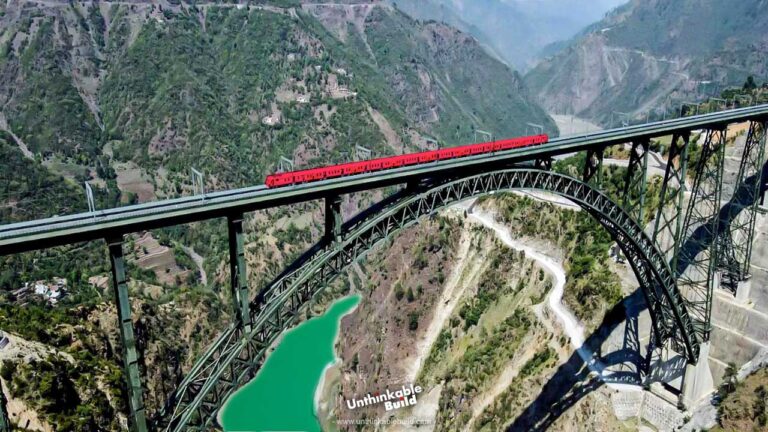
Also Read: The Impossible Railway Bridge Built 359 Metres Above the Himalayas
Even a small incident sends shockwaves through global markets. Oil prices rise within hours. Transport costs follow. Consumers feel the impact through higher fuel prices and rising costs of everyday goods. I have studied global trade routes for years, and few places carry this level of pressure packed into such a small space.
This reality raises a powerful question. Can the world reduce its dependence on the Strait of Hormuz?
Why the Strait of Hormuz Holds So Much Power
The answer begins with geography. The Persian Gulf sits at the heart of global energy production. Countries like Saudi Arabia, Iraq, Kuwait, Qatar, and the United Arab Emirates produce a significant share of the world’s oil. Almost all of it must pass through one exit point. That exit is the Strait of Hormuz.
This setup creates a natural bottleneck. Unlike other trade routes, the region offers very few alternatives. Pipelines exist, but they cannot fully replace maritime transport. Saudi Arabia operates the East-West Pipeline, which carries oil to the Red Sea. The UAE runs the Habshan-Fujairah pipeline, which bypasses the strait entirely. These systems help, but they handle only a limited share of total exports.
The International Energy Agency confirms that maritime routes still carry the majority of global oil trade. Ships remain essential. That dependence keeps the Strait of Hormuz at the center of global energy security.
From an engineering perspective, this situation feels uncomfortable. Concentrating such a large volume of trade into one narrow passage creates a single point of failure. If anything goes wrong, the consequences spread fast and far.
That is exactly why the idea of a bypass continues to attract attention.
A Bold Idea Hidden in Plain Sight
Look closely at a map of the region. At the northern edge of Oman lies the Musandam Peninsula. This rugged piece of land extends into the Strait of Hormuz and separates the Persian Gulf from the Gulf of Oman.
In some areas, the distance between these two bodies of water shrinks to just a few dozen miles. This detail sparks a simple but bold idea. What if engineers could carve a canal through this land? Ships could bypass the Strait of Hormuz entirely and sail directly into open waters.
On paper, the concept feels straightforward. It promises greater security, smoother trade flows, and reduced geopolitical risk. Many strategists and engineers have explored this idea over the years. Some even compare it to the Suez Canal or the Panama Canal, both of which reshaped global trade.
You might look at the map and think the same thing I did the first time. This looks possible. This could change everything.
Then you look at the terrain.
The Mountain Barrier That Changes Everything
The Musandam Peninsula is not flat land. It forms part of the Hajar Mountain range, one of the most rugged regions in the Middle East. Sharp limestone peaks dominate the landscape. Some rise more than 2,000 meters above sea level.
This changes the entire equation.
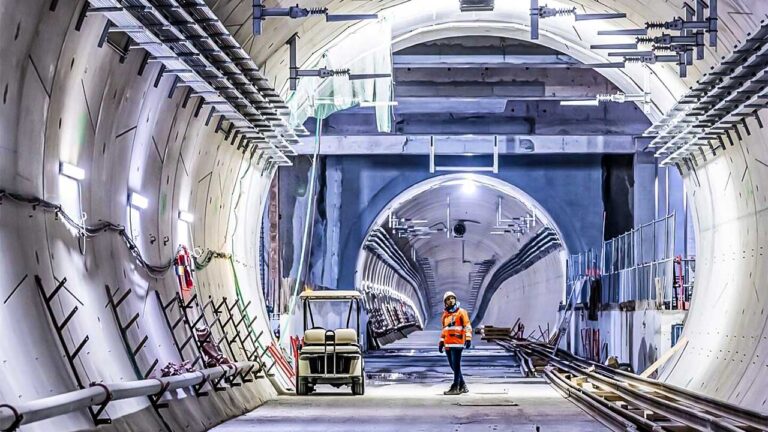
Building a canal here would not involve simple dredging. Engineers would need to cut through solid rock and reshape entire mountain sections. The scale of excavation would surpass most modern infrastructure projects. Crews would need to remove millions of tons of rock. They would also need to ensure long-term structural stability in a region known for complex geology.
The canal itself would need to support some of the largest ships ever built. A typical VLCC stretches over 300 meters in length and requires deep water to operate safely. This means the canal must be wide, deep, and carefully engineered to handle heavy traffic without delays or accidents.
The cost quickly escalates. Experts estimate that such a project could reach hundreds of billions of dollars. For comparison, the Panama Canal expansion cost around 5 billion dollars. Even large-scale projects like Saudi Arabia’s NEOM or China’s Belt and Road infrastructure highlight how quickly costs grow when terrain becomes difficult.
Environmental impact adds another layer of complexity. The Musandam region supports unique ecosystems, including marine life and coastal habitats. Large-scale excavation could disrupt these systems permanently.
At this point, the project shifts from ambitious to extremely difficult.
The Political and Strategic Reality
Engineering alone does not decide the future of such a project. Politics plays an equally important role.
Oman controls the Musandam Peninsula. The country has focused on stable economic growth, tourism, and port development. It has not announced any official plan to pursue a canal through this region. Any such project would require strong political will, long-term commitment, and cooperation between multiple countries.
Funding presents another major challenge. Governments, private investors, and international institutions would need to support the project. They would also demand clear returns on investment and strong security guarantees.
Security remains a central concern. A canal does not remove risk. It shifts it. A single blocked vessel could shut down the entire route. The Ever Given incident in the Suez Canal in 2021 showed how one ship can disrupt global trade for days. A similar event in a Musandam canal would create the same kind of crisis.
Military threats also remain a factor. Any critical infrastructure in this region would require constant protection. This adds long-term operational costs and strategic complexity.
You do not remove the chokepoint. You relocate it.
A Vision That Refuses to Disappear
Despite all these challenges, the idea continues to resurface. This persistence reveals something deeper about global trade.
The world depends on a few key routes. The Suez Canal connects Europe and Asia. The Panama Canal links the Atlantic and Pacific. The Strait of Hormuz controls a major share of global energy flow. These routes shape economies, influence politics, and determine supply chains.
Engineers often try to solve these constraints. They look for ways to reduce risk and increase efficiency. The Musandam Canal represents one of those attempts. It reflects a desire to redesign geography and gain control over critical trade routes.
History shows that such ambitions sometimes succeed. The Suez Canal once seemed impossible. The Panama Canal faced enormous engineering and health challenges. Both projects eventually transformed global trade.
Yet each project came with high costs, risks, and long-term consequences.
Where Things Stand Today
Today, the Strait of Hormuz remains the backbone of global oil transport. No alternative route matches its capacity or efficiency. Pipelines help, but they cannot fully replace maritime shipping. The proposed Musandam Canal remains an idea rather than a funded project.
Energy markets continue to monitor the region closely. Governments invest in diversification strategies. Companies build contingency plans. Still, the core reality does not change.
Also Read: China Tried to Stop a Desert With a 4,500 km Green Wall
The world depends on this narrow passage.
You can study maps, analyze data, and explore new engineering concepts, but one truth stands firm. Geography still controls global trade more than any technology ever has.
And as long as that remains true, the idea of carving a canal through the mountains of Musandam will continue to capture attention. It represents both a solution and a reminder. A solution to a fragile system, and a reminder of how difficult it is to truly escape it.