
How India Is Building Three Mega Ports to Transform Its Maritime Trade and Challenge China’s Influence
For decades, India has faced a major weakness in its maritime trade infrastructure: despite being one of the world’s largest trading nations, much of its container cargo has been handled by foreign ports. Ships carrying Indian goods frequently bypassed domestic facilities because many Indian ports lacked the depth, capacity, and strategic location required to accommodate the world’s largest container vessels.
As a result, major transshipment hubs such as Colombo, Singapore, and Dubai became essential links in India’s international supply chains. This dependence increased shipping costs, caused delays, and left a significant part of India’s maritime trade infrastructure outside its direct control.
India is now attempting to change that situation through three ambitious port developments: Vizhinjam on the southern coast, Vadhvan in Maharashtra, and Galathea Bay on Great Nicobar Island. Together, these projects represent more than $20 billion in investment and are designed to provide a combined annual capacity approaching 45 million containers.
Each port serves a different purpose. Vizhinjam is establishing India’s presence in deepwater transshipment, Vadhvan is intended to become the country’s largest container port, and Galathea Bay is positioned to give India a strategic foothold near the Strait of Malacca.
Beyond expanding cargo-handling capacity, the projects form part of a broader effort to reduce dependence on foreign shipping infrastructure, strengthen India’s maritime economy, and counter China’s growing influence across the Indian Ocean.
Why India Has Relied on Foreign Transshipment Ports
International container shipping operates through a network of major hub ports rather than direct connections between every country and destination. The largest container vessels transport enormous quantities of cargo between continents, stopping at selected hubs where containers are transferred onto smaller feeder ships for regional distribution.
For decades, India lacked a port capable of competing with the world’s leading transshipment hubs. Many of its facilities were too shallow to accommodate the largest container ships, including vessels carrying approximately 24,000 containers and requiring around 16 meters of water depth.
Consequently, an estimated 75 percent of India’s transshipment cargo passed through foreign ports, particularly Colombo in Sri Lanka, Singapore, and Dubai.
Also Read: Turkey Is Building a Bridge to Nowhere
This arrangement came with substantial economic costs. Handling containers abroad could add up to $1,000 in additional charges per container, alongside several days of shipping delays. Collectively, these expenses represented hundreds of millions of dollars in annual losses.
The dependence also created a strategic vulnerability. Colombo, which handled a substantial share of India’s transshipment cargo, became increasingly connected to Chinese investment. China Merchants Port Holdings acquired a controlling stake in its main terminal and also secured a 99-year lease on the nearby Hambantota Port.
This gave China a significant commercial presence close to India’s southern coastline.
India’s Earlier Attempt: Vallarpadam Terminal
India had previously attempted to establish its own transshipment infrastructure. In 2011, the country opened the Vallarpadam terminal in Kochi, marking its first major effort to attract international container traffic.
However, the project struggled to compete with established foreign hubs. Its water depth restricted access for the largest container vessels, while its operating costs made it less attractive to shipping companies.
By 2024, Vallarpadam was handling only a fraction of its intended capacity, leaving Colombo’s dominance largely unchanged.
The experience exposed two fundamental requirements for a successful Indian transshipment hub: sufficient water depth and competitive operating costs.
The three new port developments are designed to address these shortcomings through different geographical and engineering approaches.
Vizhinjam Port: India’s New Deepwater Transshipment Hub
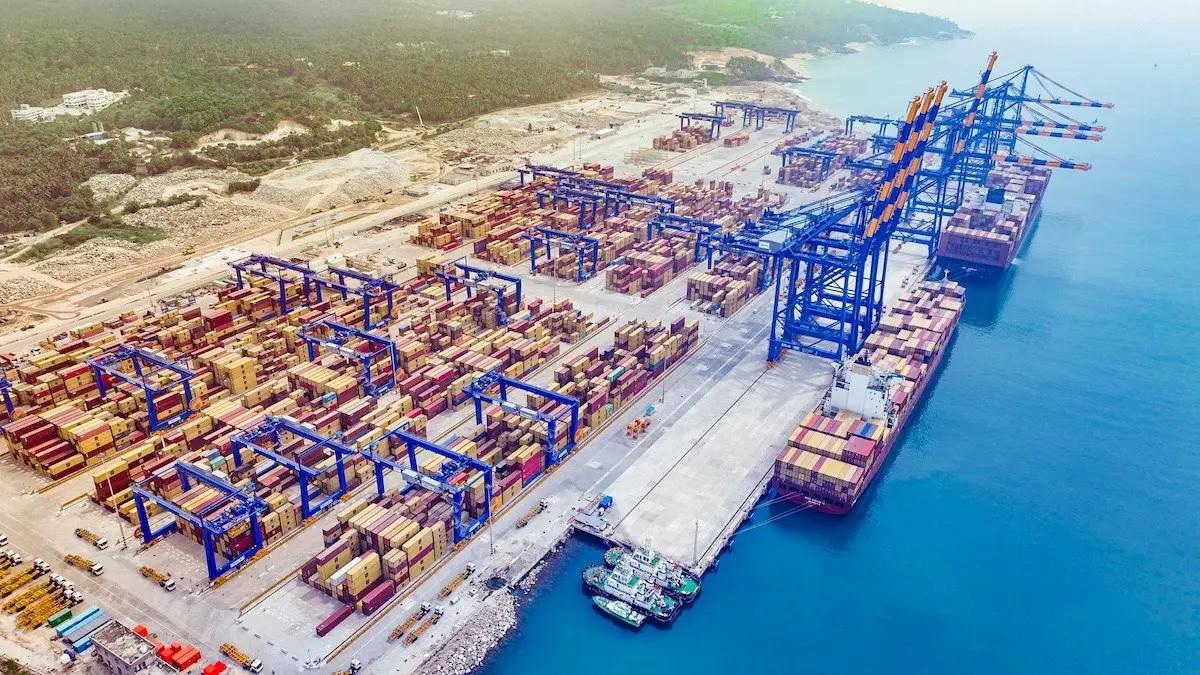
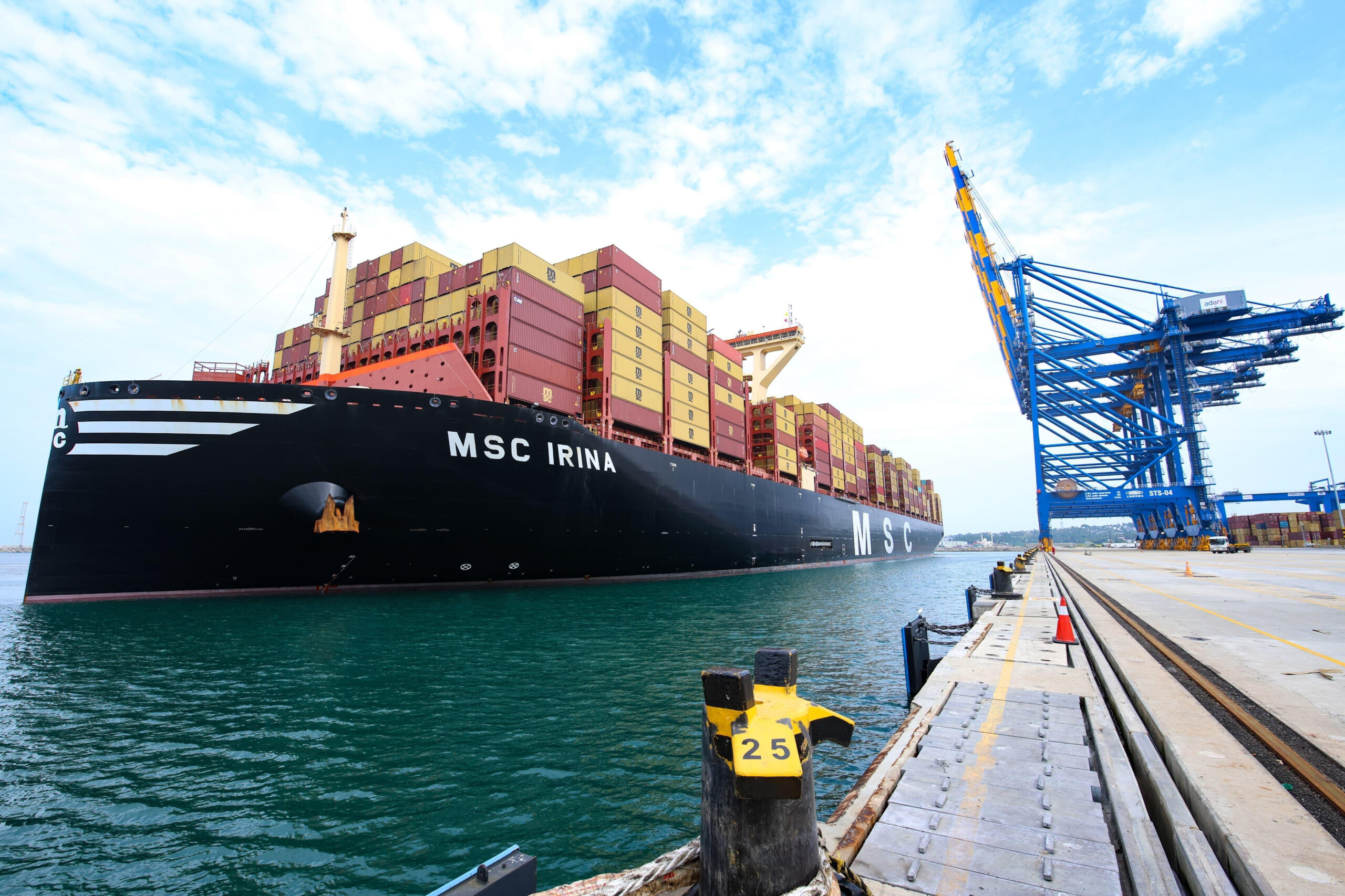
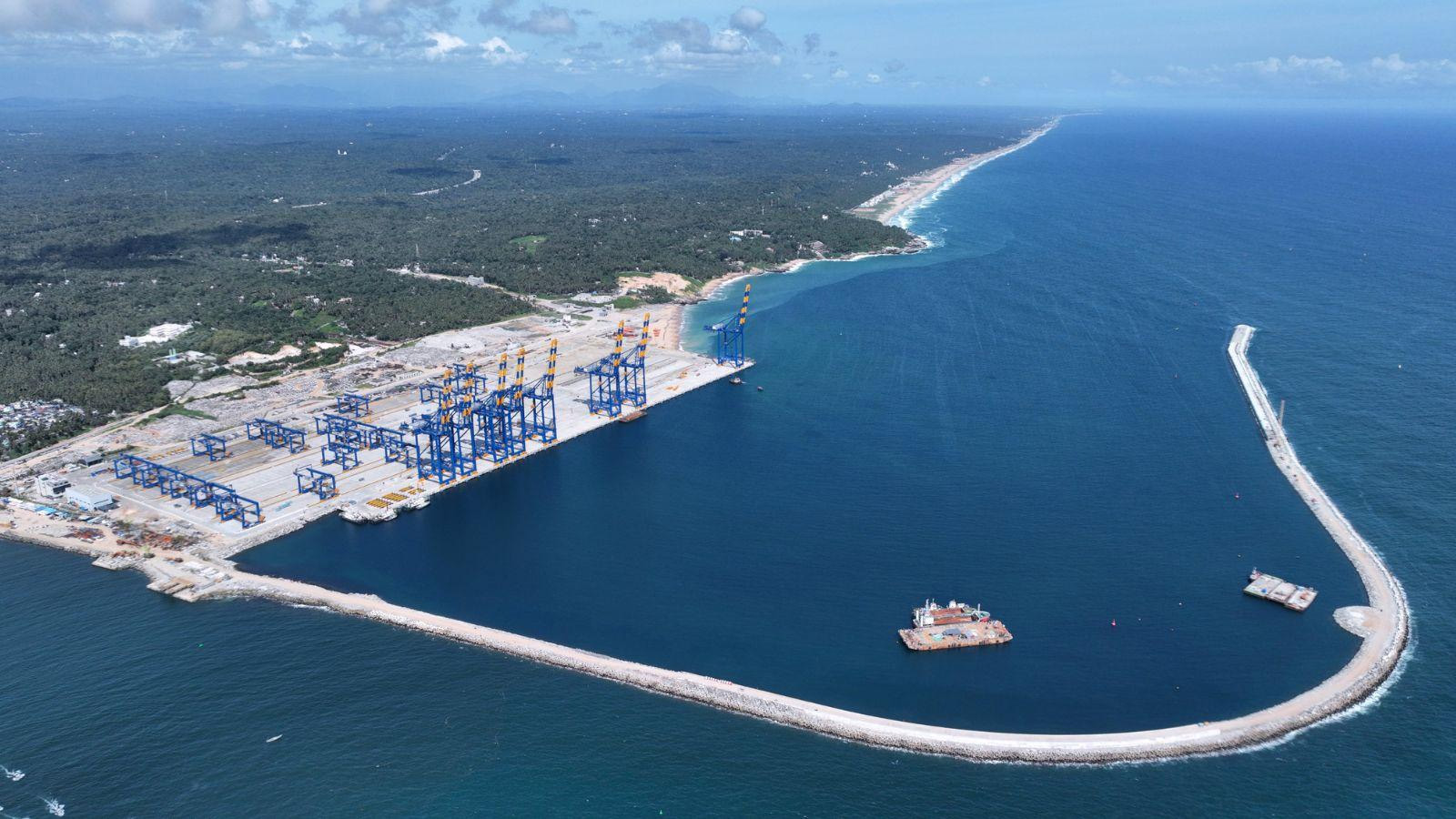
Located near the southern tip of Kerala, Vizhinjam International Seaport represents India’s first major deepwater transshipment port. Inaugurated in May 2025, it has a geographical advantage that distinguishes it from many existing Indian ports: naturally deep water reaching approximately 24 meters just offshore.
This depth allows the port to accommodate some of the world’s largest container vessels without extensive dredging.
Its location is equally important. Vizhinjam lies approximately 10 nautical miles from a major international shipping corridor that carries around 30 percent of global maritime trade. This proximity makes it attractive to vessels traveling between major international markets.
The port’s early performance has demonstrated the potential of this location. Within 18 months, it handled 2 million containers, becoming the fastest Indian port to reach that milestone. In May 2026 alone, it processed more than 130,000 containers, setting another record.
The development has also begun attracting major international shipping companies. Vessels that previously had limited options for docking at Indian ports are now routing through Kerala, strengthening Vizhinjam’s position as an emerging transshipment hub.
Expansion Plans and Remaining Challenges
Vizhinjam’s development is far from complete. Its phased expansion is expected to increase annual handling capacity to 5.7 million containers by December 2028.
International shipping giant MSC has also signed a $1.4 billion agreement for a major stake in the project, underlining the commercial interest in the port.
However, significant infrastructure challenges remain. Its road and railway connections to mainland India are still incomplete. This limits the port’s ability to efficiently handle India’s domestic import-export cargo, even as it becomes increasingly successful in international transshipment.
Until these connections are completed, Vizhinjam’s greatest strength will remain its ability to transfer containers between international vessels rather than serve as a fully integrated gateway for India’s wider economy.
Nevertheless, it has demonstrated that India can attract major container ships and compete for international transshipment traffic. The next challenge is to replicate that success on a much larger scale.
Vadhvan Port: India’s Largest Container Port Under Construction
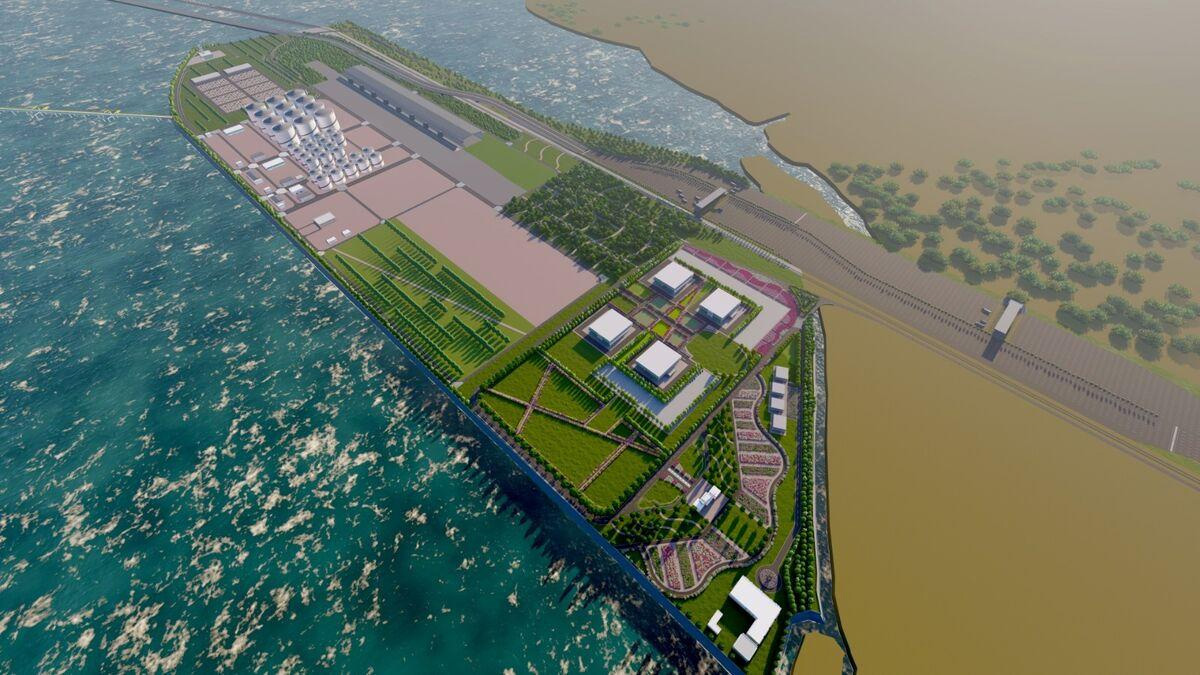
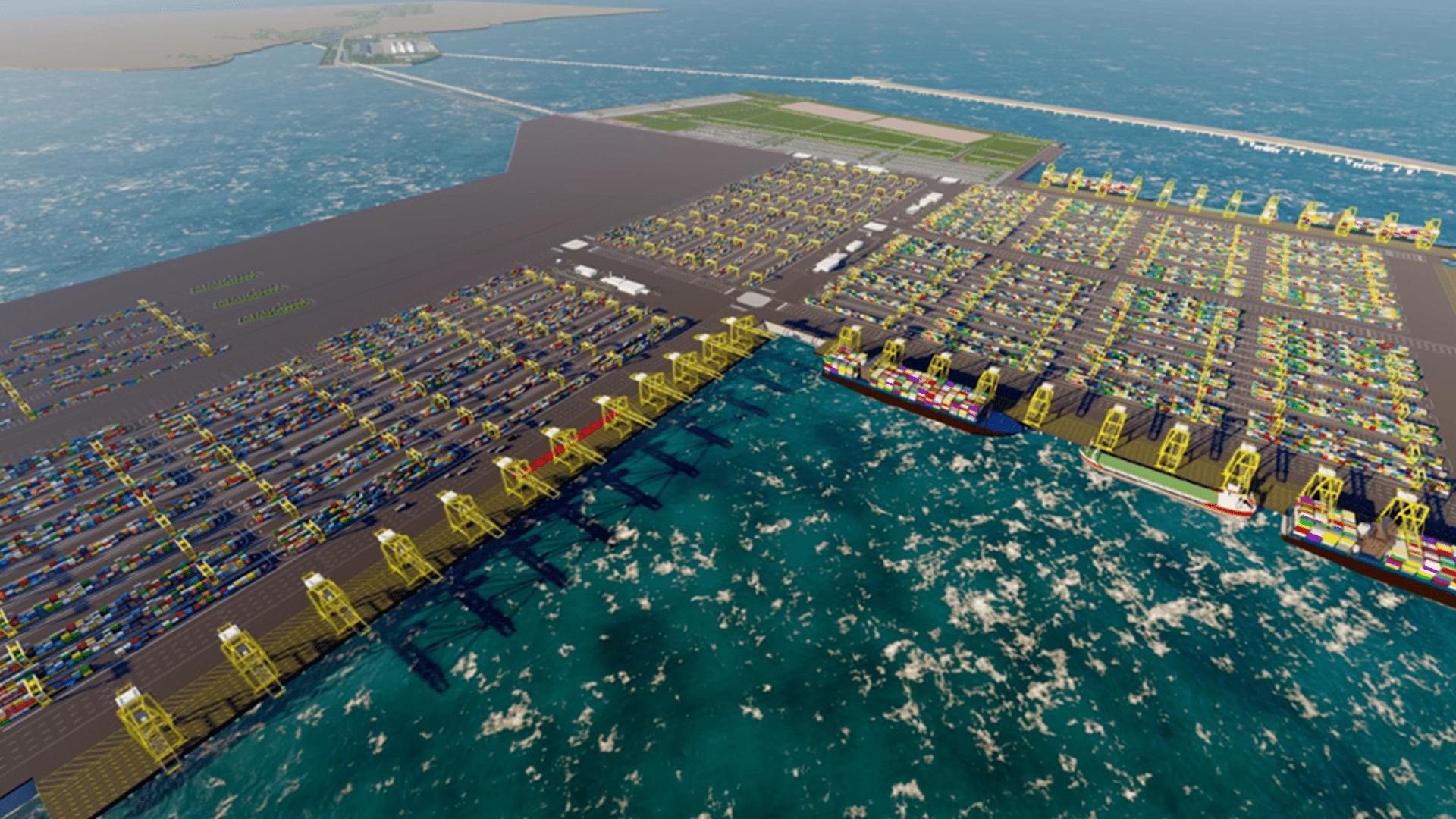
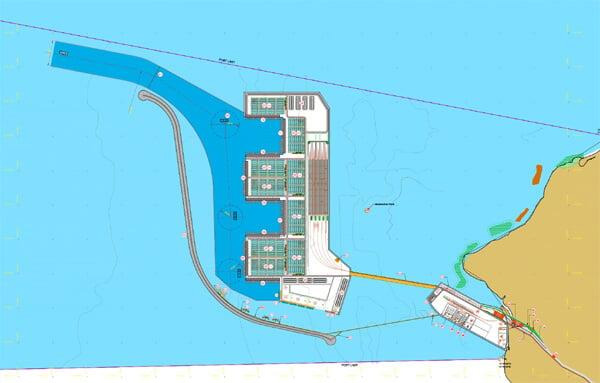
Located approximately 140 kilometers north of Mumbai, Vadhvan Port is designed to become India’s largest container port.
Unlike Vizhinjam, which benefits from naturally deep water close to the shoreline, Vadhvan requires an entirely different engineering solution. Its deepwater access lies offshore, meaning the port’s main facilities will be constructed on an enormous artificial island reclaimed from the Arabian Sea.
The proposed development covers approximately 1,448 hectares and includes nine container terminals, each extending for around one kilometer.
The scale of the construction is enormous. Engineers plan to use approximately 200 million cubic meters of material to create the artificial landmass. That is nearly three times the material required for the Suez Canal expansion.
A breakwater extending more than 10 kilometers will protect the port and its terminals from the force of the sea.
The breakwater alone represents a major engineering undertaking. India’s largest-ever marine construction contract, worth ₹5,301 crore, was awarded to Afcons for this component of the project.
Capacity, Investment, and Strategic Importance
Once fully developed, Vadhvan is expected to handle approximately 23.2 million containers annually, making its planned capacity more than four times Vizhinjam’s expanded capacity.
The project carries an estimated cost of more than ₹76,000 crore, with its first phase targeting completion in 2030.
Its strategic importance extends beyond the port itself. Vadhvan is intended to connect directly with the Delhi-Mumbai freight corridor, creating a major logistics gateway linking India’s industrial and commercial centers with international shipping routes.
It will also play an important role in the proposed India-Middle East-Europe Economic Corridor, commonly known as IMEC.
The corridor is envisioned as an alternative connectivity network linking India with markets in the Middle East and Europe. It also represents a strategic response to China’s expanding Belt and Road Initiative.
If Vizhinjam demonstrates that India can establish a competitive deepwater transshipment hub, Vadhvan represents a much larger ambition: building a container port capable of operating at the scale of the world’s leading maritime gateways.
Galathea Bay: India’s Strategic Position Near the Strait of Malacca
The third project is smaller than Vadhvan in terms of planned container capacity, but its geographical position gives it exceptional strategic importance.
The proposed Galathea Bay International Container Transshipment Port is located on Great Nicobar Island, at the southern end of India’s Andaman and Nicobar archipelago.
Its most important advantage is its proximity to the Strait of Malacca. The port site is approximately 40 nautical miles from this critical shipping passage, through which nearly one-third of global trade moves.
The strait is also particularly important to China, as approximately 80 percent of its oil imports pass through this maritime route.
A major transshipment hub at Galathea Bay would place India much closer to one of the world’s busiest commercial shipping corridors. Its location, approximately equidistant from Colombo, Port Klang, and Singapore, could help it compete for cargo moving between major Asian and international markets.
The proposed port is designed to handle 16 million containers annually. Its development is planned in four phases, with an estimated investment of around ₹44,000 crore.
More Than a Commercial Port
Galathea Bay is part of a much larger development plan for Great Nicobar Island, estimated to involve approximately $10 billion in investment.
The wider project includes an international airport, a power plant, a township, and naval and surveillance infrastructure.
These facilities would give India a stronger presence near the western entrance to the Strait of Malacca, combining commercial connectivity with strategic maritime capabilities.
Unlike many major port developments that involve international terminal operators, India has excluded foreign operators from this project, keeping its operations entirely under Indian control.
This approach reflects the strategic sensitivity of its location. A port positioned so close to a major international shipping chokepoint has implications that extend beyond commercial shipping.
Environmental and Social Controversies
Despite its strategic importance, Galathea Bay has become the most controversial of India’s three proposed port developments.
The project involves clearing rainforest in an ecologically sensitive region, raising concerns about the destruction of a biodiversity hotspot. Environmental impacts and potential threats to indigenous communities have also generated significant opposition.
The development has already become the subject of legal challenges in Indian courts.
These concerns create a difficult balance between India’s infrastructure ambitions and the need to protect the ecological and social environment of Great Nicobar Island. Unlike the engineering challenges facing Vizhinjam and Vadhvan, Galathea Bay must also overcome substantial environmental and legal obstacles.
Beyond Ports: India’s Plan to Build Its Own Shipping Ecosystem
Building world-class ports is only one part of India’s maritime strategy. Even with sufficient deepwater capacity, modern terminals cannot deliver complete shipping independence if the country continues to rely heavily on foreign vessels and container manufacturing.
For decades, Indian cargo has largely moved aboard foreign-owned ships, using foreign shipping containers and passing through foreign transshipment hubs.
Even the steel containers used to transport Indian exports have predominantly been manufactured in China.
India is now attempting to address these weaknesses by developing its own shipping and container manufacturing capabilities.
In 2025, the country launched the Bharat Container Shipping Line, a national shipping carrier intended to reduce dependence on foreign shipping companies. This initiative is designed to give India greater control over the vessels transporting its international trade and reduce its exposure to shipping companies that can increase freight rates.
The government has also committed ₹10,000 crore toward domestic container manufacturing.
This investment addresses a significant weakness in India’s supply chain. A country seeking to become a major global trading power cannot remain heavily dependent on its principal strategic rival for the containers used to transport its exports.
Together, the shipping carrier and domestic container manufacturing initiative form an important part of the broader maritime strategy.
The three ports provide the physical infrastructure, while ships and containers supply the operational capacity needed to make that infrastructure economically and strategically valuable.
How Three Mega Ports Could Reshape India’s Maritime Position
The three projects are not isolated infrastructure developments. Their locations and intended functions reflect a wider attempt to establish a more competitive Indian maritime network.
Vizhinjam provides a deepwater transshipment gateway in the south, close to major international shipping routes. Vadhvan will offer enormous container-handling capacity on India’s western coastline, supported by connections to major freight infrastructure. Galathea Bay, meanwhile, is intended to establish a strategically important presence near the Strait of Malacca.
Together, these ports could reduce India’s dependence on Colombo, Singapore, and Dubai for handling its container cargo.
The economic implications are substantial. Retaining more transshipment activity within India could reduce additional shipping expenses, shorten logistics chains, and keep a greater share of maritime revenue inside the domestic economy.
The geopolitical implications are equally important.
China has spent decades expanding its commercial presence across important ports and maritime infrastructure throughout the Indian Ocean region. Its investments in Sri Lanka, particularly Colombo and Hambantota, illustrate how commercial port development can also create strategic influence.
India’s new projects are designed to strengthen its own position in these waters and provide greater control over the infrastructure supporting its international trade.
The scale of the ambition is reflected in India’s longer-term target of increasing total port capacity more than sixfold by 2047, the centenary of its independence.
Achieving that goal will require more than constructing new terminals. Efficient road and railway connections, competitive operating costs, domestic shipping capacity, and reliable container supplies will all determine whether the projects can deliver their intended economic benefits.
Also Read: Why Every Superpower Wants This Port
India’s three mega port developments represent a fundamental shift in how the country approaches maritime trade and infrastructure.
Vizhinjam has demonstrated the potential of deepwater transshipment on India’s southern coast. Vadhvan is designed to provide container-handling capacity on an entirely different scale, while Galathea Bay could give India a strategically valuable position near the Strait of Malacca.
Supported by investments in domestic shipping and container manufacturing, these projects form part of a broader effort to reduce India’s reliance on foreign maritime infrastructure.
The challenges remain significant, particularly the unfinished transport connections at Vizhinjam, the enormous construction requirements at Vadhvan, and the environmental controversies surrounding Galathea Bay.
However, the underlying objective is clear: India wants to become more than a country whose goods pass through other nations’ ports. It wants to control a much larger share of the infrastructure, shipping capacity, and logistics networks that move its international trade.
If these projects achieve their intended scale, they could fundamentally change India’s position in the global maritime economy and strengthen its influence across the Indian Ocean.