Inside the Race to Build the World’s First AI Fighter Jet
The future of air combat no longer revolves around the reflexes of a pilot or the aerodynamic limits of a cockpit. It now depends on artificial intelligence, machine learning, and data systems that can reason and react faster than any human. Across the United States, engineers are rewriting what air power means, and deep inside a low-profile facility in Texas, one company is pushing the limits of autonomy. Shield AI calls its newest aircraft the X-Bat, a vertical takeoff system that aims to become the world’s first operational AI fighter jet. As I studied this program in depth, I felt a sense of awe at how quickly warfare is changing right in front of us.
The Rise of Autonomous Combat Aircraft
Air forces once judged superiority through speed, stealth coatings, and pilot training. Those factors still matter, but the core equation now includes sensors that never blink, neural networks that learn with every hour of flight, and autonomous agents that can complete missions without communication links. Modern battlefields filled with jamming, electronic deception, and swarm attacks demand systems that can think independently.
The global race for autonomous aircraft accelerated after conflicts in Ukraine and the Middle East exposed the vulnerability of traditional systems. GPS denial, drone swarms, and low-cost loitering munitions created new realities that major militaries couldn’t ignore. Nations that adapt will dictate the standards of future warfare.
Shield AI stepped into this space with one goal: develop aircraft that survive and succeed even when isolated from command. Their answer is Hivemind, an AI system that powers the X-Bat. With this platform, autonomy stops being a tool and becomes a core element of the aircraft itself.
Also Read: Why This $10 Billion Bridge Could Be a Huge Mistake
How a Small Startup Became a Defense Powerhouse
Shield AI started far from the aerospace giants that dominate defense contracts. Founded in San Diego in 2015, the team focused on small quadcopters designed to safely map enemy buildings. Soldiers no longer needed to enter dark rooms blindly. That early success gave the startup something rare in defense: trust.
From those humble drones emerged the V-Bat, a vertical takeoff aircraft able to stay aloft for extended surveillance missions. It launched from confined spaces and carried sensors powerful enough to support U.S. forces overseas. By the time the U.S. Coast Guard awarded Shield AI a contract worth roughly $200 million, the company had proven it could deliver reliable hardware and advanced autonomy.
The next phase required a bold leap. Shield AI engineers believed they could merge VTOL capability with fighter-level performance. They envisioned an aircraft that launched from almost any location, flew high-risk missions alone, and made its own tactical decisions. This vision became the X-Bat.
Inside testing facilities, 17 percent scale models already move through wind tunnels where airflow measurements help refine lift, stability, and heat management. Each iteration brings engineers closer to a full-scale prototype. You can feel the ambition in every interview and technical briefing. The team believes this aircraft will redefine how nations fight and deter conflict.
Engineering a New Class of Fighter Jet
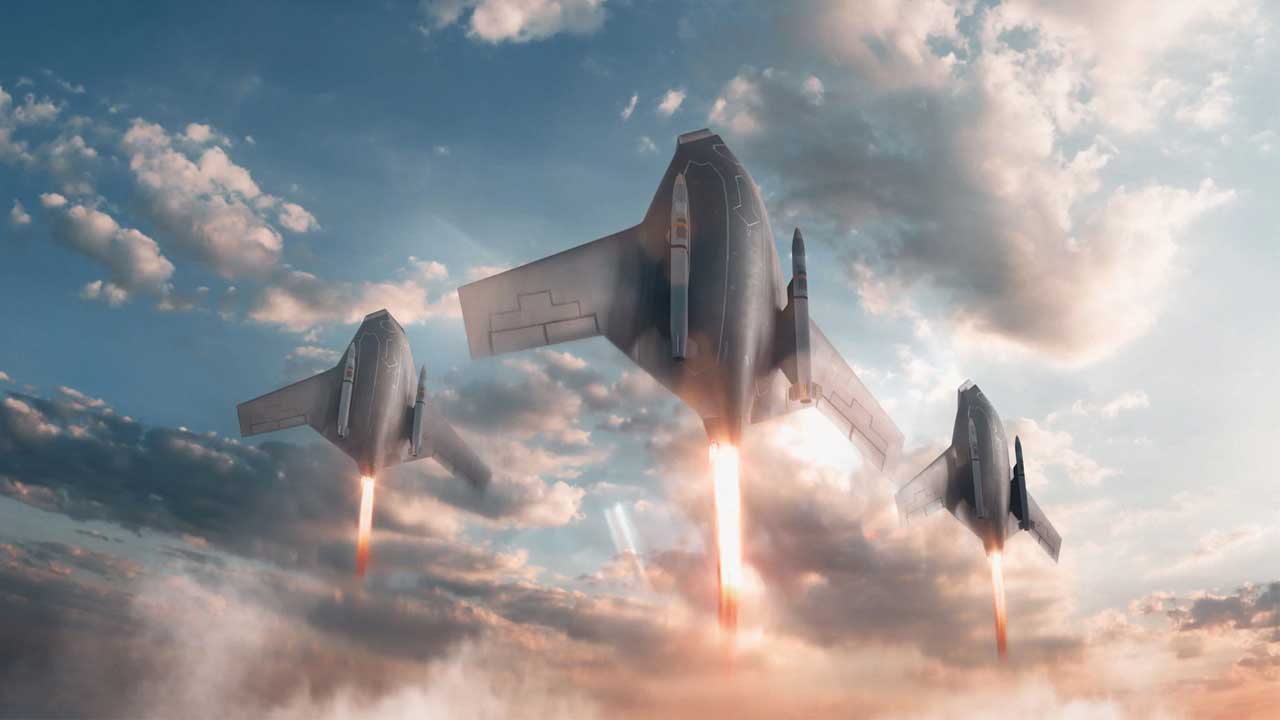
The development plan for X-Bat outlines subsystem evaluations in 2026, flight trials in 2027, and production around 2029. Timelines in aerospace often slip, but the funding momentum behind autonomy remains strong. The company invests heavily into research, material science, and neural flight models, burning through vast budgets to stay ahead of global competitors.
Government support adds further acceleration. In June 2025, the U.S. launched the “Unleashing American Drone Dominance” initiative, a national push to secure leadership in autonomous systems. The strategy expands domestic production lines, strengthens supply chains, and funds companies working on advanced autonomy. Shield AI became a central participant in that mission.
Inside engineering labs, teams test lightweight composites, high-density batteries, compact turbines, advanced imaging sensors, and thermal systems that must survive harsh combat environments. The result is an aircraft that thinks, adapts, and navigates without relying on external infrastructure.
AI warfare doesn’t depend only on machines. It forces governments to address ethics and strategy in new ways. Engineers work beside policy experts who study acceptable use, escalation risks, and international norms. AI aircraft introduce questions about trust, accountability, and human oversight. Those discussions shape every major decision in this program.
Hivemind: An Autonomous Pilot Built for Combat
Hivemind sits at the core of every Shield AI platform. It doesn’t function like traditional drones that require operators watching screens or systems tethered to GPS satellites. Hivemind runs in isolation, processing onboard sensor data to understand terrain, threats, and flight demands.
During real missions, the V-Bat has flown in radio-denied environments where conventional drones would fail instantly. It continues mapping regions, tracking targets, and maintaining positional awareness even when external contact drops. That ability has already changed how commanders plan operations.
Shield AI publicly maintains a firm stance: lethal decisions stay in human hands. Their systems do not execute independent attack orders. This approach reflects U.S. and NATO ethical standards and sets a clear line against fully autonomous weapons. By committing to human oversight, the company positions itself as a responsible actor in a field that demands public trust.
When I listened to the engineers behind Hivemind describe its role, I understood why autonomy matters. It’s not about removing humans from war. It’s about giving them tools that reduce risk, improve situational awareness, and prevent catastrophic mistakes.
The Economics Driving the Shift to Autonomous Jets
An X-Bat is expected to cost around 27 million dollars per unit. Compared to an F-35, which ranges from 80 to 100 million dollars before pilot training, the economics create a major shift in procurement strategy. Traditional fighters also require large support teams, long runways, and extensive life support systems. X-Bat removes many of those expenses and offers rapid deployment opportunities.
Pilot shortages across multiple air forces add more pressure to adopt autonomous solutions. Training a pilot can reach 10 million dollars per person, and even experienced aviators face human limits. AI aircraft never fatigue, never lose situational clarity due to stress, and can execute maneuvers impossible for the human body.
Command centers have already begun changing. Instead of a single pilot in a cockpit, teams of operators oversee networks of autonomous aircraft. One person may guide mission objectives for an entire squadron. I spoke with a defense analyst who described it as the shift from analog aviation to digital air strategy.
Competition in the Battle for Autonomous Airpower
Shield AI stands in a competitive field. Lockheed Martin, General Atomics, Boeing, and Anduril all invest in autonomous flight systems. Large contractors still dominate high-budget programs, but software-driven companies now move faster due to their agile development cycles.
In 2024, Shield AI experienced a drone testing accident that paused flight operations. Instead of hiding the incident, the company examined the failure, strengthened safety protocols, and adjusted designs. That transparency earned respect from investors and defense leaders, proving their culture values resilience and accountability.
The Pentagon’s shift toward manned-unmanned teams strengthens the demand for aircraft like X-Bat. These jets can fly beside human pilots, scout ahead, or perform dangerous tasks that protect manned aircraft. This blended approach defines the next generation of airpower.
The Global Expansion of Drone Warfare
Ten years ago, only a handful of nations possessed armed drones. Today, over 118 countries operate them, and drone systems appear in nearly three-quarters of modern conflicts. China, Turkey, and Israel dominate much of the export market, with Chinese components embedded in many systems worldwide.
The United States views that dependency as a strategic risk. Strengthening domestic drone production and AI autonomy programs helps ensure supply chain security.
X-Bat’s vertical takeoff design gives it a tactical advantage over traditional jets. It launches from compact platforms, ship decks, forward operating sites, or even mobile vehicles. This flexibility allows forces to shift airpower rapidly, avoiding predictable flight paths and vulnerable runways. In future conflicts, dispersed fleets of autonomous aircraft may replace centralized airbases.
I imagine a battlefield where mobility replaces mass, where airpower moves quietly and constantly, and where adversaries struggle to locate the source of each sortie.
Also Read: Saudi Arabia to Host FIFA World Cup 2034 | A Game-Changing Vision
What Comes Next for Shield AI
Shield AI’s rapid rise earned it a place on CNBC’s Disruptor 50 list, where it stands among companies shaping the global future. Industry leaders expect the firm to pursue an IPO in the coming years, though the internal focus remains on achieving reliable fighter-scale autonomy.
The X-Bat represents a turning point. It’s more than a new aircraft. It’s a blueprint that fuses AI intelligence with lethal-level survivability and mission complexity. The boundaries between pilot and program continue to blur, and the world is watching closely.
When I looked deeper into Shield AI’s journey from a small San Diego startup to a key player in defense autonomy, I realized how fast the arc of warfare is bending toward intelligent machines. The skies ahead will be filled with aircraft that think faster than humans, learn continuously, and carry the burden of missions too risky for any pilot.
The future of air combat isn’t approaching slowly. It’s already here, built line by line through code and tested every day in the hands of people who believe autonomy will shape the next century of defense.