Rogun Dam: The World’s Tallest Dam and Central Asia’s Defining Megaproject
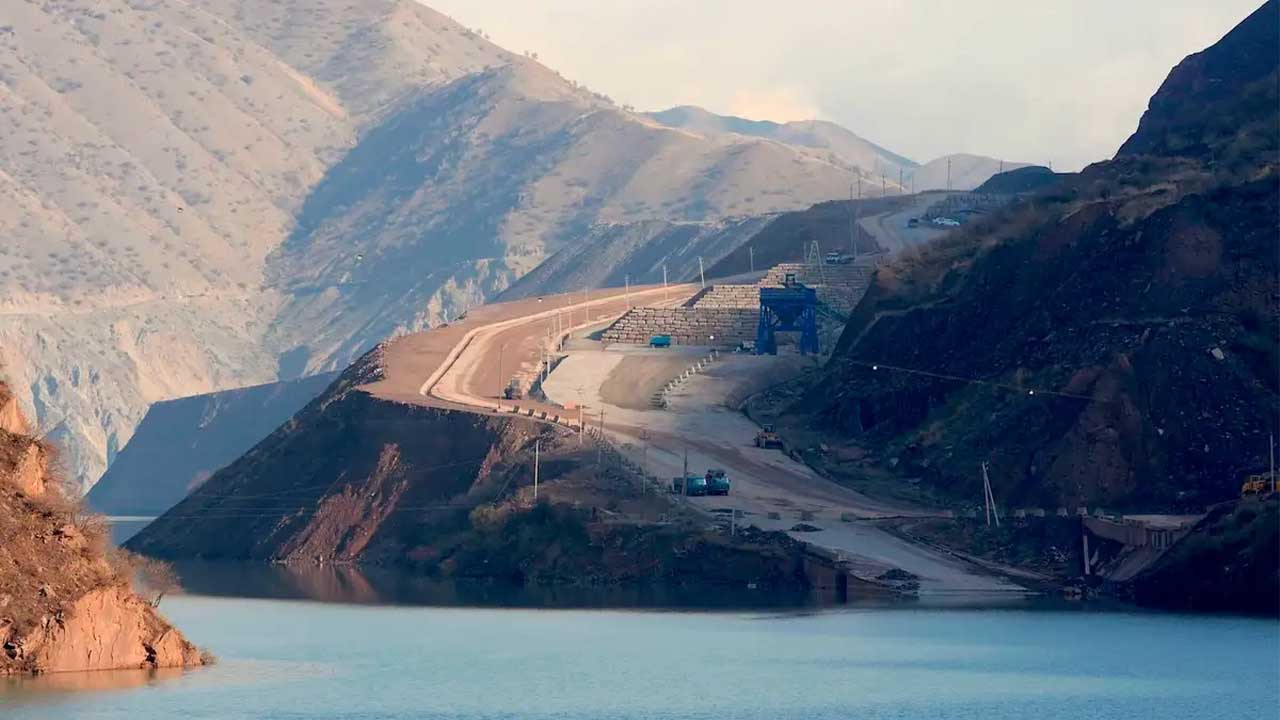
Tajikistan is building something the world has never seen before. A structure so massive it surpasses every skyscraper in London and rises higher than the skyline of Singapore. This giant is not a tower, not a monument, but a dam. The Rogun Dam will stand 335 metres tall and reshape the future of a nation that has long struggled with energy shortages and limited economic resources. I’ve stood near valleys like this in Central Asia, and the scale of such projects changes the way you see the land itself.
A Legacy Born in the Soviet Era
Rogun’s story reaches back to the 1970s, when the Soviet Union envisioned a chain of hydroelectric giants across Central Asia. Engineers had already created vast dams such as Bratsk, which required more than 40,000 workers and produced a reservoir the size of a small nation. These projects pushed Soviet engineering to its limits and shaped entire regions for decades.
In 1976, Soviet planners marked the Vakhsh Valley as the site for their next breakthrough. They wanted a dam taller than anything ever built. Their calculations pointed to the steep, narrow walls of the Rogun gorge as the ideal location. This wasn’t just about electricity; it was about proving that even the most remote landscapes could be engineered to serve a grand industrial vision.
Also Read: Inside Naypyidaw: The $7 Billion Ghost Capital of Myanmar
Nurek: Tajikistan’s First Giant
Before Rogun, Tajikistan completed the Nurek Dam in 1979. Rising 300 metres, it held the title of the world’s tallest dam for more than forty years. Nurek delivered nearly all of Tajikistan’s electricity and stood as the backbone of the nation’s power grid.
The project also revealed the consequences of reshaping rivers. Thousands were relocated, and downstream regions in Central Asia saw changes that contributed to the decline of the Aral Sea. Yet Nurek proved that Tajikistan’s rugged terrain could host record-breaking hydro projects. It set the stage for Rogun, a structure meant to surpass everything before it.
The Vision Behind the World’s Tallest Dam
Rogun was never designed as a simple power source. Engineers saw it as the key to controlling the Vakhsh River, one of the fastest-flowing rivers feeding the Amu Darya. Controlling this waterway meant controlling floods, supporting irrigation, and stabilizing water supplies for millions across Tajikistan, Uzbekistan, and Turkmenistan.
The dam would also anchor a regional power network. Plans such as CASA-1000 position Tajikistan as a potential exporter of clean energy to Afghanistan and Pakistan, creating new revenue streams and reducing dependence on imported fuel. But that same influence raised concerns. Uzbekistan, heavily reliant on steady river flow for its cotton fields, warned that Rogun could restrict its water access. From the start, Rogun balanced hope and dispute.
Collapse After the Soviet Union
Everything changed in 1991. The Soviet Union dissolved, Tajikistan entered a civil war, and the half-built Rogun site fell silent. Workers fled. Machinery disappeared. Tunnels filled with water and mud. The valley shifted from a symbol of progress to a symbol of loss.
During the 1990s and early 2000s, Tajikistan endured severe energy shortages. Winters brought long blackouts. Families relied on firewood and coal to stay warm. I’ve spoken with residents who still remember entire days without electricity. These struggles intensified the urgency to revive Rogun.
Attempts to restart the project surfaced several times. Russian company Rusal explored taking it over, but disagreements over design and cost stalled progress. For years the structure sat in limbo.
Rebirth of a Megaproject
A turning point came in 2016, when Tajikistan hired the Italian engineering firm Salini Impregilo, now known as Webuild. The company had a long history of major hydro projects worldwide, and its involvement finally brought momentum, expertise, and global attention.
That same year, engineers completed one of the project’s most important milestones: the successful diversion of the Vakhsh River. This enormous effort required blasting four diversion tunnels, each stretching more than a kilometre through solid rock. Diverting the river allowed work to begin on the dam’s core foundation for the first time in decades.
Building in One of the Most Active Seismic Zones on Earth
Rogun sits in a region prone to powerful earthquakes. This forced engineers to rethink the entire structure. A traditional concrete gravity dam risked cracking under seismic pressure. Instead, they designed a rockfill embankment with a dense clay core. This flexible structure can shift, absorb shocks, and remain stable even during magnitude 8 earthquakes.
Engineers reinforced foundation layers to prevent ground failure and carved emergency spillways into the surrounding mountains. These features protect the dam during extreme floods or seismic events. Few projects in the world face this combination of height, force, and geological stress. Rogun stands as one of the most demanding hydro engineering challenges ever attempted.
Rising Toward Record Height
Once the starter dam was completed, construction accelerated. By 2018, the first turbine began generating electricity. A second turbine followed in 2019. These early units stabilized the grid and reduced winter shortages that had troubled Tajikistan for decades.
By 2025, the dam structure reached a crest elevation of 1,110 metres above sea level. The final target is approximately 1,300 metres, which will give the dam its record 335-metre height. Full completion is expected in 2029, with reservoir filling continuing into the mid-2030s, depending on seasonal water flow and regional agreements.
When complete, the dam and its six 600-megawatt turbines will deliver more than 3,600 megawatts of power, rivaling the output of major nuclear facilities.
The Cost of Ambition
Rogun carries an extraordinary price tag of more than 6.2 billion dollars, a heavy burden for a country with a modest GDP. To raise funds, the government launched a national share-buying campaign that encouraged citizens to invest directly. Many saw it as a patriotic duty. Others felt pressured. Either way, the campaign showed how deeply the country tied its hopes to the project.
International lenders, including the World Bank, have studied the dam’s environmental and social impacts. Their assessments underscore how vital this project is for Tajikistan’s energy security and how significant its effects will be on downstream countries.
Communities Transformed
Behind the megastructure lies a human story. Building the reservoir requires relocating more than 46,000 people across 69 villages. Families leave behind farmland, historic homes, and ancestral graves. By 2024, over 15,000 people had already been moved.
New settlements offer housing, schools, and clinics, but many residents continue to face challenges related to employment, transportation, and access to farmland. Large-scale resettlement tests the country’s resources and its ability to support communities through such a profound transition.
Regional Tension and Cooperation
Water shapes politics in Central Asia. The Amu Darya feeds millions of people, and decisions made upstream influence economies downstream. Rogun’s reservoir gives Tajikistan the ability to control flow more effectively, which once heightened tension with Uzbekistan.
Recent years have seen calmer diplomatic relations. Uzbekistan’s leadership shift in 2016 opened the door to discussion, joint technical studies, and a more cooperative tone. The region’s future could rely on agreements that balance energy generation with agricultural needs. Successful collaboration would strengthen stability across Central Asia.
Examples from around the world show how delicate this balance can be. Ethiopia’s Grand Renaissance Dam triggered years of negotiations with Egypt and Sudan. Projects that reshape rivers often reshape political relationships as well. Rogun follows the same pattern.
Also Read: Saudi Arabia to Host FIFA World Cup 2034 | A Game-Changing Vision
A Future Defined by a Single Structure
Rogun stands at the center of Tajikistan’s future. Once complete, it will transform the country’s energy sector, support new industries, and turn Tajikistan into a regional exporter of clean electricity. It will also alter ecosystems, influence agriculture, and reshape communities.
A dam of this scale cannot be paused or reversed. Once the reservoir fills, the surrounding valley will change forever. The project carries risk, but it also carries the weight of a nation’s ambition to secure its future and rise from decades of hardship.
The world’s tallest dam is more than a triumph of engineering. It represents a moment where a small country takes on a project powerful enough to alter its destiny. Its impact, for better or worse, will echo across Central Asia for generations.