
China’s $2.5 Billion Escape Plan From the Strait of Malacca Is Failing
China has spent $2.5 billion building an energy corridor designed to reduce its dependence on one of the world’s most strategically important maritime chokepoints: the Strait of Malacca. The 771-kilometer pipeline system running through Myanmar offers an alternative route for crude oil and natural gas, allowing supplies to reach China’s southwestern province of Yunnan without passing through the strait.
But the project faces a problem that engineering alone cannot solve. Myanmar is engulfed in a civil war, armed resistance groups threaten critical infrastructure, and the broader economic corridor planned around the pipelines remains largely unrealized. What was intended to strengthen China’s energy security has become a test of the limits of infrastructure as a geopolitical tool.
The difficulties extend beyond a single pipeline. They raise a fundamental question about China’s ability to protect its energy supplies from disruption and whether the country’s long-term solution lies in finding new routes for imported fuel or reducing its dependence on fossil fuels altogether.
China’s Strategic Vulnerability at the Strait of Malacca
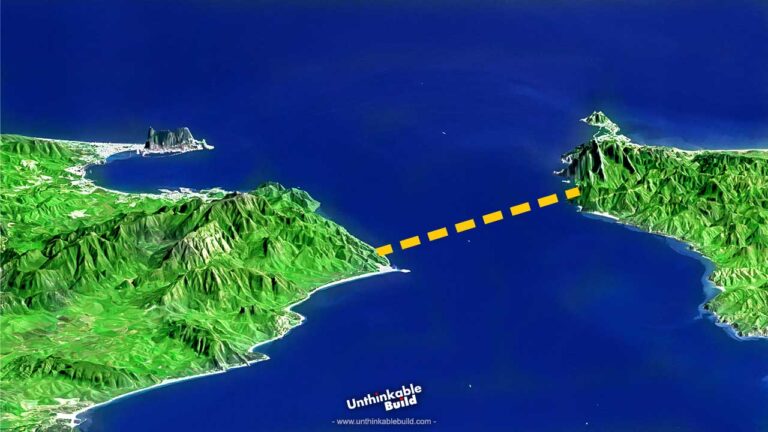
The Strait of Malacca is one of the most important maritime passages in global trade. At its narrowest point, it measures approximately 2.8 kilometers wide, forming a critical link between the Indian Ocean and the South China Sea.
For China, the strait represents a major strategic vulnerability. According to the figures cited in this account, approximately 80% of China’s oil imports pass through the passage. Tankers carrying crude oil from the Middle East and Africa, along with liquefied natural gas shipments from Qatar, rely on maritime routes that converge in this region.
This concentration of energy traffic creates a serious security concern. A blockade imposed by the United States or another hostile power could disrupt China’s access to imported fuel, threatening industrial production, transportation, and economic activity.
Also Read: Why America Is Spending $22 Billion on One Airport
Chinese strategists have long referred to this vulnerability as the Malacca Dilemma. The concern is that China could face severe economic consequences if a foreign power were able to restrict access to the strait during a major geopolitical confrontation.
The situation became more complicated in 2026, when disruptions in the Strait of Hormuz added another potential source of instability to global energy supplies. The two chokepoints occupy different positions in the energy transportation system, but disruptions affecting both could compound the risks facing a country heavily dependent on imported fuel.
China’s response has involved diversifying its supply routes. Rather than relying exclusively on tankers passing through the Strait of Malacca, Beijing sought to establish a direct land connection between the Indian Ocean and southwestern China.
Myanmar became the centerpiece of that strategy.
The China–Myanmar Pipeline: An Alternative Energy Route
The China–Myanmar energy corridor consists of two parallel pipelines: one transporting crude oil and the other carrying natural gas. Both begin at Kyaukphyu, a coastal area in western Myanmar facing the Bay of Bengal.
From there, the pipelines extend approximately 771 kilometers northeast through Myanmar’s interior, passing through the Mandalay region and Shan State before crossing into China’s Yunnan province.
The natural gas pipeline began operating in 2013, followed by the crude oil pipeline in 2017. Together, the projects cost approximately $2.5 billion.
Their strategic purpose is straightforward. Oil arriving by tanker from the Indian Ocean can be unloaded at Myanmar’s coast and transported overland into China, avoiding the need for that oil to pass through the Strait of Malacca. The natural gas pipeline provides another route for energy supplies entering China from the same coastal corridor.
However, the system was never designed to replace all of China’s maritime energy imports. Its capacity is described here as equivalent to approximately 12% of China’s energy requirements, making it a supplementary route rather than a comprehensive solution to the Malacca Dilemma.
Even so, the pipelines were an important component of China’s wider effort to connect its southwestern provinces to the Indian Ocean. Beijing envisioned a much larger economic corridor that would include a deepwater port, railways, and additional infrastructure.
That broader vision has encountered far greater difficulties than the pipelines themselves.
The Larger Corridor That Never Materialized
The pipelines were only one part of China’s ambitions in Myanmar. Beijing also planned a railway linking Yunnan to the Indian Ocean, with a proposed route of approximately 1,500 kilometers.
The railway was envisioned as a major engineering undertaking involving 124 bridges and 60 tunnels. Combined with a deepwater port at Kyaukphyu capable of handling large oil tankers, it would create an alternative trade corridor connecting China’s interior to the Bay of Bengal.
Such a route could offer China greater flexibility in transporting energy and other goods. It would also strengthen the economic importance of southwestern China by connecting the region more directly to international shipping networks.
Yet the larger project has failed to advance as planned.
As of 2026, construction of the proposed port had not begun, while the railway remained on paper. The continuing conflict in Myanmar has made the political and security conditions required for such long-term infrastructure investments increasingly uncertain.
The challenges became especially visible in February 2026, when a Chinese power plant worth approximately $140 million in Kyaukphyu was dismantled and physically relocated because the fighting had made it impossible to operate.
The episode illustrates the wider problem confronting Beijing. Infrastructure designed to improve strategic access can become a liability when the surrounding political environment deteriorates. Without reliable security, even expensive and technically successful projects may struggle to deliver their intended economic benefits.
Myanmar’s Civil War Threatens China’s Energy Security
The China–Myanmar pipeline system was developed with the expectation that Myanmar could provide a sufficiently stable environment for long-term infrastructure cooperation. Instead, the country descended into a prolonged civil war.
On February 1, 2021, Myanmar’s military seized power in a coup, overthrowing the elected civilian government. The takeover triggered widespread resistance and escalated into an armed conflict involving the military, pro-democracy forces, and multiple ethnic armed organizations.
The conflict has spread across significant parts of the country, creating persistent security risks for transportation routes, energy facilities, and foreign-backed infrastructure.
Between October 2021 and May 2025, at least seven major attacks reportedly targeted Chinese pipeline stations in Myanmar. These incidents exposed the vulnerability of an energy corridor that depends on facilities remaining operational across hundreds of kilometers of contested territory.
The problem is not limited to isolated attacks. The pipeline passes through areas where control over towns and transport routes has shifted amid the fighting. As armed groups expand their influence, the security arrangements that once supported the project have become increasingly difficult to maintain.
For Beijing, protecting the pipelines now requires navigating Myanmar’s changing balance of power rather than relying solely on agreements with the central authorities.
China Is Reassessing Its Relationship With Myanmar’s Armed Groups
One of the most significant developments concerns the Arakan Army, an ethnic armed organization that has expanded its control across Rakhine State.
According to the account presented here, the group controls 14 of the state’s 17 townships, including territory around Kyaukphyu, where the pipeline corridor begins. The military government, meanwhile, has lost control of substantial areas of the country.
These developments have created a difficult diplomatic calculation for China. Beijing has maintained relations with Myanmar’s military authorities, but the long-term security of its infrastructure may increasingly depend on the cooperation of armed groups operating in the territories through which its projects run.
China is reportedly preparing to negotiate directly with the Arakan Army, potentially bypassing authorities it has publicly supported for years.
Such a shift would reflect a pragmatic approach to protecting Chinese investments. If the military government cannot guarantee security around Kyaukphyu, Beijing may have to establish working relationships with whichever actors exercise effective control over the region.
The implications extend beyond the pipeline. China’s ability to complete its planned port and railway projects could depend on whether it can negotiate a workable arrangement with the forces likely to shape Myanmar’s political future.
In this environment, diplomatic flexibility may prove more important than the original construction plans.
The Human Cost of Protecting Strategic Infrastructure
The conflict surrounding China’s energy corridor is also a humanitarian crisis.
In March 2025, more than 20,000 residents reportedly fled Kyaukphyu Township as fighting intensified. China subsequently deployed 25 private security personnel to protect the pipeline.
During the same month, military operations elsewhere in Myanmar demonstrated the risks faced by civilians caught between armed forces. In Bago Region, military personnel reportedly surrounded Yai Twin Cone Village, trapping residents for days before launching an airstrike on a Buddhist monastery where civilians had sought shelter. The reported death toll was 25.
These events form part of a broader conflict that has displaced approximately 1.4 million people since the 2021 coup, according to the figures cited in this account.
For communities living along the pipeline route, the infrastructure is not simply an abstract symbol of international trade or energy security. Its location intersects with territories contested by armed groups and government forces, bringing strategic interests into direct contact with civilian life.
The deployment of security personnel and the protection of critical facilities also highlight a central contradiction in China’s approach. Infrastructure intended to reduce exposure to geopolitical risks can become dependent on an unstable local security environment, potentially increasing the pressure on surrounding communities.
The pipeline may provide China with an alternative energy route, but it cannot insulate that route from the consequences of Myanmar’s civil war.
The Financial Burden on Myanmar
The difficulties surrounding the corridor extend beyond security. The projects also raise questions about debt, financial viability, and the economic relationship between China and Myanmar.
China did not finance its infrastructure ambitions in Myanmar entirely through grants. The proposed Kyaukphyu port, for example, was expected to be financed predominantly through loans from China Exim Bank, with the cited financing structure placing the Chinese lender’s share at approximately 95%.
That arrangement could create substantial financial pressure for Myanmar if the project fails to generate the revenue needed to service its debt.
The country’s economy has suffered amid political instability and prolonged conflict. Under these conditions, completing large infrastructure projects and generating predictable returns has become increasingly difficult.
Analysts cited in the account argue that the business case for these projects has weakened considerably because of the security risks. If construction is delayed, facilities cannot operate reliably, or trade volumes fall short of expectations, the revenue required to repay loans may never materialize.
Myanmar is consequently facing pressure to renegotiate financial obligations that have become increasingly difficult to meet.
This creates a problem for both countries. Myanmar risks carrying debt associated with infrastructure that cannot deliver its expected economic benefits. China, meanwhile, risks seeing strategic investments lose value while the projects remain exposed to conflict and political uncertainty.
The result is a relationship in which infrastructure intended to deepen economic cooperation may instead generate financial strain and diplomatic complications.
Describing the arrangement simply as a strategic partnership overlooks this underlying tension: both sides have substantial interests at stake, but neither can guarantee that the projects will achieve their original objectives.
Why China’s Other Alternatives Have Struggled
Myanmar is not the only route China has considered for reducing its dependence on the Strait of Malacca. Over the years, Beijing has supported or explored several alternatives, each facing its own technical, financial, or security constraints.
Thailand’s Proposed Kra Canal
One frequently discussed proposal is the Kra Canal, a waterway that would cross the Thai peninsula and provide ships with an alternative to the longer route through the Strait of Malacca.
The project has been discussed for decades, with estimated costs exceeding $30 billion. Proponents argue that it could save approximately three days of transit time by allowing vessels to avoid the existing maritime passage.
However, the proposal has struggled to advance. Its enormous construction costs, political sensitivities, and potential strategic consequences have made it controversial. Thailand has not committed to building the canal, and the prospect of opposition from the United States adds another geopolitical complication.
Even if constructed, the canal would primarily change the route ships take. It would not eliminate China’s dependence on imported oil or remove the broader risks associated with maritime energy transportation.
The China–Pakistan Economic Corridor
Another major initiative is the China–Pakistan Economic Corridor, which aims to connect China’s Xinjiang region with the Pakistani port of Gwadar.
The corridor offers a potential connection between western China and the Arabian Sea. In principle, it could give Beijing another way to diversify its trade and energy routes.
However, the project has experienced delays and faces significant security challenges. The route crosses difficult terrain and areas affected by political and security instability, complicating the development and operation of infrastructure.
Like the Myanmar corridor, the China–Pakistan Economic Corridor has strategic value, but that value depends on the ability to build, maintain, and operate infrastructure under difficult conditions.
The Limits of Land-Based Alternatives
The Myanmar pipeline faces a similar problem on a smaller scale. Although it offers a route around the Strait of Malacca, its reported capacity accounts for only about 12% of China’s requirements, and the civil war threatens its reliability.
None of these alternatives, individually, can replace the volume of energy transported through China’s established maritime supply chains.
The 2026 disruption in the Strait of Hormuz adds another layer of uncertainty. If supplies from the Middle East are disrupted before tankers can reach the Indian Ocean routes serving Asia, an alternative passage around Malacca cannot solve the initial supply problem.
This distinction matters. Diversifying transportation routes can reduce exposure to a particular chokepoint, but it cannot guarantee access to energy that is unavailable at its source.
China’s challenge is therefore broader than constructing a canal, pipeline, or railway. It must manage the risks associated with both the origins of its energy imports and the routes used to transport them.
China’s Long-Term Strategy: Reduce Dependence on Imported Fossil Fuels
As the limitations of alternative transportation corridors become more apparent, China’s expanding clean energy sector offers a different approach to energy security.
Rather than relying exclusively on new routes for imported oil and gas, China can reduce the amount of fossil fuel it needs to import in the first place.
The country has invested heavily in renewable energy infrastructure, including solar and wind power. According to the figures cited in this account, China achieved its 2030 solar and wind capacity targets six years ahead of schedule.
In 2024 alone, Chinese investment in clean energy infrastructure exceeded $625 billion. That annual investment was approximately 250 times the reported $2.5 billion cost of the Myanmar pipeline.
The comparison highlights the scale of the country’s energy transition. The pipeline represents a targeted effort to diversify the transportation of imported fuel, while renewable energy investment addresses a much broader question: how much imported fossil fuel China will need in the future.
If electricity generation increasingly relies on domestic renewable resources, China could reduce its exposure to international fuel markets and the maritime chokepoints through which imported energy travels. Electrification and other changes in energy consumption could extend that effect to additional sectors of the economy.
However, renewable energy does not eliminate every dimension of the Malacca Dilemma. Oil remains important for transportation, petrochemicals, and other uses, while natural gas serves a range of industrial and energy needs. The pace at which these fuels can be displaced will depend on technological development, infrastructure, and changes in demand.
The strategic logic is nevertheless clear. A country that reduces its dependence on imported fossil fuels becomes less vulnerable to disruptions along the routes used to transport them.
In this sense, the energy transition offers a long-term complement to pipeline and port construction rather than an immediate replacement for them.
Also Read: The $25B Land Route Replacing the Red Sea
China’s $2.5 billion Myanmar pipeline demonstrates both the value and the limitations of infrastructure as a tool of energy security. The 771-kilometer system provides an alternative route for oil and natural gas entering China, reducing the need for some supplies to pass through the Strait of Malacca. Yet its limited capacity, exposure to armed conflict, and dependence on an unstable political environment prevent it from eliminating China’s wider vulnerability.
The failure to advance the planned railway and deepwater port further illustrates how strategic ambitions can be undermined by conditions that engineering cannot control. Infrastructure can connect markets and diversify supply routes, but it cannot independently guarantee political stability, financial returns, or security.
China’s response may ultimately extend beyond building additional corridors. Its investment in renewable energy offers a way to reduce the underlying demand for imported fossil fuels, addressing the source of the vulnerability rather than only its transportation routes.
The Myanmar pipeline was designed to provide an alternative path through a dangerous geopolitical landscape. Whether China can achieve lasting energy security may depend less on finding another path for oil tankers and more on reducing how much imported oil the country needs.