
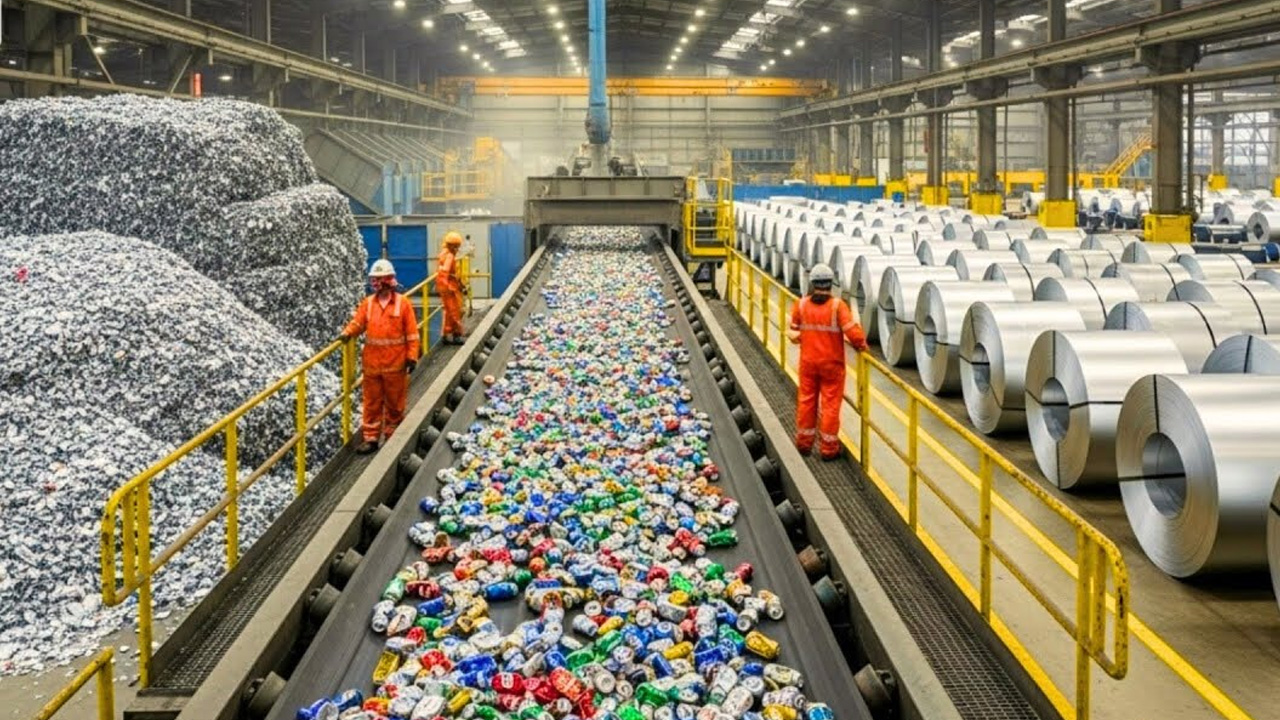
Inside America’s Aluminum Recycling Machine
Most people treat an empty aluminum can as disposable. You drink, crush it, drop it in a bin, and forget about it. In the United States, that can never becomes waste. It becomes industrial fuel. It holds real economic value, measurable energy savings, and strategic importance for manufacturing.
Every year, Americans discard more than 50 billion aluminum cans. Each one enters a tightly controlled industrial system that operates with speed most people never imagine. Within roughly 60 days, that same metal can reappear on a store shelf as a new can, holding the same drink, with no loss in quality. When I first traced that journey from curbside bin to rolling mill, I realized I was standing on top of one of the most efficient material systems ever built.
Also Read: Can China Turn Pakistan’s $60 Billion Mega Port into the Next Dubai?
Why Aluminum Plays by Different Rules
Aluminum behaves unlike almost any other industrial material. Recycling does not weaken it. The metal does not lose strength, form, or durability. One can can cycle through this loop dozens of times without degradation.
Energy separates aluminum from everything else. Producing primary aluminum from bauxite ore requires massive electricity input, often exceeding 14 megawatt hours per ton. Recycling aluminum slashes that figure by about 95 percent. The Aluminum Association estimates that U.S. aluminum recycling saves enough energy each year to power more than four million American homes. That energy gap turns recycling from a good idea into an industrial necessity.
A National Industrial System Hiding in Plain Sight
The United States operates one of the largest aluminum recycling systems on Earth. When you include recycling, smelting, rolling, and finished products, the aluminum sector contributes roughly 170 to 180 billion dollars annually to the U.S. economy. It supports about 650,000 direct and indirect jobs, according to data from the Aluminum Association and the U.S. Geological Survey.
No single mega plant controls this system. It works because it spreads across the country. Collection starts in homes, offices, airports, stadiums, factories, and public spaces. From there, aluminum moves through material recovery facilities, scrap processors, remelt plants, and rolling mills. This system operates on profit and precision, not environmental slogans.
The Sorting Challenge That Makes or Breaks Recycling
When aluminum reaches a recycling facility, it arrives buried in chaos. Plastic, glass, steel, paper, food waste, and dirt all mix together. Sorting must happen fast, and mistakes cost money.
Modern U.S. facilities process tens of thousands of tons every day using layered separation systems. Magnets remove steel. Screens divide material by size. Air jets blow away light contaminants. Aluminum then reaches the heart of the system: eddy current separators. These machines create rapidly changing magnetic fields that physically push aluminum away from other materials in milliseconds. At scale, they recover millions of pounds of aluminum each week with stunning accuracy.
Turning Scrap Into Liquid Metal
Once sorted, aluminum enters the industrial core of the system. Shredders break it into clean fragments. Decoating systems burn off paint and organic residue. The material moves into remelt furnaces that run around the clock.
Inside these furnaces, temperatures exceed 700 degrees Celsius. The scrap becomes molten aluminum. Plants across the country process more than three million metric tons of aluminum scrap every year. Operators carefully remove impurities and fine tune alloy composition to meet strict industrial standards. What exits the furnace is controlled, consistent metal ready for demanding use.
Closed Loop Recycling Keeps the System Tight
One of the strongest features of the U.S. system is closed loop recycling. Aluminum from used beverage cans goes directly back into new beverage cans. Companies such as Novelis, Ball Corporation, Crown Holdings, and Alcoa have built facilities where recycled content often exceeds 70 percent.
This closed loop stabilizes supply. It shields manufacturers from volatile global energy prices and geopolitical shocks that affect primary aluminum production. For many can makers, recycled aluminum now costs less and carries lower long term risk than virgin metal.
Rolling Mills Built for Speed and Precision
After remelting, aluminum is cast into slabs that can weigh more than 25 tons. These slabs enter rolling mills, where machines flatten them into sheets thinner than a human hair in some sections.
Sensors monitor thickness to fractions of a millimeter. Speed and precision matter here. A single mill can produce material for billions of cans each year. From there, aluminum moves to can forming plants, where presses shape, trim, and seal cans at rates exceeding 2,000 units per minute. In optimized regions, the full journey from scrap to shelf can take as little as six to eight weeks.
Why the United States Performs So Well
The U.S. does not recycle every aluminum can it uses. That fact matters. Even so, it still recovers more than one million tons of aluminum cans every year. Automation, geographic proximity, and strong domestic demand keep recycled aluminum flowing as a core industrial input, not a fallback option.
This integration gives the system resilience. Shorter supply chains reduce transport costs. Domestic remelt capacity limits reliance on imports. Manufacturers treat recycled aluminum as a primary resource.
How the U.S. Compares Globally
China dominates global aluminum output by volume. Much of that aluminum still comes from primary production powered by coal heavy electricity. This drives high energy use and carbon intensity.
Germany and Japan achieve recovery rates above 70 percent using deposit return systems and strict collection policies. Their scale stays smaller, but efficiency remains high.
The United States sits between these models. It produces less aluminum than China, yet relies far more on recycled material. This position cuts emissions, lowers energy risk, and reduces dependence on new smelters. According to the International Aluminium Institute, recycled aluminum already supplies over 40 percent of U.S. aluminum demand, and that share continues to rise.
Recycling as Industrial Insurance
Recycling does more than save energy. It protects industry from disruption. When global aluminum prices spike due to energy shortages or political tension, recycled scrap provides a domestic buffer.
Recent supply chain shocks proved this point. Recycled aluminum helped U.S. manufacturers avoid shutdowns that would have cost billions in lost output. For many sectors, recycling now functions as a form of insurance.
Industries That Rely on Recycled Aluminum
The beverage sector leads the list. Aluminum cans rank among the most recycled consumer products in the country.
Automakers follow close behind. Modern vehicles already contain between 250 and 400 pounds of aluminum. That figure continues to climb as manufacturers chase weight reduction targets. Ford, Tesla, and General Motors now increase recycled aluminum use in body structures and battery enclosures.
Construction depends heavily on aluminum for facades, windows, rail systems, and public infrastructure. Recycled aluminum can lower the carbon footprint of major projects by up to 80 percent compared to primary material.
Aerospace and advanced manufacturing also depend on recycled aluminum. Proper processing allows it to meet strict performance standards without the energy cost of virgin metal.
Why Beverage Cans Matter More Than You Think
A single aluminum can weighs about 15 grams. That sounds trivial. At scale, cans form one of the most valuable scrap streams in the economy. Known alloys, uniform shapes, and massive volumes turn cans into a consistent domestic resource.
Every billion cans recycled reduces the need for new mining, overseas shipping, and energy heavy smelting. That impact extends far beyond the recycling bin.
The Weak Link That Still Holds the System Back
The U.S. system has one clear bottleneck. Collection rates vary sharply by state. Some regions recover over 70 percent of cans. Others fall below 30 percent. That gap sends billions of recyclable cans to landfills each year, even though industrial capacity already exists.
This problem does not come from technology. It comes from policy gaps, inconsistent incentives, and uneven public participation.
The Global Demand Surge Ahead
Global aluminum demand is expected to grow more than 40 percent by 2030, driven by electric vehicles, renewable energy systems, and lightweight transportation. New mines and smelters take decades to plan and permit. Recycling delivers supply immediately.
Much of tomorrow’s aluminum already sits in circulation today. The cans, cars, buildings, and products around you form the future supply chain.
Also Read: Europe Is Building the Biggest Transport Network in History
The Hidden Infrastructure You Use Every Day
The next time you crush a can, it will feel small. Inside America’s aluminum recycling system, it becomes part of a vast industrial machine. That machine supports hundreds of thousands of jobs, saves enormous energy, and keeps critical industries moving.
Some of the most important infrastructure in modern society does not rise as bridges or towers. It works quietly, starting with what you choose to throw away.