Why India Is Building the $6.6 Billion Polavaram Mega Dam
Along the shifting waters of the Godavari River in Andhra Pradesh, engineers push forward on one of the most demanding infrastructure projects in modern Indian history. I have followed major dam projects for years, but standing beside the scale of Polavaram, even through documentation and field reports, feels different. You sense the weight of ambition in every concrete pour and steel alignment. You also sense the cost of waiting.
The Polavaram Project stands as India’s largest multi-purpose dam currently under construction and one of the most complex river management schemes ever attempted in the country. The central government declared it a National Project due to its strategic importance, rare status reserved for works that carry national-scale economic, social, and environmental impact. The vision seeks to reshape water security across several states, yet decades of challenges have placed the dam under intense scrutiny.
Also Read: No Workers, Just Robots: Inside the World’s Largest 3D-Printed Dam
At its heart, Polavaram aims to create stability where uncertainty ruled generations. Farmers battled unreliable monsoons. Villages relied on tanker water supplies. Floods swallowed fertile land when the Godavari surged beyond control. The dam rises to change those realities. I often write from a distance, but this project feels different. It carries a sense of urgency that touches human lives directly.
Origins of the Vision
Engineers first proposed harnessing the Godavari in the 1940s after observing recurring floods and prolonged drought cycles. Early feasibility studies highlighted the river’s unmatched water volume as a potential lifeline for parched districts along coastal Andhra and Rayalaseema. Political turmoil and lack of funding stalled these ambitions for decades.
Formal approval arrived in 2004 after extensive environmental assessments and inter-state negotiations. Planners selected Polavaram village in present-day Eluru district due to its geographic advantage. The river narrows here before widening upstream, making it ideal for water storage and regulated diversion. The design integrates spillways, a large power station, and extensive canal systems to distribute water to dry zones while moderating flood flow toward the delta downstream.
State leaders presented Polavaram as a project capable of altering the economic destiny of Andhra Pradesh. Agricultural economists projected massive crop expansion in delta areas where rainfall irregularity suppressed productivity for generations.
What the Dam Is Designed to Achieve
Polavaram’s scope exceeds ordinary irrigation infrastructure. The project targets irrigation coverage for more than 700,000 hectares of farmland. That area rivals the agricultural footprint of several small nations. The left and right main canals will carry stored water hundreds of kilometers inland, creating year-round irrigation across fertile but dry territorial belts.
Drinking water infrastructure connected to the dam aims to serve at least 540 villages across Visakhapatnam, East Godavari, West Godavari, Krishna, and parts of Vizianagaram districts. Treatment plants under construction will distribute clean potable water to households where women previously traveled kilometers for basic water access.
The dam’s power station includes 12 turbines generating a planned 960 megawatts of hydroelectricity. That output can supply over two million households annually, reducing coal demand and advancing renewable energy targets set under India’s integrated power strategy.
Flood mitigation remains equally core. Seasonal surges of the Godavari historically destroyed crops and settlements downstream. The reservoir design provides moderated release capacity through a reinforced spillway system capable of handling extreme inflow volumes exceeding one million cubic meters per second during severe monsoon cycles.
Beyond state borders, Polavaram serves as a major component of India’s long-discussed river interlink system. Engineers intend to move excess Godavari water northward into the Krishna basin when drought cycles intensify, redistributing natural resources to balance water inequality between river basins.
Mounting Costs
Early estimates projected a total completion cost near ₹10,000 crore. That figure did not survive reality. By mid-2025, official government accounting places the revised outlay above ₹55,500 crore, which converts to roughly $6.6 billion at current exchange rates.
Multiple drivers fueled the escalation. Prolonged project disruptions stretched labor contracts and material procurement cycles. Steel, cement, and structural aggregate prices surged after pandemic-era manufacturing instability. Global shipping constraints slowed imported machinery delivery.
Resettlement remains the single largest financial strain. More than 100,000 residents from over 290 submerged villages required relocation. Construction crews built entire townships featuring homes, schools, roads, hospitals, and sanitation systems. Land compensation packages expanded following court rulings that revised valuation standards upward.
Cyclonic storms in 2019 and 2020 inflicted damage to temporary cofferdams and partially completed embankments, forcing emergency reconstruction and inflating safety mitigation budgets.
Engineering Challenges That Tested the Project
Polavaram crosses one of India’s most voluminous rivers. Engineers faced enormous hydraulic pressures during construction phasing. Crews built multiple staged cofferdams to divert the river temporarily while pouring concrete for the foundation blocks. They worked against unpredictable sediment flows that continually interfered with heavy machinery operations.
Flood surges repeatedly damaged temporary protection structures. In certain seasons, displaced impact forces bent reinforcement cages and cracked early pours. Engineers redesigned cofferdam reinforcement systems using heavier steel anchoring loops and deeper piling after successive monsoon setbacks.
Seismic safety also commanded close attention. Technical standards demanded that the dam withstand regional fault-line activity. Structural models integrated elastic concrete formulations and uplift pressure control grouting beneath foundation slabs to meet safety compliance.
Environmental impact mitigation generated prolonged court supervision. Wildlife preservation authorities placed forest compensatory planting requirements on project execution. Crews replanted thousands of hectares while also creating artificial water bodies for displaced aquatic ecosystems.
Public protests grew intense as villages faced inundation deadlines. Administrative delays emerged as rehabilitation settlements waited for utilities, schools, and working land replacements. Each postponement fed litigation cycles that stalled major pours.
The Project’s Status in 2025
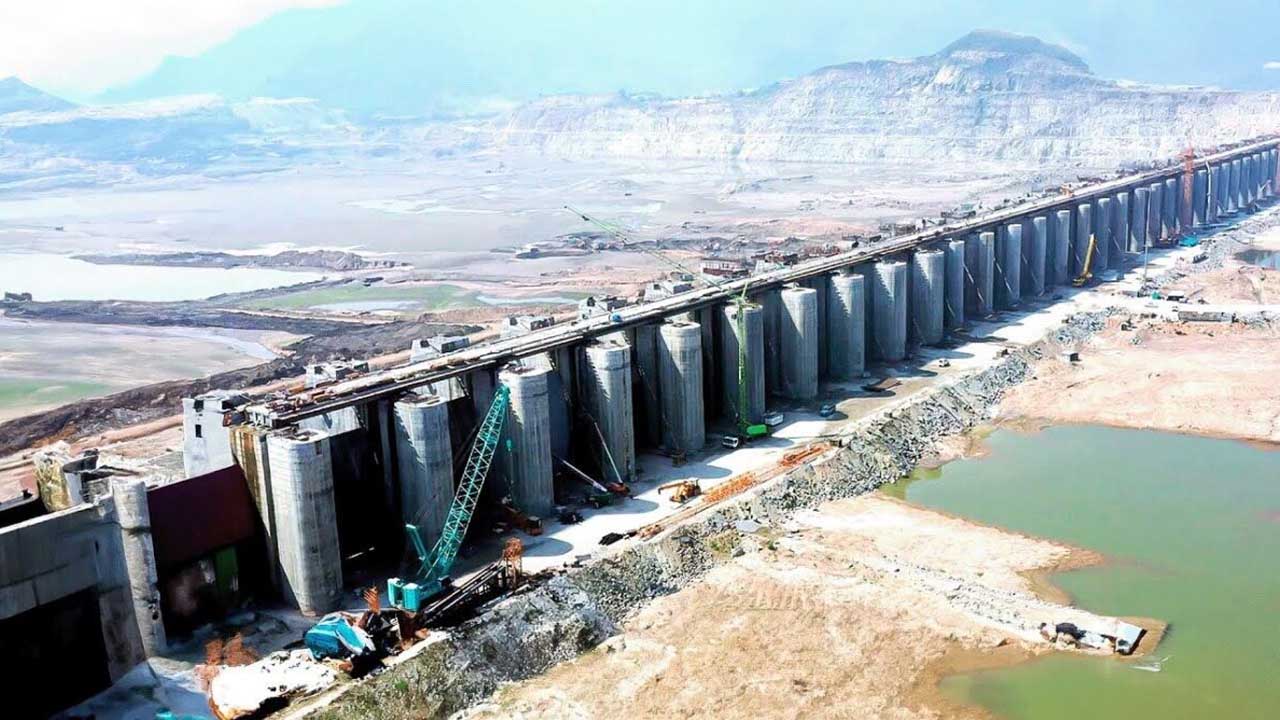
Today, Polavaram stands substantially formed yet incomplete. The main spillway complex remains fully operational. It already controls flood discharge during heavy monsoons. The upstream cofferdam now stands sealed, allowing uninterrupted work on the primary dam structure.
Powerhouse construction lags behind schedule. Turbine halls rise from the foundation but remain unfinished internally. Turbine installation awaits final civil completion.
The canal network advances unevenly. Portions of major distribution channels operate in limited capacity, yet full interconnectivity remains absent. Reservoir boundary clearances also await completion as rehabilitation settlements remain under phased delivery timelines.
Revised planning now estimates limited water storage operations beginning by late 2027. Full power generation and complete irrigation delivery could extend into 2028 based on current productivity data released by the Andhra Pradesh Water Resources Department.
Political and Administrative Headwinds
National Project status guarantees federal funding coverage, yet disputes over reimbursement delays remain frequent. The Andhra Pradesh government claims delayed fund disbursement from New Delhi slowed contractor payments and procurement cycles.
Political leadership changes at the state level repeatedly reset contractor frameworks and tender structures. Each administrative transition introduced review delays, fresh audits, and reallocation negotiations.
Inter-state water sharing negotiations also complicated operational schedules. Odisha and Chhattisgarh periodically raised concerns regarding backwater submergence of tribal lands upstream. Supreme Court intervention limited reservoir height modifications until comprehensive review concluded, which constrained certain work phases.
What Polavaram Could Deliver
Once operational, agricultural output gains could redefine rural income levels across Andhra Pradesh. Irrigated land stability enables consistent multi-crop cultivation rather than monsoon-dependent farm cycles. That stability improves farmer credit eligibility and rural insurance security.
Access to household drinking water reduces disease burden tied to contaminated source reliance. Health economists expect meaningful drops in waterborne illnesses upon project completion.
Hydroelectric output strengthens renewable share in India’s southern grid. The dam contributes ongoing carbon reduction credits under national climate mitigation programs, reinforcing energy security.
Flood moderation protects delta population clusters and infrastructure investments downstream. Economic modeling predicts damage reduction in the billions of rupees annually by preventing crop wipeouts and structural losses caused by river surges.
Also Read: The World’s Tallest Dam: Inside Tajikistan’s $6 Billion Megaproject
Regional development plans link Polavaram to port logistics growth in Visakhapatnam and inland road corridor expansion that may draw manufacturing into previously underserved territories.
The Meaning of Polavaram
Polavaram reflects both India’s infrastructure ambition and the abyss between vision and execution. It promises prosperity yet bears the scars of delay. It stands as a testimonial to engineering persistence under political turbulence.
I study mega projects worldwide, yet this dams feels uniquely personal. You cannot walk past the resettlement colonies or drone photograph spillway bays without sensing the tension between progress and patience. Millions wait for water security that engineers already designed on paper decades ago.
The dam continues to rise. The questions persist. Time factors into every calculation now more than any technical equation.
India’s $6.6 billion bet on Polavaram still seeks resolution. The next few years will determine if this generational effort fulfills its promise or joins the list of dreams slowed by complexity. The structure may not yet be complete, but its impact already reshapes conversations around national infrastructure priorities and the human price of grand ambition.