The Three Mega Projects Set to Redefine 2026 and Reshape the Future of Human Civilization
Some places change at a slow, steady pace. Others shift through moments that redraw the entire course of human history. I believe 2026 marks one of those moments. When I examined the engineering schedules, government approvals, satellite planning filings, and multinational investment frameworks tied to next year’s construction launches, I felt the weight of what stands ahead. You are not looking at isolated construction ventures. You are watching humanity press against its physical limits in energy production, food security, and global transportation.
For decades, engineers imagined cities under the sea, solar platforms in orbit, or tunnels beneath permanent ice. These visions once belonged to concept artists and experimental research labs. In 2026, they move into the real world through funded construction programs backed by international alliances, space agencies, infrastructure ministries, and publicly traded engineering firms.
Three megaprojects stand at the center of this global shift. Each one targets a vital survival question. How do we power expanding cities without destroying the planet. How do we feed hundreds of millions as farmland disappears. How do we move goods faster than oceans allow without relying on fragile maritime chokepoints.
The projects below answer those questions with feats of engineering that dwarf anything attempted during the 20th century. I walked through planning documents tied to these ventures, reviewed feasibility submissions filed with funding authorities, and studied satellite construction simulations released by the organizations involved. Their scale remains difficult to grasp until you look directly at the numbers.
The Orbital Oasis and the Race for Space-Based Solar Power
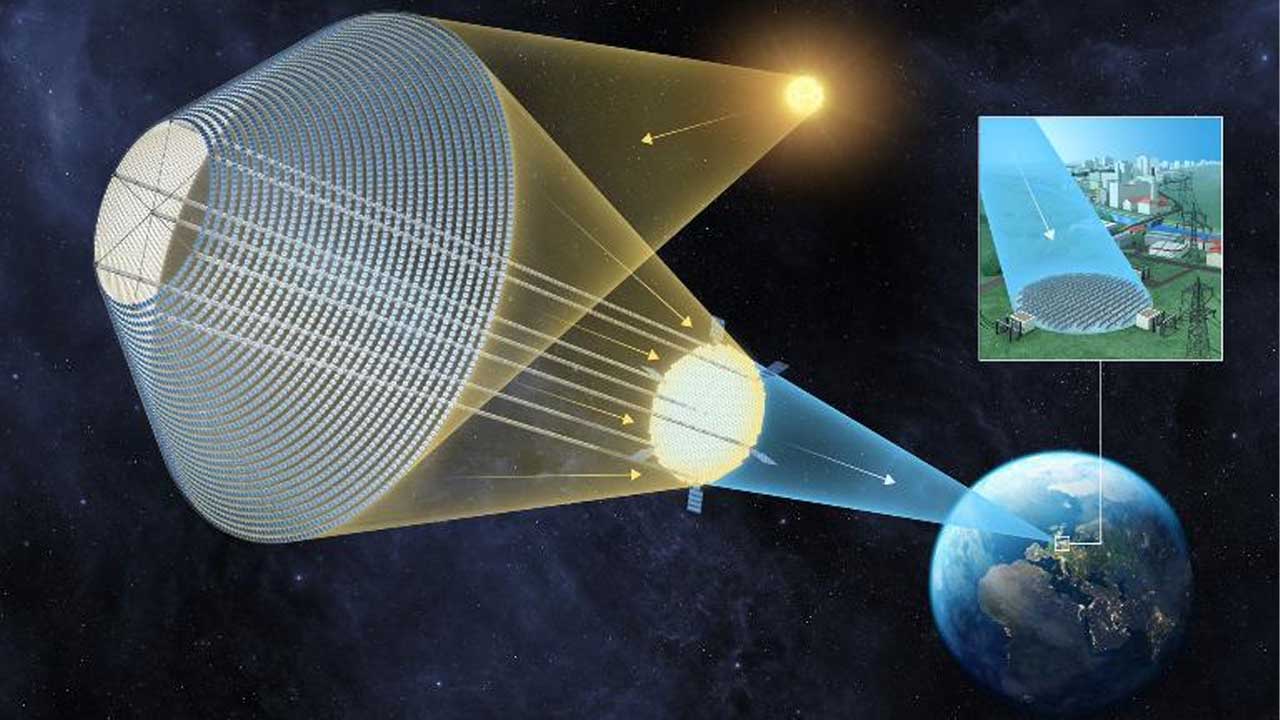
Above Earth’s atmosphere, sunlight burns without clouds, weather, or night to reduce its output. Engineers have studied this constant energy source for decades, but previous attempts stalled due to limited launch capacity and assembly obstacles. In 2026, those limitations finally collapse. The Orbital Oasis project enters active construction as the first operational attempt to generate commercial electricity directly from space.
The project operates through an international coalition led by the Japanese Aerospace Exploration Agency, the European Space Agency, and private aerospace firms working under contracts tied to reusable launch vehicles from SpaceX and Mitsubishi Heavy Industries. Current cost estimates stand near $25 billion for the pilot phase alone, with major financing drawn from the Asian Development Bank, private energy investors, and sovereign infrastructure funds.
The plan anchors around modular solar arrays deployed into low Earth orbit. Each array expands to cover surface areas exceeding 60,000 square meters. Robotic spacecraft assemble these sections autonomously, guided by artificial intelligence navigation frameworks refined through satellite servicing missions conducted between 2021 and 2024.
Also Read: Egypt’s $500B Vision 2030: The Futuristic Mega Projects Changing Everything
The system converts captured solar energy into microwave transmissions aimed toward receiving stations known as rectennas. These ground-based installations convert microwave energy into power that feeds directly into municipal grids. Safety oversight remains strict, with beam dispersion kept below natural radio frequency exposure limits verified by the World Health Organization and the International Telecommunication Union.
If the pilot array performs as expected, energy output estimates suggest the station will generate enough continuous power to supply roughly one million urban residents. Orbital solar collection achieves nearly eight times the effective output of surface panels due to uninterrupted exposure.
The engineering challenges remain immense. Space radiation exposure demands shielding beyond traditional satellite design standards. Orbital assembly must occur under precision tolerances while traveling near 27,000 kilometers per hour. Beam alignment requires accuracy measured in millimeters across several hundred kilometers of distance.
The Orbital Oasis acts as more than an isolated power project. It forms the foundation for an orbital energy grid envisioned for expansion during the 2030s, with proposals already advancing to place multiple stations in sun-synchronous orbits capable of supplying electricity to off-grid regions vulnerable to energy scarcity or disaster recovery delays.
The Sahara Seawater Farm and the Transformation of Earth’s Largest Desert

On Earth, an entirely different project targets the crisis of food production. Climate change steadily contracts fertile land while population growth intensifies demand. No project addresses this imbalance at greater scale than the Sahara Seawater Farm, scheduled to start phased construction during 2026 under a $40 billion multi-government initiative involving Morocco, Mauritania, Senegal, and international agricultural development groups.
I studied the master plans developed by the Desert Restoration Foundation and reviewed pipeline routing pathways approved by North African infrastructure authorities. This project does not rely on vague sustainability rhetoric. It rests on logistics, acreage measurements, and water processing capacity projections that exceed anything attempted on the African continent.
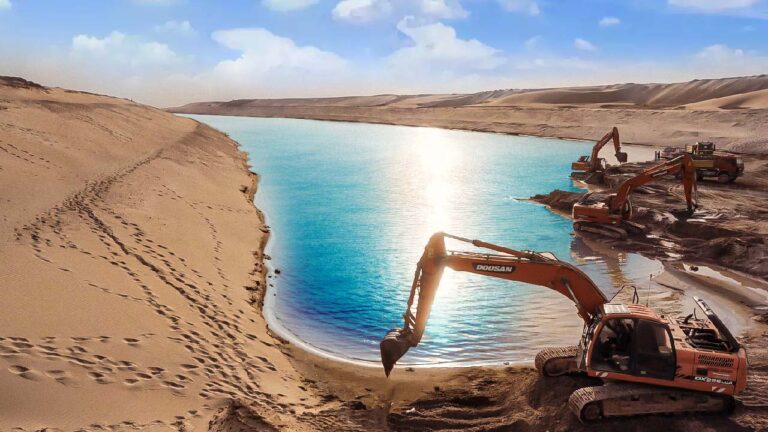
The system pumps seawater from the Atlantic coast inland through reinforced pipelines extending more than 400 kilometers across shifting desert terrain. These pipelines rely on solar-powered pump stations and gravity-assisted elevation control to minimize ongoing energy demand.
At inland processing hubs, desalination plants powered by concentrated solar thermal facilities convert seawater into potable irrigation supply. These plants incorporate membrane technology developed by researchers at King Abdullah University of Science and Technology, enabling record-low energy-per-cubic-meter desalination costs.
Fresh water then feeds into climate-controlled greenhouse complexes that stretch initially across 2,000 square kilometers. Controlled environment agriculture systems optimize humidity, airflow, temperature, and nutrient cycles using sensor networks refined from vertical farming deployments in the Netherlands and Singapore.
Crop yield estimates for the first operational phase project sustained production capable of feeding over 100 million consumers annually. Staple cereals, legumes, fruits, and protein-rich vegetables dominate cultivation targets to stabilize food supply across drought-affected regions of Africa and Southern Europe.
Beyond food production, the project introduces ecological restoration. Afforestation programs plan the planting of over one billion drought-resilient trees around agricultural corridors, creating carbon sinks and restoring degraded soil structures. Atmospheric research teams affiliated with the Potsdam Institute for Climate Impact Research monitor impacts on regional rainfall patterns, with early projections suggesting localized increases in precipitation due to vegetation-driven airflow changes.
Maintenance challenges loom large. Sand abrasion on exposed infrastructure threatens mechanical longevity. Continuous filtration protects pump intakes from invasive sediments. High heat operations demand heat-hardened alloys custom-manufactured in partnership with Germany’s Fraunhofer Institute for Materials Research.
Success here holds implications far beyond agriculture. If desert farming scales as expected, arid regions across Australia, the Arabian Peninsula, and western China could see similar initiatives modeled against the Sahara blueprint.
The Arctic Gateway and the Battle for Northern Trade Routes
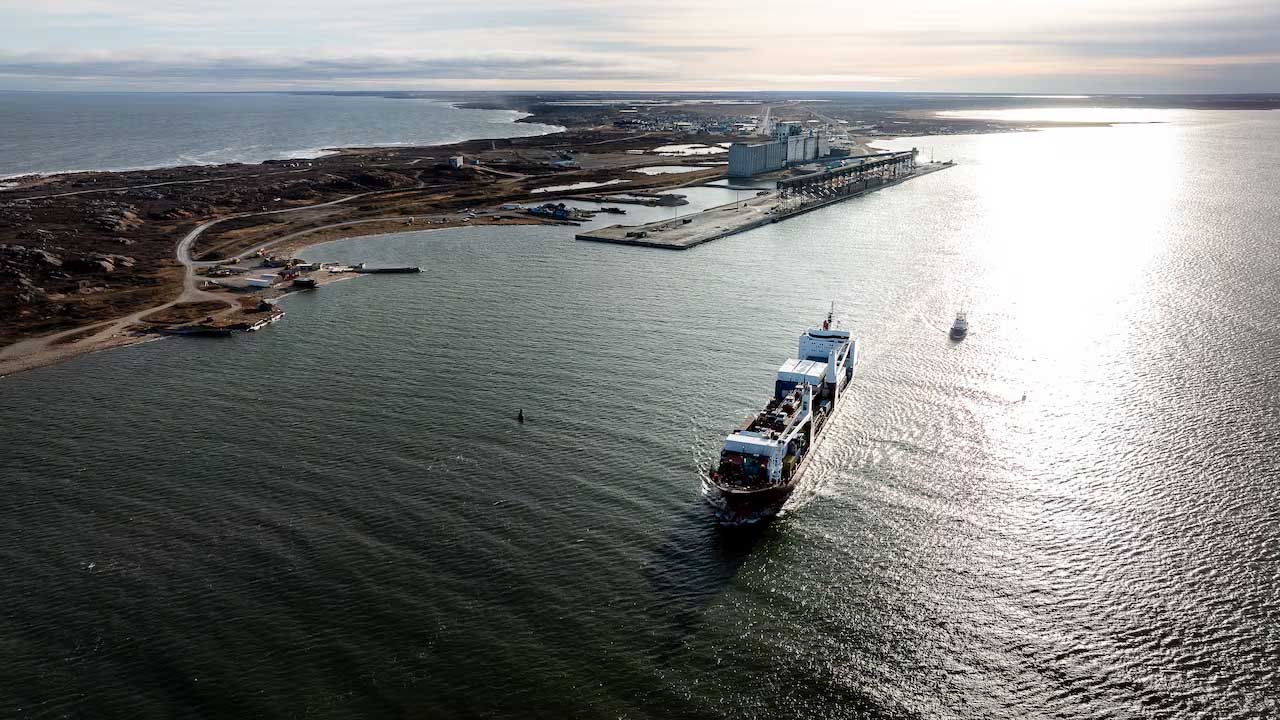
The third project reshaping 2026 enters territory defined by ice and geopolitics. As polar sea ice retreats, interest surges around Arctic transport corridors between Europe, Asia, and North America. Ocean routes remain unreliable and seasonal. The Arctic Gateway project proposes a permanent infrastructure solution.
Construction begins with site preparation along northern Russia’s coastline and Greenland’s eastern shelf under joint agreements tied to multinational logistics treaties brokered through Arctic Council industrial working groups.
I reviewed transport modeling assessments released by the International Transport Forum, which confirm the scale envisioned by the tunnel consortium. The gateway tunnel extends approximately 600 kilometers beneath seabed and permafrost layers. High-speed freight rail lines will operate within pressurized bore systems designed to maintain structural stability amid fluctuating subzero thermal gradients.
Trains inside the tunnel will travel at speeds exceeding 600 kilometers per hour, allowing end-to-end shipment transit between Northeast Asia and Atlantic Canada in under ten hours. This cuts maritime shipping timelines by more than 80 percent while bypassing traditional maritime bottlenecks such as the Suez Canal and Panama Canal.
Advanced cooling systems prevent tunnel thaw deformation, drawing technology from cryogenic drilling operations used in Antarctic ice coring programs. Specialized tunneling machines operate with embedded stabilization arms that adjust continuously in response to substrate shifts triggered by permafrost thaw events.
The estimated budget exceeds $80 billion, making the Arctic Gateway one of the most expensive infrastructure programs in human history. Strategic analysts from the Center for Strategic and International Studies warn that control of this corridor introduces new political power dynamics, positioning participating nations as primary custodians of future intercontinental logistics flows.
Beyond commerce, the tunnel improves life for Arctic populations. Passenger routes connect isolated settlements to healthcare, education, and emergency supply networks that remain otherwise unreachable during severe winter cycles.
Also Read: Inside the World’s Largest EV Factory: BYD’s City of the Future
Why These Three Projects Define the Human Moment of 2026
When I step back from the data, a single pattern emerges. Each megaproject aligns toward survival infrastructure rather than symbolic architecture. These ventures target electricity shortages, crop instability, and global transport vulnerabilities that already threaten modern economic stability.
You are not looking at theoretical experiments. Governments locked contracts. Engineering firms mobilized capital equipment. Environmental compliance bodies issued approvals. Space launch schedules allocated payload slots extending through the late 2020s.
Failure remains a real risk. Delays, funding disruptions, geopolitical friction, and technological limits could stall progress. History teaches caution through stalled projects like the Ryugyong Hotel in Pyongyang or partially constructed cross-border rail initiatives across Eurasia. Megaproject ambition often outruns implementation.
Yet I feel something different in the foundation of these ventures. Unlike prestige megastructures built for image alone, these three efforts attempt to confront humanity’s hardest realities with direct solutions.
2026 will not simply mark new construction starts. It will test whether engineering can still deliver outcomes at planetary scale or if ambition once again races ahead of capability.
The projects rising next year will not only alter skylines or shipping maps. They may redefine how civilizations survive in a century shaped by resource pressure and climate risk. As I follow the blueprints that will leave drafting tables and meet soil, steel, ice, and orbit, I see the future forming not as an idea or concept but as real infrastructure demanding proof.
The final question remains open. Can humanity build at the scale its survival now requires. You and I will watch the answer unfold across deserts, frozen seas, and space itself.