
The Island the World Forgot
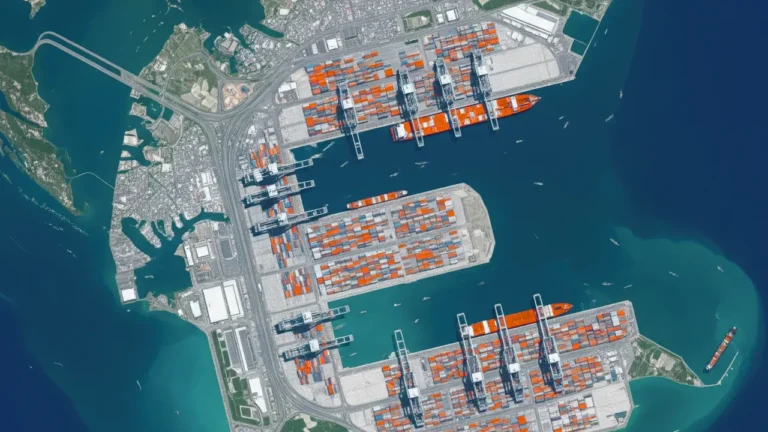
In the vast blue stretch of the Pacific Ocean, far from crowded trade routes and political power centers, a small island sits in near silence. You will not find it in most travel plans or global headlines. From above, Tinian looks calm and untouched. Dense green vegetation spreads across the land. Coral reefs hug its edges. A narrow runway cuts through the trees like a forgotten scar.
Nothing about this place suggests global importance. Nothing hints at conflict. Yet history tells a different story.
In 1945, Tinian stood at the center of one of the most decisive military operations ever carried out. The United States turned this quiet island into a launch point for B-29 bombers that flew missions deep into Japan. Those flights changed the course of the Second World War. Then the war ended, and the urgency vanished. The runways cracked under the sun. The structures fell apart. Nature reclaimed what war had built.
For decades, Tinian disappeared from global strategy. Now it is coming back, and I can tell you, when you look closely at what is happening here, it feels like watching history prepare itself for a second act.
Also Read: 2026: The World’s Biggest Megaprojects Finally Finish
Why Big Military Bases No Longer Feel Safe
For years, the United States relied on a clear and simple strategy. Build large, permanent bases in key regions. Fortify them heavily. Operate from these hubs with confidence. Places like Andersen Air Force Base in Guam, Kadena Air Base in Japan, and Ramstein Air Base in Germany became symbols of reach and control.
This model worked for decades. Now it carries serious risk.
Modern warfare has changed the rules. Countries like China have developed long-range missile systems that can strike targets thousands of kilometers away with high accuracy. Satellite surveillance tracks movement in real time. Cyber capabilities can disrupt communication and navigation systems without a single shot fired. The threat is not theoretical.
China’s Anti-Access and Area Denial strategy focuses on pushing U.S. forces away from key regions in the Pacific. Systems like the DF-21D and DF-26 missiles target fixed bases and aircraft carriers. According to reports from the U.S. Department of Defense, these systems can reach critical installations like Guam.
In the Middle East, Iran has shown a different approach. It uses proxy groups, drones, and ballistic missiles to hit U.S. positions across Iraq, Syria, and surrounding waters. These attacks often target known, fixed locations. The message is clear. Large, predictable bases attract attention. And in modern conflict, attention can lead to destruction within minutes.
A Strategy Built on Movement
To deal with this new reality, the U.S. military has changed its approach. The concept is called Agile Combat Employment. You can think of it as controlled unpredictability.
Instead of concentrating aircraft, fuel, and personnel in a few major bases, forces spread out across many smaller locations. Aircraft no longer stay in one place for long. They move frequently. They land, refuel, reload, and take off again from different airstrips.
Some of these locations include civilian airports. Others include remote strips. Some have not seen military use since World War II. The goal is simple. Make it extremely difficult for an enemy to track and target assets.
And this is exactly where Tinian becomes important again.
Tinian’s Strategic Advantage
Tinian sits in the Northern Mariana Islands, a U.S. territory in the western Pacific. On a map, it looks small. In strategic planning, it carries serious weight.
Its location offers a unique advantage. It sits close enough to support operations across East Asia and the South China Sea. At the same time, it lies far enough from immediate threat zones to reduce the risk of early strikes.
The U.S. Department of Defense has committed around 800 million dollars to develop infrastructure on the island. This investment covers multiple projects that aim to turn Tinian into a flexible support hub. Crews are upgrading the existing airport to handle military aircraft, including refueling tankers and cargo planes. Engineers are improving fuel storage, logistics systems, and rapid deployment capabilities.
But the real story lies just beyond the modern runway.
The Return of North Field
Hidden beneath layers of vegetation and decades of neglect sits North Field. This airbase once held four massive runways and supported one of the largest air operations in history.
Today, it is coming back to life. Construction teams are clearing dense overgrowth. They are restoring taxiways and rebuilding runway surfaces. New concrete replaces old war-era slabs. Modern engineering blends with historical foundations.
This is not about rebuilding a traditional base. It is about creating a flexible launch point. Aircraft can land here without warning. They can refuel, rearm, and disappear again. No permanent presence. No predictable pattern. From a strategic view, that makes Tinian far more difficult to target.
Turning Geography into an Advantage
This new approach changes how military planners think about terrain. In the past, geography limited options. Forces depended on a few strongholds. Losing one created serious problems.
Now, geography creates options. Aircraft might take off from Guam, complete a mission, and land briefly on Tinian. From there, they might move to another location entirely. Each movement adds uncertainty for any opponent trying to track them.
Smaller teams support these operations. Pilots and ground crews train to handle multiple roles. Equipment stays minimal and mobile. This creates a network of locations instead of a single point of failure.
An adversary now faces dozens of possible targets instead of a handful. Some locations stay active for only a few hours. Others serve as backups. No one can strike all of them at once.
War No Longer Happens in One Space
This shift connects to a broader concept known as Multi-Domain Operations. Modern conflict does not stay limited to land, air, or sea. It spreads across multiple domains at the same time. Space and cyberspace now play critical roles.
A cyberattack can disrupt satellite communications. That disruption can create an opening for air operations. Airstrikes can support naval movements or ground actions. Each domain influences the others. Victory no longer depends on controlling everything. It depends on creating small windows of advantage and acting quickly.
Tinian fits into this model as a support node. It does not serve as a main base. It acts as part of a wider network that shifts and adapts.
Why This Shift Matters Now
Global tensions are rising across several regions at the same time.
In the Pacific, attention focuses on Taiwan and the South China Sea. Military planners prepare for scenarios that involve high-intensity conflict between major powers.
In the Middle East, U.S. forces continue to face pressure from Iran and its allied groups. Missile attacks, drone strikes, and maritime disruptions keep the region unstable.
Each of these situations reinforces the same lesson. Fixed infrastructure remains vulnerable. The U.S. response focuses on dispersion, redundancy, and mobility. Tinian reflects this strategy in action.
This is not a local project. It connects to a global shift in military thinking.
Infrastructure Still Decides Outcomes
You might expect dramatic visuals from projects that shape global power. Tinian offers none of that. There are no skyscrapers. No massive public announcements. No global spotlight.
Instead, there are runways, fuel systems, and logistics networks. Quiet work. Yet infrastructure has always shaped warfare.
During World War II, Tinian enabled long-range bombing missions. During the Cold War, large bases showed strength and permanence. Today, smaller and flexible sites represent survival and adaptability.
These structures do not aim to impress. They aim to endure.
A New Form of Deterrence
Deterrence has changed. In the past, it relied heavily on visible strength. Large bases, powerful fleets, and clear signals of force.
Now it depends on resilience. Tinian sends a subtle message. Even if an attack hits major bases, operations will continue. Aircraft will keep flying. Missions will not stop.
For any opponent, this creates uncertainty. And uncertainty forces caution. No military wants to strike without confidence in the outcome. When targets keep shifting, that confidence drops.
Also Read: The World’s Tallest Dam and the Country That Can’t Afford It
The Island Steps Back Into History
Tinian’s story feels almost cyclical. It rose to global importance during one of the most intense conflicts in history. Then it faded into quiet obscurity. Now it returns, shaped by a completely different kind of warfare.
This time, it does not stand as a symbol of overwhelming power. It stands as a tool for survival.
Local communities raise valid concerns about environmental impact and resource strain. Strategic planners focus on positioning and readiness. Both perspectives matter, and the conversation continues.
Still, one fact remains. The world is entering a period of rising competition. Conflicts may not stay contained to one region. Pressure can build in multiple places at once.
In that kind of environment, even a small island can carry global weight. Tinian proves that the most important projects are not always the largest or the most visible.
Sometimes, they are the ones that wait quietly, ready to matter again.