Russia’s $300 Billion Arctic Highway and the Northern Sea Route
In 1878, the Swedish Finnish explorer Adolf Erik Nordenskiöld entered seas most sailors refused to cross. Ice locked his ship in place. Crews rationed food. Temperatures dropped to survival limits. They waited almost a year before completing the Northeast Passage. That journey proved the Arctic could serve as a corridor between continents, but it also revealed how unforgiving the region could be. I still remember reading his expedition journals and feeling the weight of isolation in each line, as if the cold itself had words.
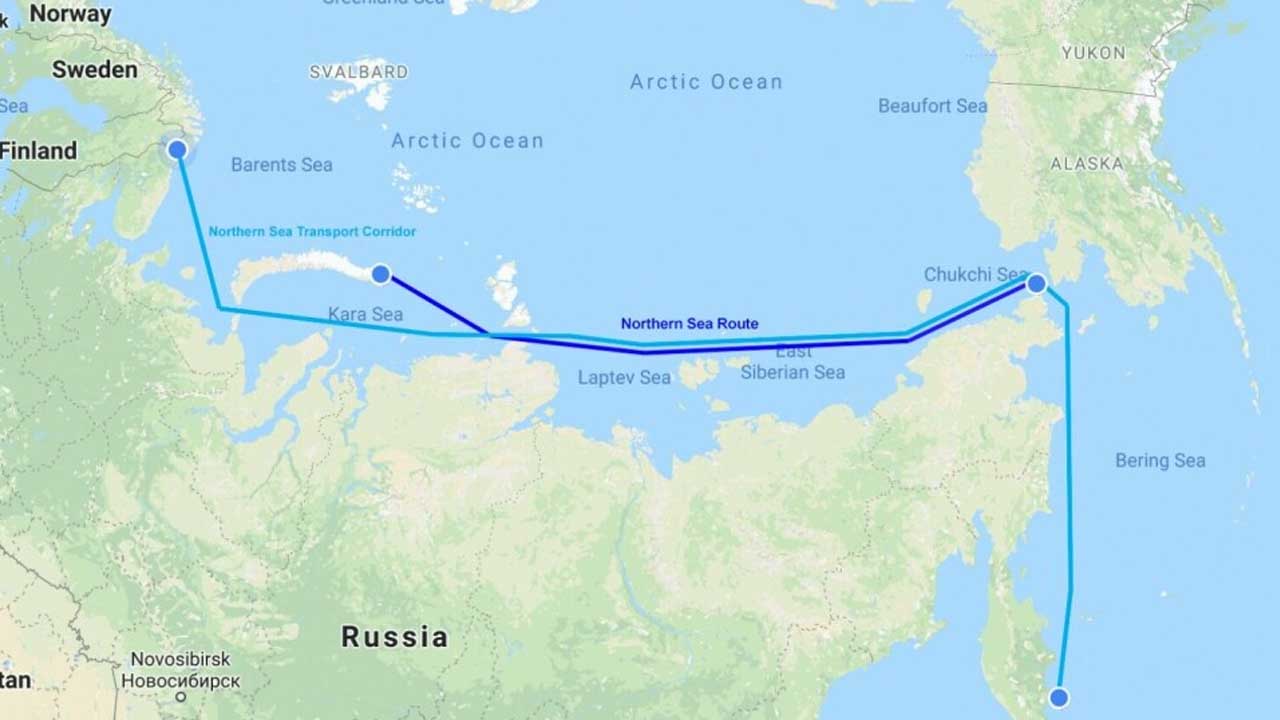
More than 140 years later, Russia is attempting something far larger than any single voyage. The country has committed roughly $300 billion toward turning the Northern Sea Route into a permanent global shipping artery that links Asia and Europe across the Arctic Ocean. Russia wants this corridor to function as a strategic alternative to the Suez Canal and unstable southern routes. You now see the same sea that trapped Nordenskiöld carrying liquefied natural gas carriers and container vessels through waters once labeled unnavigable.
From Exploration to Modern Shipping Reality
For centuries, Arctic exploration blended ambition with tragedy. Crews searched for maps that did not exist. Ice crushed wooden hulls. Storms erased rescue attempts. Nordenskiöld’s 1878 to 1879 expedition confirmed navigation was possible, but only under extraordinary endurance. Even after that success, commercial shipping remained impossible due to persistent pack ice, the lack of ports, no rescue capability, and no navigation support.
The global shipping revolution shifted elsewhere. The opening of the Suez Canal in 1869 reduced travel distances between Europe and Asia by thousands of miles and cemented southern trade corridors. Arctic dreams faded and remained shelved until climate shifts began altering the region’s ice cover.
The Arctic now warms roughly four times faster than the global average according to the National Snow and Ice Data Center. Satellite measurements confirm summer sea ice coverage continues to shrink year after year. Some climate models forecast largely ice free Arctic summers in the 2040s. Shipping companies began testing limited transits in the late 2000s, supported almost entirely by Russian icebreakers.
What once required heroic survival now requires engineering.
Also Read: Inside California Forever: Billionaires’ $900M Secret City
Why the Northern Sea Route Matters
A container voyage from Shanghai to Rotterdam through the Suez Canal typically requires about 40 days under optimal conditions. The Arctic route shortens that journey to roughly 26 days. That difference eliminates nearly two weeks at sea. You save fuel, reduce crew costs, lower carbon output, and shrink shipping insurance risks tied to congestion bottlenecks.
After the Suez blockage of 2021 delayed nearly $10 billion per day in global trade, shipping operators began reassessing vulnerability across choke points. The Arctic offers route diversification rather than replacement. Shipping companies operate on redundancy. They want more than one corridor connecting major markets.
Beyond logistics, geopolitics raises the stakes. Control of long distance shipping lanes influences national power. Whoever shapes Arctic maritime regulations controls commerce across new polar trade lanes. Russia views the Northern Sea Route as both an economic asset and a strategic instrument.
Russia’s $300 Billion Arctic Strategy
In 2020, the Russian government formalized a multi decade development plan for the Arctic valued at approximately $300 billion. This investment focuses on infrastructure, energy production, shipping terminals, population settlements, airfields, communications systems, and nuclear icebreaker fleets.
Russia estimates Arctic shelf resources include more than $30 trillion in hydrocarbons, metals, and rare minerals. Energy extraction supports transport viability. Ports attract shipping, which supports settlements, airports, repairs, and communications networks that pull in further industrial development.
By 2024, cargo volumes along the Northern Sea Route reached approximately 38 million metric tons annually. Most of this volume consists of liquefied natural gas shipments from the Yamal Peninsula bound for China and other Asian clients. Russian planning targets volumes of 200 million tons annually by 2030, although analysts consider that figure optimistic under current sanctions and capital investment constraints.
Mega Projects Powering Arctic Development
The cornerstone of Russia’s Arctic expansion is large scale resource extraction supported by purpose built logistics networks.
Vostok Oil remains the largest oil development currently underway in the Arctic. Valued at approximately $150 billion, the project links multiple fields across the Taymyr Peninsula. Infrastructure includes airports, power plants, hundreds of kilometers of pipelines, port terminals, and fifteen newly built worker settlements created on reinforced permafrost platforms. Vostok Oil aims to reach production capacity of about 2 million barrels per day once fully operational.
Sanctions slowed components procurement and financing flows. Extreme cold limited annual construction windows. Despite these obstacles, Russian firms continue to expand infrastructure through domestic supply chains and Asian technical partnerships.
Yamal LNG provided proof Arctic shipping could succeed. Operational since 2017, the facility overcame permafrost instability using pile reinforced foundations and cryogenic storage tanks designed for subzero pressure stability. Ice class LNG carriers now sail year round between Yamal and East Asia using nuclear icebreaker escorts. Annual output reaches roughly 17 million tons of liquefied gas shipped primarily to China and South Korea.
Arctic LNG 2 expands that success. Construction began in 2019. Sanctions forced delays, yet by early 2025 satellite tracking confirmed several LNG shipments successfully delivered to China. Once fully active, Arctic LNG 2 is designed to exceed 19 million tons of LNG production annually. Floating construction platforms reduce exposure to thawing ground instability, a chronic Arctic engineering risk.
Each of these projects feeds cargo volume growth on the Northern Sea Route.
Nuclear Icebreakers Anchor the Highway
None of this shipping remains possible without nuclear powered icebreakers. Russia operates the world’s only civilian nuclear icebreaker fleet. As of 2025, seven vessels remain active, including the Arktika class heavy icebreakers capable of cutting through ice nearly three meters thick. Four more lay under construction within Russian shipyards.
Nuclear reactors allow icebreakers to operate continuously for years without refueling. Diesel vessels cannot sustain that endurance in Arctic conditions. Icebreakers escort convoys, maintain shipping lanes, conduct emergency rescues, and provide navigational support when severe ice compression threatens hull integrity.
Rosatom manages fleet operations and frequently cooperates with Chinese shipping firms to schedule Arctic convoys. Without continuous nuclear escort capacity, winter navigation would remain impossible, restricting Arctic operations to brief summer seasons.
Ports, Railways, and Connectivity
Shipping alone could never transform the Arctic into a functioning highway. Russia continues upgrading port gateways at both ends of the route.
Murmansk now receives new deep water terminals, expanded rail connections, and year round logistics depots tied to European bound cargo flows. Vladivostok anchors the Pacific end of the route, increasingly integrated with Asian feeder networks serving Japan, South Korea, and China.
Rail infrastructure bridges inland industrial centers to Arctic ports, extending cargo sourcing beyond coastal extraction zones. Cold climate sensor networks now track ice movement, hull pressure effects, and storm systems in near real time.
Russia and regional partners also continue laying a 12,000 kilometer trans Arctic undersea fiber cable, connecting Asia to Northern Europe. When completed, this cable reduces digital latency across continents and supports operational coordination for maritime logistics and communications.
Tour operators have introduced high end Arctic cruises for Chinese and European travelers, offering polar experiences at premium price levels. Tourism volume remains small, but infrastructure built for tourism indirectly supports year round aviation services and port upgrades.
Sanctions and the Search for Capital
Western sanctions since 2014, followed by sweeping trade restrictions in 2022, curtailed most European and North American investment flows into Arctic development. Russia shifted financing pipelines toward China, India, Middle Eastern sovereign funds, and state backed institutions.
China describes itself as a “near Arctic nation” and incorporates the Northern Sea Route into its Polar Silk Road program aligned with broader Belt and Road corridors. Chinese state shipping enterprises launched container routes dubbed the Arctic Express connecting Dalian and Qingdao to Rotterdam.
International legal disputes continue over routing authority. Russia asserts regulatory jurisdiction based on coastal economic zone interpretations under the United Nations Convention on the Law of the Sea. Several maritime nations contest these controls, arguing for international transit passage rights. The disagreements raise uncertainty for widespread multinational ship deployments.
Engineering Challenges Remain Constant
Permafrost destabilization presents enormous foundation risks. Thawing ground alters load bearing performance beneath infrastructure. Designers rely on thermosiphon cooling systems, deep pile foundations, and floating modular construction platforms to counter subsidence effects.
Weather volatility increases navigation hazards. Arctic storms strengthen as sea ice retreats. Free drifting ice floes compress unpredictably. Communication and rescue coverage remains sparse outside escorted shipping convoys.
Insurance premiums remain higher than traditional routes. Many shipping firms avoid Arctic voyages without government indemnities or high revenue contracts such as LNG delivery agreements.
Also read: The $1 Billion Gamble to Rebuild the Astrodome | Will Houston’s Icon Rise Again?
The Arctic Highway’s Uncertain Future
Russia’s Arctic highway already operates as a functioning route rather than a distant concept. LNG shipments reached Asia. Nuclear escorts maintain winter corridors. Ports expand steadily. Fiber networks near completion. Resource extraction volumes rise annually.
Yet full commercial credibility remains unsettled. Extreme environmental volatility, unresolved legal disputes, and ongoing sanctions restrict widespread adoption. Container fleets hesitate to invest in ice class upgrades without stable regulatory clarity and predictable insurance frameworks.
I have studied polar infrastructure long enough to recognize the dual nature of this effort. I see extraordinary engineering courage standing against one of the harshest environments humans have ever confronted. I also see fragile economics demanding constant political stability that the Arctic region has never sustained.
The Northern Sea Route may never replace Suez or Panama. It may operate instead as a strategically vital supplement that serves specialized cargo flows tied to Arctic energy exports and selective Asia Europe container trade.
You now stand at the moment when the world decides how far that expansion will go. Russia’s Arctic highway has crossed the threshold between exploration and operation. The next decade will determine if the route matures into a dependable artery of global trade or remains an audacious industrial experiment carving tracks across drifting ice.