
Is Saudi Arabia’s $500 Billion Megacity Failing
A Vision That Felt Like the Future
In 2017, Saudi Arabia introduced NEOM, a project so ambitious that many people compared it to science fiction. The plan promised a $500 billion megacity rising from empty desert along the Red Sea. Leaders presented a bold idea. A city without cars. Zero emissions. Artificial intelligence managing daily life. At the center stood The Line, a 170-kilometre-long mirrored structure designed to house millions of residents in a completely new urban model.
The concept captured global attention. Architects, investors, and governments studied it closely. It challenged everything we know about how cities function. I remember looking at those early visuals and thinking this might redefine urban life forever.
Also Read: How Saudi Arabia Makes Water Where None Should Exist
The Global Spotlight and the Promise of Vision 2030
NEOM became the flagship project of Saudi Arabia’s Vision 2030. The kingdom wanted to reduce its dependence on oil and build a diversified economy powered by tourism, technology, and advanced industries. The Line acted as the centerpiece of that strategy.
Designers planned two parallel skyscrapers, each rising 500 meters high. They stretched across the desert in a straight line, covered in reflective glass. The design eliminated roads and cars completely. Every daily need would sit within a five-minute walk. A high-speed underground rail system would connect the entire city end to end in just twenty minutes.
These ideas turned NEOM into one of the most talked-about construction projects in modern history. Global firms like McKinsey, Boston Consulting Group, and leading architectural studios became involved. The Public Investment Fund backed it with massive financial power. Yet behind the polished visuals, serious challenges started to emerge.
Early Reality Check on the Ground
Nearly a decade later, the gap between vision and reality has become impossible to ignore. Saudi Arabia has already spent around $50 billion on NEOM. That figure exceeds the GDP of several small nations. Despite that investment, satellite imagery and on-site reports show limited large-scale progress across the full length of The Line.
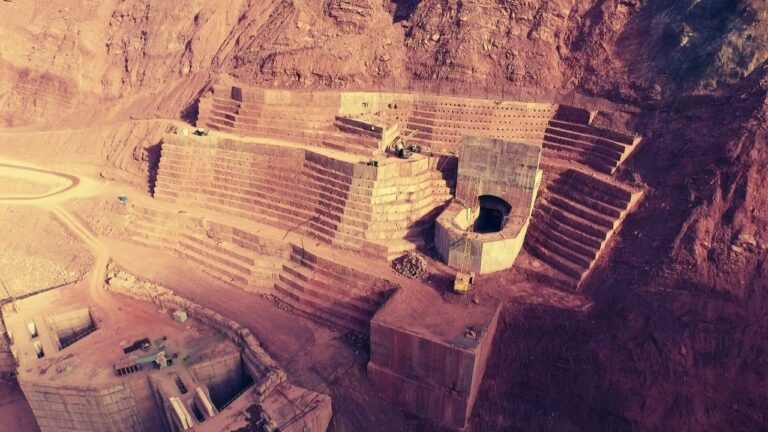
Construction activity remains concentrated in specific zones rather than spread across the full 170 kilometres. Large sections of desert still sit untouched. Early excavation created a massive trench that stretches for over 100 kilometres, but active development continues only in selected areas.
This raises a serious question. Can a project of this scale maintain momentum over such a vast area without continuous, massive funding?
The Cost Problem No One Could Ignore
As planning moved forward, cost estimates began to climb sharply. Some internal projections suggested that completing The Line in its full form could reach $8.8 trillion. That number exceeds the combined annual GDP of the Middle East and Africa. Even if the final cost comes lower, the scale remains staggering.
Mega projects often face rising costs, but NEOM operates on a different level. The project requires new infrastructure, new supply chains, and new technologies built from scratch. It is not an expansion of an existing city. It is a completely new system.
This created pressure on financial planners. The original economic assumptions relied on strong long-term returns, high population growth, and continuous global investment. Over time, those assumptions started to look overly optimistic.
Economic Shifts Changed the Equation
Saudi Arabia’s economy does not exist in isolation. It depends heavily on global energy markets. Oil prices fluctuate, and those fluctuations directly affect national spending.
The Public Investment Fund manages NEOM funding carefully. It does not spend its entire wealth at once. It invests globally and uses returns to finance projects. That approach limits how much capital flows into NEOM each year.
As global conditions shifted, financial discipline became more important. Authorities had to prioritize projects with clearer returns and manageable risks. NEOM, in its full scale, began to look financially difficult to sustain under those constraints.
Scaling Down The Line
By late 2024, reports confirmed a major shift in strategy. Instead of building the full 170 kilometres immediately, developers decided to focus on a smaller section. Current plans aim to complete around 2.4 kilometres by 2030. That represents less than two percent of the original vision.
Population targets also changed. Early projections promised millions of residents by 2030. Those numbers have now been reduced significantly.
This shift reflects a more practical approach. Build a working model first. Prove that it functions. Expand later if it succeeds. That strategy reduces risk but also signals that the original timeline was too aggressive.
Internal Changes and Organizational Reset
Large-scale projects often face leadership changes during difficult phases. NEOM followed the same pattern. In late 2024, CEO Nadhmi al-Nasir stepped down after years of leading the project. Aiman al-Mudaifer took control and began restructuring operations.
The organization reduced its workforce. Thousands of international employees lost their roles. Offices scaled down. In early 2025, NEOM did not issue major new construction contracts for the first time since its launch.
These actions indicate a clear reset. The project moved from aggressive expansion to careful reassessment.
Impact on Other Mega Projects
The changes did not stop at The Line. Other major developments within NEOM also faced adjustments. Trojena, the planned mountain resort set to host the 2029 Asian Winter Games, experienced delays and scope reductions. Some hotel projects paused completely.
Oxagon, the industrial and port hub, also underwent review. Authorities examined its scale, timeline, and expected returns.
Across Saudi Arabia’s giga-project portfolio, priorities shifted. Decision-makers focused on deliverability. Projects that could show measurable progress gained attention. Others faced cuts or delays.
Financial Audits Revealed the Full Picture
Audits provided deeper insight into the situation. Reports indicated that around $44 billion in project value had been reassessed or written down. A significant portion related directly to NEOM developments.
Trojena accounted for a large share of those adjustments. Oxagon added billions more. Infrastructure costs rose beyond initial estimates. These findings confirmed what many analysts suspected. The original plans underestimated complexity and cost.
Time Pressure from Global Events
Saudi Arabia faces fixed international deadlines. The country will host the Asian Winter Games in 2029, Expo 2030 in Riyadh, and the FIFA World Cup in 2034. These events require massive infrastructure investment, including transport systems, hotels, and stadiums.
Eleven new stadiums alone will demand significant resources. With these commitments approaching, authorities must allocate funding carefully.
This creates direct competition for capital. NEOM must now compete with projects that have clear deadlines and global visibility.
Engineering Complexity Behind The Line
The Line presents a unique engineering challenge. It is not a typical city built in phases. It is a single continuous structure designed to function as one system.
Reducing its size creates technical complications. Changes affect transportation systems, energy distribution, and structural design. Even small adjustments can ripple across the entire concept.
This makes scaling down far more complex than simply building less. Engineers must rethink how each component works together.
What Is Actually Moving Forward
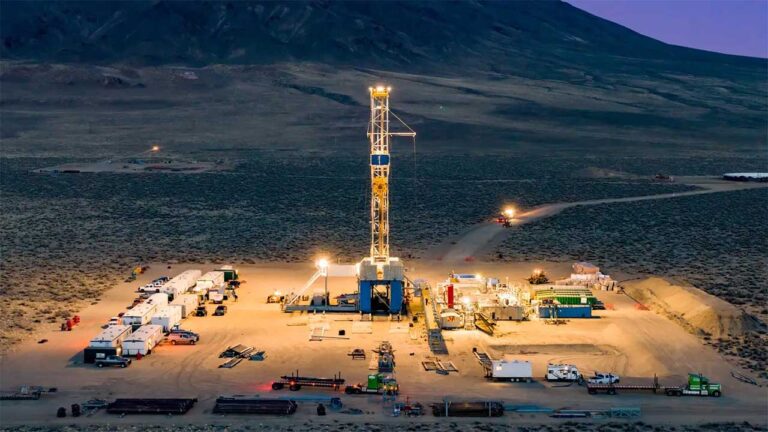
NEOM has not stopped. It has shifted focus. In February 2026, the project signed a $5 billion agreement with DataVolt to build a renewable-powered data center at Oxagon. This represents real infrastructure, not conceptual design.
Developments in green hydrogen, logistics, and advanced manufacturing continue. These sectors align closely with Saudi Arabia’s economic goals. They offer clearer returns and practical value.
At the same time, updates on The Line remain limited. The conversation has moved away from mirrored skyscrapers and toward energy, data, and industry.
A Clear Comparison Within Saudi Arabia
Another developer, Red Sea Global, provides an important contrast. It delivered its first phase of luxury resorts on time and within controlled budgets. These projects show tangible results. Visitors can see them, use them, and generate revenue.
This comparison matters. Saudi Arabia needs projects that deliver before global events begin. Execution now carries more weight than ambition.
So, Is NEOM Failing
The answer is not simple. NEOM is not collapsing, but it is not progressing as originally promised. It is evolving under pressure.
The full vision of The Line appears paused in its original form. A smaller, phased version has taken its place. Development continues across the broader region, especially in industrial and energy sectors.
This shift reflects a move toward realism. It reduces risk and increases the chance of long-term success.
The Bigger Lesson Behind NEOM
Mega projects rarely unfold exactly as planned. History offers many examples. Dubai faced major slowdowns during financial crises. Large cities often grow in stages rather than through one massive push.
NEOM may follow a similar path. It may start smaller, prove its value, and expand over time. The ambition to reshape Saudi Arabia’s economy remains strong.
The key question now focuses on execution. Can a smaller version succeed and attract real residents, businesses, and investors?
Also Read: Why MrBeast Built His First Theme Park in Saudi Arabia
What Stands Today Matters Most
NEOM started as a bold promise. It aimed to redefine how cities function. That ambition still exists, but reality has reshaped the timeline and scale.
What stands on the ground today may not match the original vision, but it carries more weight than any rendering. In mega projects, reality defines success.