
Duqm Port: Why Every Global Superpower Wants a Strategic Foothold Outside the Strait of Hormuz
Once a remote fishing village along Oman’s central coastline, Duqm has become one of the most strategically important infrastructure developments in the Indian Ocean. Its transformation reflects a growing geopolitical struggle involving the United States, China, India, the United Kingdom, and Japan, all of which have recognized the strategic value of this Omani port.
The reason is geography. Duqm sits on the Arabian Sea, completely outside the Strait of Hormuz, one of the world’s most important energy and shipping chokepoints. As tensions involving Iran and Western powers continue to threaten maritime trade, access to a major port beyond the strait offers something increasingly valuable: strategic independence.
In March 2026, that strategic importance became impossible to ignore when Iranian missiles struck Duqm, suspending port operations and raising questions about the security of the international military and commercial interests established there. The incident exposed Oman’s difficult diplomatic position and demonstrated why so many global powers have invested in securing a presence at this location.
Why Duqm’s Location Makes It So Important
To understand Duqm’s strategic importance, it is necessary to examine the role of the Strait of Hormuz in global energy security.
At its narrowest point, the Strait of Hormuz measures approximately 33 kilometers wide. Around 21 million barrels of oil pass through it every day, representing roughly 20 percent of the world’s total oil supply. Major Gulf energy exporters, including Saudi Arabia, Kuwait, Iraq, the United Arab Emirates, and Qatar, depend on this maritime passage to reach international markets.
Although some countries have alternative export routes, existing pipelines cannot collectively replace the strait’s importance. Any serious disruption would therefore affect far more than Iranian oil exports. It could threaten energy shipments from across the Persian Gulf, sending shockwaves through international markets.
Also Read: The $25B Land Route Replacing the Red Sea
The problem extends beyond commercial shipping. Military forces operating inside the Persian Gulf depend on the same narrow passage to reach the wider Indian Ocean. If Iran closes the strait or military conflict makes navigation too dangerous, naval vessels, supply operations, and other military assets could become effectively trapped inside the Gulf.
Duqm offers a way around this geographical vulnerability.
Located approximately 550 kilometers south of Muscat, on Oman’s Arabian Sea coastline, the port provides direct access to the Indian Ocean without requiring ships to enter the Persian Gulf or transit the Strait of Hormuz. Vessels operating from Duqm can reach international shipping routes through the Arabian Sea and beyond without depending on the contested passage.
This positioning gives the port considerable military and commercial value. During the escalating US-Iran tensions in April 2026, when the United States moved to restrict shipping through the Strait of Hormuz, the strategic advantage of maintaining assets outside the strait became particularly apparent.
For military planners, the question was no longer simply who controlled the Gulf. It was which countries had access to facilities beyond it. Duqm provided one important answer.
Inside Oman’s Multibillion-Dollar Duqm Development
Duqm is considerably more than a conventional commercial port. It forms the centerpiece of a Special Economic Zone covering approximately 2,000 square kilometers, an area roughly three times the size of Singapore.
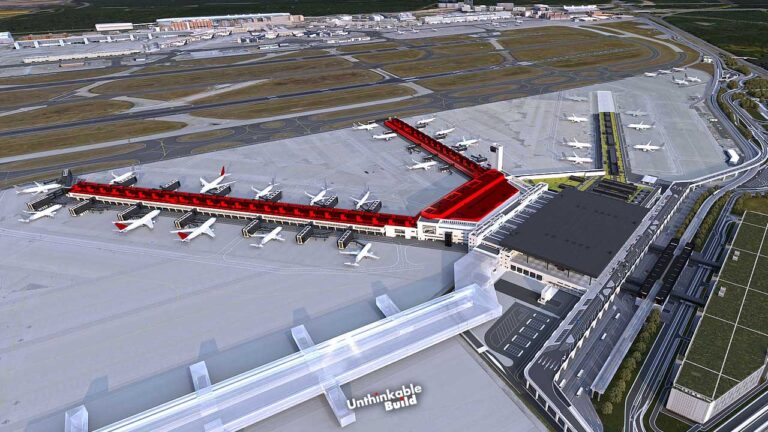
The development combines maritime infrastructure, industrial facilities, energy projects, and residential areas into a single economic zone. Its main components include a deep-water commercial terminal, a large ship repair and dry dock complex, oil storage facilities, and industrial land for manufacturing and energy-related investments.
One of its most important facilities is Asyad Drydock, among the largest ship repair facilities in the region. It can accommodate vessels of up to 180,000 deadweight tonnes, making it suitable for servicing some of the world’s largest commercial and naval vessels.
The port’s industrial expansion also includes construction projects worth more than $5 billion. These developments are intended to establish Duqm as a center for maritime services, manufacturing, energy processing, and international trade.
The $6 Billion Refinery and Strategic Oil Reserves
The Duqm Refinery and Petrochemical Industries Company is one of the economic zone’s anchor projects. Established as a joint venture between Oman and Kuwait, the refinery represents an investment of approximately $6 billion and has a processing capacity of 230,000 barrels per day.
Its infrastructure is connected to the Ras Markaz crude oil storage terminal through an 81-kilometer pipeline. Ras Markaz can accommodate up to 10 million barrels of crude oil, providing substantial storage capacity outside the Strait of Hormuz.
Together, these facilities give Oman an important oil processing and storage system with direct access to the Arabian Sea. This creates an alternative for handling and exporting petroleum resources without requiring every shipment to pass through the Persian Gulf’s most vulnerable maritime chokepoint.
Industrial Expansion and the Worker City
Beyond shipping and oil infrastructure, the Special Economic Zone includes industrial land for manufacturing and several green hydrogen and ammonia projects under development.
A residential development known as Mazun has also emerged to support the growing workforce. It accommodates tens of thousands of construction workers and engineers involved in the region’s expanding industrial projects.
The scale of this transformation is remarkable. Within approximately fifteen years, an isolated coastal settlement has developed into an industrial and logistics center supporting a large workforce and billions of dollars in infrastructure investment.
However, Duqm’s most unusual characteristic is not simply the size of its facilities. It is the number of major international powers seeking access to them.
Why the United States, China, India, and the UK Want Duqm
Most major port developments are closely associated with one dominant foreign investor or strategic partner. Duqm is different. Several global powers have established interests there, but their objectives are not necessarily aligned.
Each country views the port through a different strategic lens, ranging from naval access and regional influence to energy security and industrial investment.
United Kingdom: A Permanent Naval Logistics Presence
The United Kingdom established its Joint Logistics Support Base at Duqm in 2017 under a 37-year lease. The facility was expanded in 2020 through an additional investment of £23.8 million.
The base can accommodate major Royal Navy vessels, including Queen Elizabeth-class aircraft carriers and nuclear submarines. This gives Britain a long-term logistics presence in the Indian Ocean, outside the Strait of Hormuz.
For the Royal Navy, Duqm provides an important location for supporting operations across the wider region without relying exclusively on facilities inside the Persian Gulf.
United States: Access Beyond the Persian Gulf
The United States has also secured access to Duqm through an agreement allowing regular use of the port by the US Navy.
Its strategic value is straightforward. American military assets operating from locations inside the Persian Gulf could face serious logistical difficulties if the Strait of Hormuz became inaccessible. Duqm provides an alternative location from which US forces can operate, receive supplies, and maintain their regional presence.
Rather than depending entirely on military facilities located inside the Gulf, Washington gains access to a strategic position on the Indian Ocean side of the chokepoint.
This arrangement strengthens American operational flexibility during periods of heightened regional tension.
India: A Strategic Position in the Arabian Sea
India announced in 2018 that it would use Duqm for the maintenance of its military vessels.
The arrangement gives the Indian Navy access to an important support facility in the Arabian Sea, complementing India’s presence at Iran’s Chabahar port on the opposite side of the Gulf of Oman.
The two locations offer India valuable geographical options. Chabahar provides access to Iran and potential connections toward Central Asia, while Duqm offers a maintenance and logistical location outside the Strait of Hormuz.
For New Delhi, access to both facilities supports a broader regional strategy focused on maritime security and commercial connectivity.
China: A $10 Billion Industrial Ambition
China’s involvement reflects a different set of priorities.
Beijing announced plans for approximately $10 billion in investment in the Sino-Oman Industrial Park within Duqm’s Special Economic Zone. The proposed development includes port-related facilities, manufacturing operations, and a residential district.
However, progress has not matched the original scale of the announcement. Several projects have moved slowly, with some delayed or reduced because of commercial constraints.
Despite these challenges, China’s involvement remains strategically significant. Even a partial industrial presence provides Beijing with an economic foothold in a location that has attracted considerable Western military interest.
Duqm therefore offers China an opportunity to strengthen its commercial relationship with Oman while maintaining a presence in a strategically important part of the Middle East.
Japan: Protecting Energy Security
Japan has also explored cooperation with Oman centered on Duqm.
Its interest is closely connected to energy security. Japan depends heavily on Middle Eastern crude oil, making any disruption to shipping through the Strait of Hormuz a serious concern.
Cooperation involving Duqm could help strengthen alternative energy infrastructure and provide additional resilience if the main maritime route becomes inaccessible.
For Tokyo, the port represents an opportunity to support a more secure regional energy supply system.
The result is an unusual concentration of international interests. The United States, China, India, the United Kingdom, and Japan all recognize Duqm’s strategic importance, even though their objectives differ considerably.
Oman’s Difficult Geopolitical Balancing Act
Hosting several major powers might appear to be an enormous diplomatic advantage for Oman. However, it also creates a complicated foreign policy challenge.
Oman is a relatively small Gulf state that has traditionally maintained a neutral and pragmatic approach to international relations. Rather than aligning exclusively with one major power, it has built its foreign policy around maintaining relationships with competing countries.
This approach has allowed Muscat to play an important diplomatic role in the region.
Oman brokered the secret negotiations that helped lead to the Iran nuclear deal. It also maintained diplomatic relations with Tehran throughout successive rounds of Western sanctions.
At the same time, Oman signed military access agreements with the United States and pursued military cooperation with Iran.
This balancing strategy is not simply a diplomatic preference. It is central to Oman’s security and regional influence. Maintaining communication with competing powers helps the country avoid becoming directly involved in conflicts that could threaten its economy and stability.
However, Duqm has made this balancing act increasingly difficult.
The March 2026 Iranian Missile Strike
The Iranian missile strike on Duqm in March 2026 exposed the risks associated with hosting competing international interests at a single strategic location.
The port was not an isolated commercial facility. It had become an important logistics center for Western naval forces, a maintenance location for India, and an industrial investment destination for China.
The reported strike resulted in casualties and the suspension of port operations.
Its significance extended beyond the immediate physical damage. By striking Duqm, Iran sent a message to the international powers that had established military and commercial interests along Oman’s coastline.
The diplomatic response demonstrated the difficult position facing Muscat. Oman did not recall its ambassador from Tehran or abandon its diplomatic approach. Instead, it sought a ceasefire through diplomatic channels.
Iran’s official statement maintained that it had not ordered an attack on Omani territory, even as strikes continued.
For Oman, responding through direct confrontation would have risked damaging relationships that are essential to its regional position.
The country’s geographical circumstances make the situation even more complicated. Parts of the Strait of Hormuz’s narrowest shipping corridor pass through waters where Oman’s location gives it both strategic leverage and considerable vulnerability.
The United States also depends on Omani cooperation for its regional maritime strategy, while China has significant commercial ambitions in the country. At the same time, Oman remains an important diplomatic channel to Iran.
Consequently, Muscat finds itself balancing several competing relationships while dealing with the consequences of military escalation.
There is also a paradox in this situation. Because so many major powers have invested in Duqm’s stability, each has an interest in preventing the port from collapsing or becoming permanently unusable.
However, having strategic interests in a location does not automatically guarantee its protection. The March 2026 strike demonstrated that even a port supported by multiple international powers remains vulnerable to regional conflict.
Why Duqm Matters to the Future of Global Trade and Security
Duqm’s transformation illustrates how geography can turn a relatively isolated coastline into an international strategic asset.
Thirty years ago, the area was primarily a fishing settlement. Its residents depended on the Arabian Sea, seasonal winds, and local fishing grounds. Today, the same coastline accommodates major naval vessels, industrial developments, oil infrastructure, and international military logistics operations.
The port’s importance is not based on its current position among the world’s largest shipping hubs. Duqm is not yet a dominant global logistics center, and its commercial development remains ongoing.
Instead, analysts view it as a supplementary strategic node that improves regional resilience rather than fundamentally reshaping global trade.
That distinction is important. Duqm does not need to replace major ports or become a global shipping giant to justify its strategic value. Its location outside the Strait of Hormuz is enough to make it valuable when the region’s main maritime routes face disruption.
For the United States and the United Kingdom, it provides additional naval access. For India, it offers a forward maintenance and logistics position. For China, it represents an industrial foothold and an opportunity to deepen economic ties with Oman. For Japan, it contributes to the broader challenge of protecting energy supplies.
All these interests converge at one location because they share a common geographical concern: the vulnerability of the Strait of Hormuz.
Also Read: The $16B Railway That Handed China Southeast Asia
Duqm’s rise from a remote fishing village to a strategically contested international port reflects the growing importance of alternative maritime access in an increasingly uncertain geopolitical environment.
Its deep-water facilities, $6 billion refinery, 10-million-barrel oil storage capacity, industrial zone, and international naval agreements have transformed it into much more than an infrastructure development.
Yet its greatest advantage remains geographical. By providing access to the Arabian Sea without requiring passage through the Strait of Hormuz, Duqm offers something that conventional Gulf ports cannot easily replicate.
The involvement of the United States, China, India, the United Kingdom, and Japan demonstrates how seriously major powers view this advantage. But the Iranian missile strike also highlights the risks of placing so many competing interests in one strategically exposed location.
Duqm may not yet dominate global trade, but its value lies in the resilience it offers when established routes become vulnerable. As long as the Strait of Hormuz remains a potential flashpoint, this Omani port will continue to attract international attention.
The fishing village has become a meeting point for global strategic ambitions, and its future will depend on whether Oman can preserve the delicate balance that made its transformation possible.