

China’s Hidden Clause in Nigeria’s $5 Billion Railway Deal
Nigeria’s railway revival represents one of Africa’s most ambitious infrastructure transformations, promising to reconnect major cities, reduce freight costs, and modernize a transport system weakened by decades of neglect. Much of this effort has been financed by China, whose loans and construction companies have helped deliver new railway lines across the country. Yet the projects have raised a difficult question: how much financial and legal leverage does China gain in exchange for building Nigeria’s infrastructure?
The issue extends beyond the cost of railway construction. Loan agreements reportedly include provisions that may allow Chinese lenders to pursue certain Nigerian government assets through international arbitration if the country defaults. At the same time, Nigeria faces substantial debt-servicing obligations while continuing to fund new railway projects.
The result is a complicated trade-off between immediate economic development and long-term financial exposure. Nigeria is gaining modern railway infrastructure that its economy urgently needs, but the terms used to finance that transformation have sparked debate over sovereignty, debt sustainability, and the balance of power between borrower and lender.
Also Read: The Impossible Railway Bridge Built 359 Metres Above the Himalayas
Nigeria’s Railway System: From Colonial Extraction to National Decline
Nigeria’s railway network originated under British colonial rule in the late nineteenth century. Beginning in 1898, railway construction was designed largely to move agricultural products, minerals, and other resources from the interior toward coastal ports for export. Rather than creating an integrated transport system centered on domestic economic needs, the network primarily served the requirements of the colonial economy.
When Nigeria gained independence, it inherited this infrastructure. However, decades of insufficient investment and maintenance gradually weakened the railway system. By the early 2000s, Nigeria had more than 3,500 kilometers of railway lines on paper, but much of the network had fallen into disrepair.
Train speeds averaged approximately 45 kilometers per hour, making rail travel slow and unreliable. Journeys that should have taken hours could consume an entire day. As railway services deteriorated, businesses and individuals increasingly depended on roads to transport passengers and goods across the country.
The consequences extended throughout the economy. A country with major agricultural, industrial, and commercial centers lacked the reliable transport connections needed to move goods efficiently between them. Rebuilding the railway network therefore became more than an infrastructure priority; it was a necessary step toward reducing the costs associated with Nigeria’s fragmented transport system.
Why Nigeria Depends So Heavily on Road Freight
More than 90 percent of Nigeria’s freight moves by truck, placing enormous pressure on a road network that was not designed to handle such volumes. Containers, agricultural products, fuel, and other essential goods must travel by road, often through congested urban areas and across long distances.
Lagos illustrates the problem particularly clearly. As a major commercial and maritime gateway, its port generates substantial freight traffic. Trucks can spend several days waiting to leave the terminal, delaying deliveries and increasing transportation costs.
These delays affect more than shipping companies. Businesses must absorb additional expenses, which can eventually be passed on to consumers. The impact is especially significant in a country where more than 40 percent of the population lives below the poverty line.
Rail transport offers a potential alternative. Moving one ton of goods by truck costs roughly four times as much as transporting the same weight by rail, according to the figures cited in the original account. Across a large economy, that difference can influence the competitiveness of manufacturers, the profitability of agricultural businesses, and the price of everyday goods.
Nigeria’s railway problem, therefore, is not a lack of demand for transport. It is the absence of an efficient system capable of meeting that demand at a reasonable cost.
Why China Became Nigeria’s Railway Partner
China emerged as a major partner because it could combine infrastructure financing, engineering expertise, equipment, and construction services into a single package. Between 2008 and 2019, China built an average of 5,400 kilometers of railway annually, creating an extensive ecosystem of experienced engineers, specialized equipment suppliers, and state-backed financial institutions capable of supporting large-scale projects.
For Nigeria, this model offered a way to rebuild its railway network without having to assemble separate financing and construction arrangements for every project.
The financing structure generally involves China’s Export-Import Bank providing loans while Chinese companies undertake design and construction. Under the arrangement described in the original account, Nigeria contributes approximately 15 percent of project costs, while Chinese financing covers the remainder. Interest rates are reported at 2.5 to 3 percent, with repayment periods extending to 20 years.
The partnership also carries strategic significance for China. Nigeria is Africa’s most populous country and occupies an important position on the continent’s Atlantic coast. Its ports, commercial centers, and transport corridors make it a valuable partner for a country that has expanded its economic presence across Africa over the past two decades.
For Nigeria, Chinese financing offers access to infrastructure that might otherwise take years longer to develop. For China, railway contracts create opportunities for its construction companies, engineering suppliers, and financial institutions.
The interests of the two countries overlap, but they are not identical. Nigeria needs affordable, dependable infrastructure that supports domestic economic growth. China seeks repayment, commercial opportunities, and stronger economic relationships. How successfully the partnership serves both sides depends partly on the projects’ performance and partly on the terms governing the loans.
The Sovereignty Waiver and Nigeria’s Debt Debate
One of the most contentious aspects of Nigeria’s Chinese-financed railway projects concerns the legal provisions included in loan agreements.
The original account describes a sovereignty waiver clause that could allow Chinese lenders to pursue certain Nigerian government assets through international arbitration if Nigeria defaults. Such provisions raise concerns because they can affect the legal protections available to a sovereign borrower when a financial dispute arises.
However, the existence of a waiver does not automatically mean that a lender owns the railway infrastructure or can seize any Nigerian government asset at will. The precise consequences depend on the wording of the agreement, the assets covered, the applicable law, and the relevant enforcement procedures.
Sovereign immunity provisions and arbitration arrangements are not unique to Chinese lending. International creditors commonly seek contractual protections when extending large loans. From a lender’s perspective, these safeguards help establish how disputes will be resolved and what remedies may be available if repayment obligations are not met.
The controversy lies in the circumstances under which Nigeria accepted those terms. Critics argue that a country with urgent infrastructure needs and limited financing alternatives may have less bargaining power than a wealthier borrower negotiating from a stronger financial position.
This creates a fundamental distinction between the legal validity of a loan agreement and the broader question of whether its terms serve a country’s long-term interests.
The Cost of Servicing Nigeria’s Debt
Debt repayment adds another dimension to the debate. The original account states that more than 80 percent of Nigeria’s total bilateral debt is owed to China. It also describes government revenue as being under substantial pressure from debt servicing, claiming that nearly 84 naira out of every 100 naira in government revenue was spent servicing debt in recent years.
If accurate for the relevant period and using comparable fiscal measures, that ratio would indicate a severe constraint on public spending. Money allocated to interest and principal repayments cannot simultaneously be used for hospitals, schools, transport maintenance, or other public services.
Nevertheless, debt-financed infrastructure is not inherently damaging. Borrowing can support economic development when projects generate sufficient benefits to justify their costs. Improved rail connections may lower freight expenses, expand commercial activity, and strengthen government revenues over time.
The central challenge is ensuring that these benefits exceed the financial burden. If railway projects fail to attract enough passengers or freight, repayment obligations could become more difficult to manage. If they operate efficiently and stimulate economic growth, the infrastructure may help strengthen Nigeria’s ability to service its debts.
The long-term outcome depends not simply on how much Nigeria borrows, but on what it builds, how effectively those assets operate, and whether the resulting economic gains are distributed widely enough to support the country’s development.
Nigeria’s New Railways Are Already Changing Transport
Despite the concerns surrounding their financing, Nigeria’s new railway lines demonstrate why the government has pursued the partnership.
Abuja–Kaduna Railway
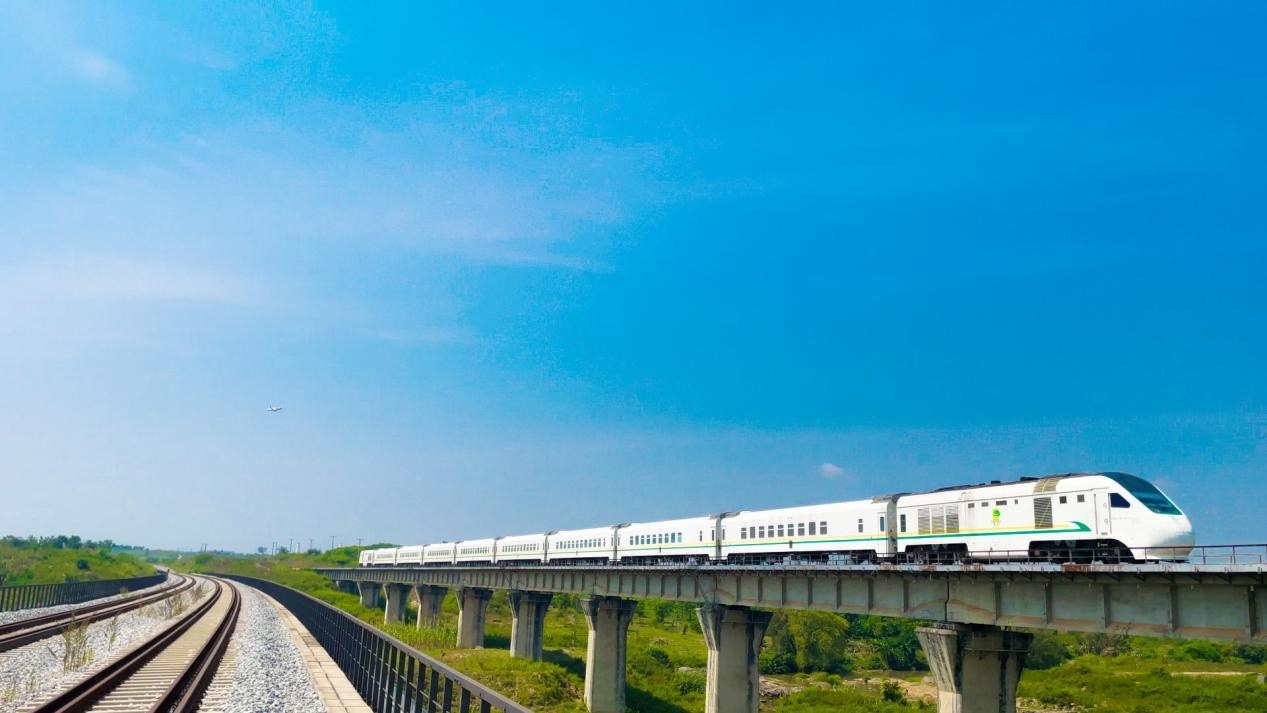
The 186-kilometer Abuja–Kaduna railway opened in 2016, providing a new transport option between Nigeria’s capital and Kaduna. Before the line opened, the road connecting the two cities was associated with serious security risks, including armed robberies and kidnappings.
The railway offered passengers an alternative to a journey that could expose them to those dangers. Demand grew as travelers recognized the value of a more predictable and secure connection.
According to the original account, the line generated more revenue in 2019 than Nigeria’s entire colonial-era railway network had generated. Although that comparison requires clarification regarding the revenues and networks being measured, it illustrates the commercial potential of modern rail services in a country where existing transport options have often been unreliable.
The Abuja–Kaduna line demonstrates that railway demand is not determined by ticket prices alone. Safety, journey times, reliability, and convenience also influence whether passengers choose rail over road transport.
Lagos–Ibadan Railway
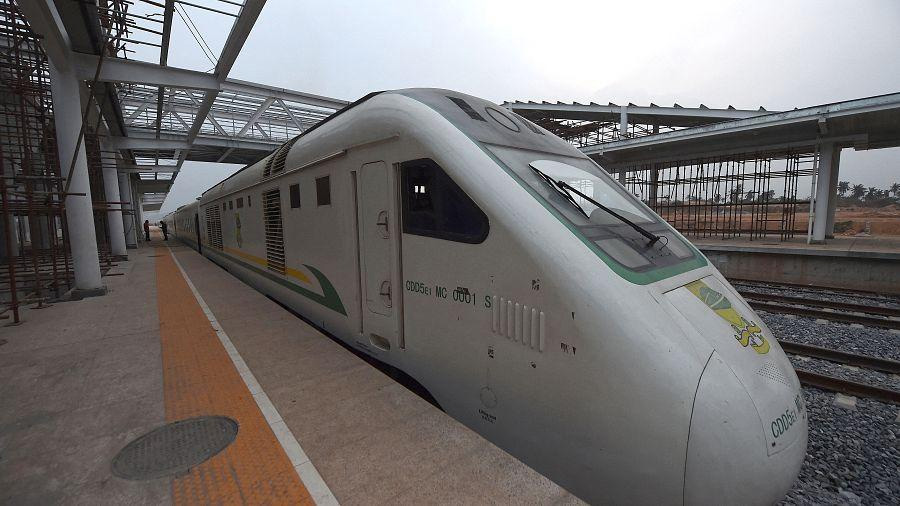
The Lagos–Ibadan railway, which entered service in 2021, extends 157 kilometers and is designed for train speeds of up to 150 kilometers per hour.
Its importance lies in connecting Lagos, Nigeria’s principal commercial center, with Ibadan, a major city farther inland. The route offers an alternative to road travel and provides a foundation for improving connections between the country’s largest port region and inland markets.
For businesses, more reliable transport can reduce delays and improve the movement of goods. Traders who previously faced lengthy road journeys and port-related congestion may benefit from faster connections to inland distribution centers, provided that freight facilities and supporting logistics services are available.
These improvements matter because transport delays can determine whether a business remains profitable. Faster and more dependable connections can reduce uncertainty, improve delivery schedules, and help companies use their resources more efficiently.
However, the full economic value of the railway depends on how effectively it integrates with ports, roads, warehouses, and local distribution networks. A modern railway cannot eliminate logistical bottlenecks if goods still face lengthy delays before reaching their final destinations.
The $5 Billion Railway Expansion
Nigeria’s railway modernization program extends far beyond the two completed routes.
The broader Lagos–Kano corridor is planned to span approximately 1,340 kilometers, connecting the country’s largest port and commercial center with an important northern economic hub. The corridor is intended to improve movement between coastal trade gateways and inland markets.
As of early 2026, the Kaduna–Kano section was reported to be 68 percent complete, with delivery expected by December 2026. That schedule represents a target rather than confirmation that the segment was completed by the stated date.
The wider ambition includes a proposed coastal railway and a high-speed rail network extending approximately 4,000 kilometers, with an estimated value of $60 billion. These proposals indicate the scale of Nigeria’s infrastructure ambitions, although proposed networks should be distinguished from projects that have secured funding or entered construction.
On April 30, 2026, Nigeria approved an additional $2.99 billion for new railway projects in Lagos, Kano, and Kaduna, according to the original account.
This expansion suggests that the government intends to continue investing in rail despite existing debt concerns. Yet every additional project creates new financial and operational responsibilities. Construction costs are only part of the equation: railways also require maintenance, trained personnel, reliable power and equipment systems, and sufficient passenger or freight demand.
The challenge is therefore to build a connected national transport network without allowing the cost of expansion to undermine the economic benefits it is supposed to deliver.
Kenya’s Railway Offers a Cautionary Lesson
Nigeria is not the first African country to rely on Chinese financing for a major railway project.
Kenya opened its Chinese-financed Nairobi–Mombasa railway in 2017 at a reported cost of $3.2 billion. The project demonstrated the potential for modern rail infrastructure to improve connections between an inland capital and a major coastal port. However, the railway also faced questions about its financial performance and competitiveness with road freight.
The original account states that the railway lost more than $200 million within three years, attributing its difficulties to high tariffs, missing last-mile connections, and competition from cheaper trucking services. The precise financial period and accounting basis behind that figure would need verification, but the broader concerns illustrate the risks of building infrastructure without fully addressing the transport system around it.
A railway may offer lower costs per ton over long distances, yet trucking can remain more attractive when freight must be collected from dispersed locations or delivered directly to businesses and warehouses. Without effective connections between rail terminals and final destinations, the savings from rail transport can be reduced by additional handling and transfer costs.
Nigeria’s circumstances differ from Kenya’s. Its road network faces significant congestion, and the potential demand for alternative freight transport is substantial. Those conditions could support stronger railway utilization.
Even so, Nigeria cannot assume that its projects will automatically succeed because the tracks have been built. The Kenyan experience highlights the importance of competitive pricing, efficient operations, reliable connections, and realistic demand forecasts.
Infrastructure succeeds when the entire logistics system works, not simply when a railway opens.
Skills Transfer and Dependence on Chinese Contractors
The relationship between Nigeria and China also raises questions about the development of local engineering capacity.
The original account describes a Nigerian engineer who said he was learning Mandarin through YouTube because direct communication with Chinese managers was essential to keeping his job. The anecdote illustrates a potential challenge in projects where foreign contractors supply much of the technical expertise and management.
Large infrastructure projects often require specialized knowledge, construction methods, and equipment that local workforces may initially lack. International contractors can help deliver projects more quickly, but the long-term value of that involvement depends partly on whether local employees acquire the skills needed to operate, maintain, and eventually expand the infrastructure independently.
If technical knowledge remains concentrated among foreign contractors, Nigeria could face continuing dependence on external expertise even after construction is complete.
Effective skills transfer would involve training Nigerian engineers, developing local technical teams, strengthening maintenance capabilities, and ensuring that domestic institutions can manage railway operations over time.
This matters financially as well. A railway that requires sustained external technical support may carry higher long-term operating costs than one supported by a capable domestic workforce.
The question is not whether foreign expertise should be used. It is whether that expertise helps create a stronger local engineering sector or leaves the country dependent on the same external systems for decades.
Who Benefits From Nigeria’s Railway Investments?
The potential beneficiaries extend beyond passengers traveling between major cities.
Farmers may gain access to more affordable transport to commercial centers. Manufacturers can potentially move raw materials and finished products more efficiently. Traders may benefit from more reliable links between ports and inland markets, while businesses can gain from reduced delivery times and lower logistical uncertainty.
The original account reports that farmers in areas served by completed railway sections have experienced transportation cost reductions of approximately 30 percent. It also states that more than 25,000 direct jobs had been created by 2025.
These figures suggest potentially significant economic benefits, although their geographic scope, measurement methods, and attribution to specific projects require verification.
Railway construction can create employment directly through engineering and construction work, while improved transport links may support additional jobs in logistics, manufacturing, agriculture, and commerce. The scale of these wider benefits depends on how effectively the railway network connects productive regions with markets.
China’s construction companies and financial institutions also benefit through contracts, financing arrangements, and longer-term commercial relationships. Nigeria gains infrastructure, but it assumes the responsibility for repaying the loans and ensuring that the completed projects deliver sufficient value.
The distribution of benefits is therefore central to evaluating the partnership. If lower transport costs stimulate domestic production and trade, the railways could strengthen Nigeria’s economy. If financial obligations grow faster than the benefits generated, the same projects could place additional pressure on public finances.
Development Partnership or a New Form of Dependency?
The comparison between British colonial railways and China’s modern infrastructure projects remains central to the debate.
British railway construction in Nigeria served an extractive colonial economy, directing resources toward coastal export routes. China’s projects operate within a different political and economic context, involving agreements with Nigeria’s sovereign government and infrastructure intended to support modern transport needs.
The two situations are not identical. Yet the historical comparison raises a legitimate question about who ultimately benefits from major infrastructure investments and how much control the host country retains over its economic future.
Also Read: Uzbekistan’s $30B Mega City Has a Serious Problem
Critics argue that debt obligations and contractual protections can leave developing countries vulnerable when they negotiate from a position of financial weakness. Others contend that Nigeria’s predicament stems primarily from decades of domestic governance failures, inadequate infrastructure investment, and limited alternatives for financing large projects.
Both perspectives highlight different parts of the problem. China has supplied financing and construction capacity that Nigeria urgently needed, while Nigeria’s own development challenges helped create the conditions under which that assistance became so important.
The railway projects themselves offer tangible infrastructure benefits. The more difficult question is whether those benefits will translate into a stronger, more self-reliant economy or whether the financial commitments will constrain Nigeria’s choices for years to come.
Nigeria’s railway modernization program presents a significant opportunity to transform the country’s transport system. The Abuja–Kaduna and Lagos–Ibadan lines have demonstrated the value of modern rail connections, while the proposed Lagos–Kano corridor and wider expansion plans could improve links between ports, commercial centers, and inland markets.
Yet infrastructure construction is only one part of the equation. Debt sustainability, contractual protections, operating costs, skills transfer, and effective integration with other transport systems will determine whether these investments deliver lasting economic gains.
China has provided financing and engineering capacity that helped Nigeria move beyond a deteriorating railway network. In return, Chinese lenders and contractors have secured a substantial role in the country’s infrastructure development and financial relationships.
Whether this partnership ultimately strengthens Nigeria’s independence or creates a new form of dependency will depend on what happens long after construction ends. The decisive test will be whether the railways remain operational, generate sufficient economic value, and help Nigeria build the financial and technical capacity to manage its own transport future.