
How Saudi Arabia Moves 3 Million Pilgrims in 5 Days
Every year, Saudi Arabia executes one of the most demanding mobility operations on Earth. In just five days, nearly three million pilgrims move through a fixed sequence of sacred sites near Makkah. These movements follow strict dates and cannot shift. Pilgrims do not spread across weeks or disperse across a wide city. They move together, in phases, through narrow mountain corridors that limit expansion and amplify pressure.
The journey follows a defined route. Pilgrims travel from Mina to Arafat, then to Muzdalifah, back to Mina, and finally toward Masjid al-Haram. Each step carries religious importance, and each movement must occur within a precise time window. A delay at one point can ripple across the entire system. Congestion can build quickly. Risk can rise within minutes.
I have studied large-scale infrastructure systems, but nothing matches the intensity and precision required here.
Also Read: How Saudi Arabia Is Rebuilding the Road to Mecca
A Temporary City Built for Millions
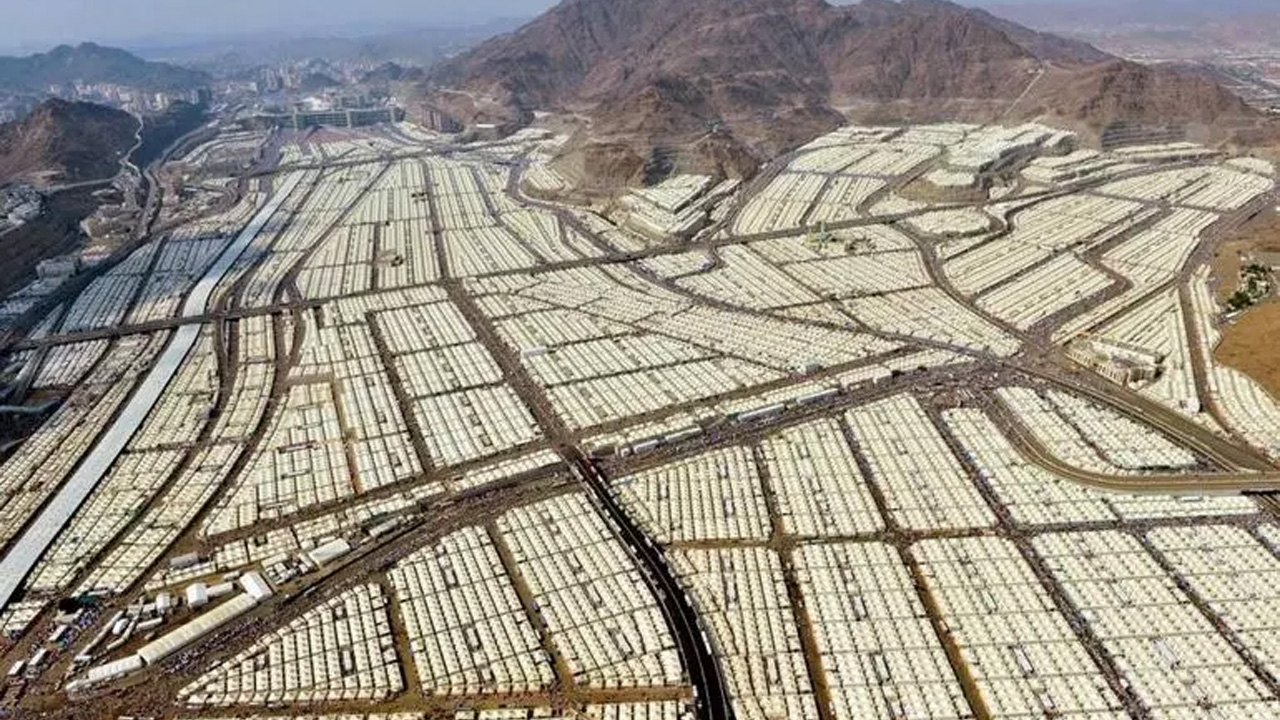
Mina stands as the core of this operation. For most of the year, it remains a quiet desert valley. During Hajj, it transforms into a fully functional city with more than 100,000 fire-resistant, air-conditioned tents. These tents house millions of pilgrims, supported by power, water, sanitation, and emergency services that must perform without failure.
Authorities redesign the entire road network before Hajj begins. Engineers convert roads into one-way corridors to control direction and prevent counterflows. They install temporary barriers to define walking paths and separate pedestrian streams. Security teams enforce these routes to maintain order.
Arafat presents a different challenge. Nearly the entire pilgrim population must gather there within a single day. This open plain lacks permanent infrastructure for such density, yet it must support millions safely under extreme heat. After sunset, pilgrims move toward Muzdalifah, where they spend the night in open space before returning to Mina.
The terrain complicates every decision. Makkah sits within a basin surrounded by steep mountains. Narrow valleys create natural choke points. Engineers cannot expand freely due to both geography and the sacred nature of the land. Instead of forcing expansion, planners redesigned how people move through the space.
The Hajj Metro as a Pressure Control System
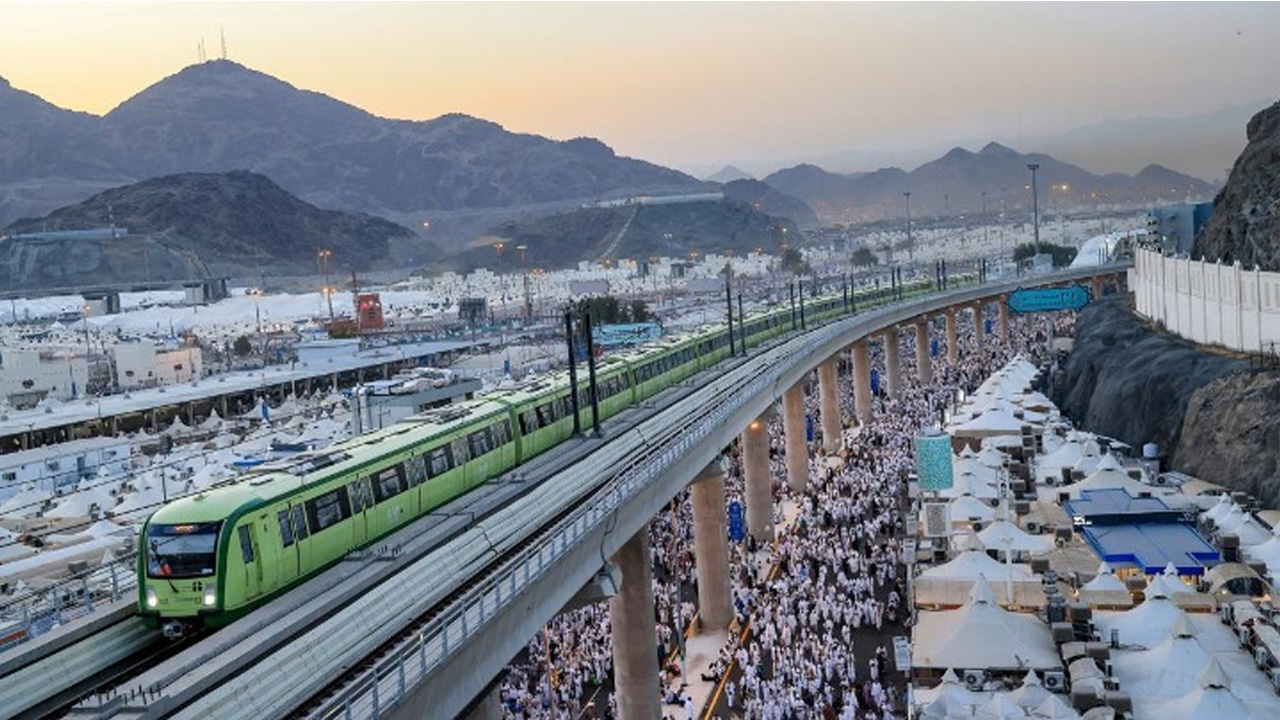
Saudi Arabia introduced the Al Mashaaer Al Mugaddassah Metro in 2010 to reduce transport pressure during Hajj. This railway spans 18.1 kilometers and connects Mina, Muzdalifah, and Arafat through nine stations. It operates only during the الحج season, yet it handles one of the highest passenger densities in the world.
Each train consists of 12 cars and carries more than 5,000 passengers. At peak capacity, the system moves up to 72,000 passengers per hour in one direction. This throughput matches some of the busiest metro lines in cities like Tokyo, according to urban transit benchmarks published by the International Association of Public Transport.
The environment adds another layer of difficulty. Temperatures can exceed 50 degrees Celsius. Pilgrims include elderly individuals and families who have waited years to perform Hajj. The system must maintain speed, reliability, and safety under extreme physical and emotional conditions.
Recent Hajj seasons show that the metro transported close to two million pilgrims. This shift removed pressure from road networks and reduced dependence on tens of thousands of buses. When Hajj ends, the system shuts down completely. It remains idle for most of the year, then returns to full intensity within days. Few transport systems operate under such concentrated demand cycles.
Precision Scheduling Controls the Crowd
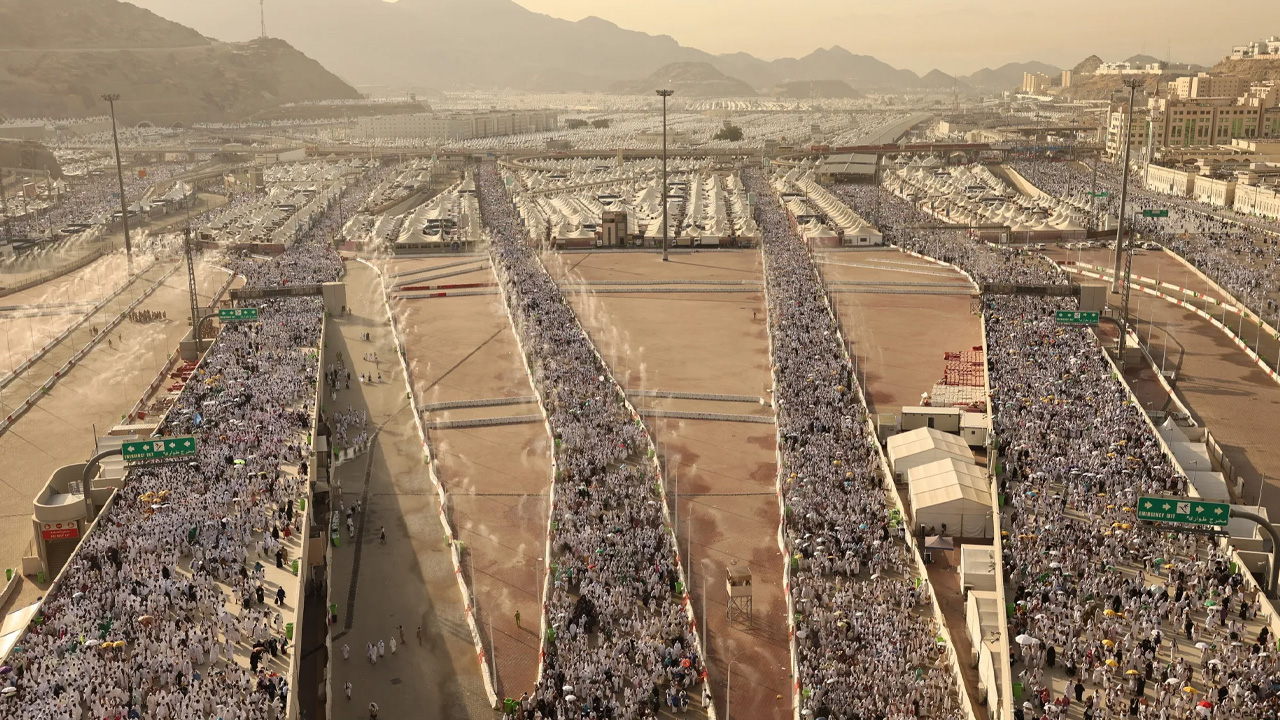
Infrastructure alone cannot manage millions of people. Time acts as the most powerful control tool. Authorities divide pilgrims into organized groups based on country, travel agency, and service tier. Each group receives a fixed movement schedule.
Pilgrims leave Mina for Arafat in staggered intervals. Officials phase the return journey after sunset to prevent sudden surges. Access to the Jamarat Bridge follows strict time slots. This bridge hosts the symbolic stoning ritual, one of the most sensitive points in the entire pilgrimage.
Planners treat this operation like an aviation system. Each group follows assigned slots, similar to flight departures. Authorities separate entry and exit routes to avoid crossing flows. They convert roads into one-way channels and restrict access points based on real-time capacity.
This method reduces uncertainty. It replaces uncontrolled crowd movement with predictable, structured flow. It also allows authorities to intervene quickly when conditions change.
Lessons Learned from Past Incidents
Hajj has faced serious crowd incidents in the past. The 2015 Mina tragedy marked a turning point. A crowd crush during the stoning ritual caused significant loss of life and exposed the dangers of unmanaged density.
Authorities responded with a comprehensive overhaul. They expanded the Jamarat Bridge into a multi-level structure, allowing pilgrims to perform the ritual across separate layers. Engineers redesigned access routes to eliminate intersections where flows could collide. They widened pathways and improved signage to guide movement clearly.
Saudi planners introduced advanced crowd simulation tools. These systems model human behavior under different scenarios before each Hajj season begins. They predict where congestion might occur and allow engineers to adjust routes and schedules in advance. Research from institutions such as King Abdulaziz University and global crowd science studies supports these predictive methods.
Heat mitigation also became a priority. Authorities installed shaded walkways, cooling mist systems, and additional water stations. Medical teams increased their presence across all major sites. These measures aim to reduce physical stress and prevent emergencies before they escalate.
Real-Time Monitoring Keeps the System Stable
Control centers form the operational core of Hajj logistics. Thousands of cameras monitor activity across Makkah and surrounding sites. These systems feed live data into centralized platforms that analyze crowd density in real time.
Software generates heat maps that highlight pressure zones. When density rises beyond safe limits, authorities act immediately. They increase metro frequency, redirect buses, and pause access at critical entry points. They also activate alternative pedestrian routes to disperse crowds.
This approach focuses on prevention. Teams act before congestion reaches dangerous levels. Over recent years, officials have reported a strong safety record compared to earlier decades. The system continues to evolve with each موسم, adapting to new challenges and larger crowds.
Preparing for Future Demand
Saudi Arabia expects continued growth in religious tourism. Under Vision 2030, the country plans to host up to 30 million Umrah visitors annually. This goal places additional pressure on Makkah’s infrastructure beyond the Hajj season.
To meet this demand, planners proposed the Makkah Metro, a large urban rail network with four lines extending nearly 200 kilometers. The system aims to carry over one million passengers per day. Authorities first announced the project in 2012. They restarted planning efforts in 2024 after delays. As of early 2026, the project remains in the pre-construction phase.
The city has already introduced an electric bus rapid transit system to improve mobility. This system supports both residents and pilgrims, reducing reliance on private vehicles and improving traffic flow.
These investments reflect long-term planning. Saudi Arabia is not reacting to current demand alone. It is preparing for decades of growth.
Global Lessons from Hajj Operations
The scale of Hajj makes it unique, but its challenges mirror those faced by major cities worldwide. Urban centers deal with rising populations, climate stress, and transport congestion. The strategies used in Makkah offer valuable insights.
Predictive modeling helps cities anticipate crowd behavior. Structured scheduling reduces peak pressure. High-capacity transit systems move large populations efficiently. Real-time monitoring allows fast intervention when conditions change.
Cities such as London and Singapore already apply similar methods in transport management. Hajj demonstrates how these tools perform under extreme conditions. It shows how planning, discipline, and technology can prevent disaster in high-density environments.
Also Read: Why Saudi Arabia Is Building the Largest Park on Earth?
Five Days That Test Engineering Limits
Moving three million people presents a massive challenge. Doing it within five days, across fixed routes, under extreme heat, raises the stakes even higher. Saudi Arabia has built a system that absorbs immense pressure and maintains control at every stage.
This operation depends on precision. Each movement follows a plan. Each delay carries consequences. Authorities must coordinate transport, security, healthcare, and logistics without failure.
For five days, this system operates at maximum intensity. It then shuts down and prepares for the next year.
This is not just a religious gathering. It is one of the most complex mobility operations ever executed, where every second matters and every decision carries weight.