How Saudi Arabia Makes Water in the Desert
An Impossible Nation Engineered to Survive
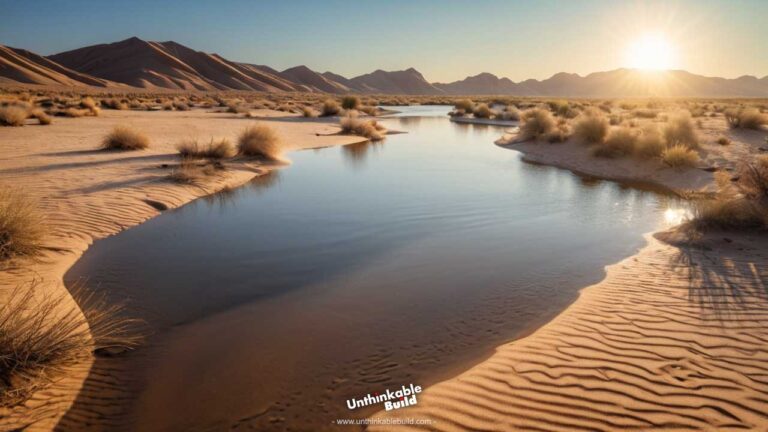
Stand in the heart of Saudi Arabia’s interior, and the scale of the challenge becomes physical. Heat presses down on your chest. The land stretches empty in every direction. Rain arrives rarely, and when it does, the ground absorbs nothing. More than ninety five percent of the kingdom is classified as desert. Annual rainfall in many regions stays below 100 millimeters. Summer temperatures climb beyond 45 degrees Celsius for weeks at a time. By every natural measure, large scale settlement should fail here.
Yet more than 37 million people live, work, and build cities across this terrain. Riyadh rises far from any coast. New industrial zones expand inland. Agriculture exists where clouds almost never gather. This reality does not depend on oil. It depends on water that humans create, move, protect, and control every second of every day. Beneath the sand, Saudi Arabia runs a steel lifeline so vast that it functions like an artificial river system. I have studied infrastructure across many extreme environments, and few systems feel as deliberate and unforgiving as this one.
Also Read: China’s $70 Billion Water Project That Reversed an Entire River
Geography Sets the Trap
Saudi Arabia’s geography offers no mercy. The country has no permanent rivers. It has no natural lakes of scale. Surface runoff disappears through evaporation before it can travel. Groundwater exists, but much of it is fossil water trapped thousands of years ago, with no meaningful natural recharge. Large scale extraction only drains it closer to exhaustion.
Population growth made this imbalance impossible to ignore. Coastal cities along the Red Sea and the Arabian Gulf gained early access to seawater. Inland population centers exploded in size, especially Riyadh, Qassim, and Hail. Demand for reliable water outpaced every traditional source. At that point, water stopped behaving like a resource. It became a manufactured product.
Every liter consumed in major Saudi cities passes through industrial systems first. Engineers design it, move it, pressurize it, protect it, and deliver it with zero tolerance for interruption.
Turning the Sea Into a Reservoir
Saudi Arabia chose desalination because geography left no other option. Surrounded by long coastlines, the kingdom gained access to a seawater supply that never runs dry. The obstacle sat in chemistry and energy. Seawater holds roughly three point five percent salt. Drinking, farming, and industrial use require near complete removal of dissolved solids.
Beginning in the late twentieth century, the government invested heavily in desalination capacity. Today, Saudi Arabia produces roughly twenty percent of the world’s desalinated water. The Saline Water Conversion Corporation operates the largest desalination network on Earth. Plants like Ras Al Khair, Shuaibah, Yanbu, Jubail, and Shoaiba rank among the biggest ever built.
Ras Al Khair alone produces more than one million cubic meters of freshwater every day. It supplies Riyadh through pipelines that run hundreds of kilometers across open desert. This is not a backup system. It is the primary source of life.
The Hidden Cost of Survival
Producing water at this scale carries consequences. Desalination consumes enormous energy. Even with modern reverse osmosis systems, pumping, pressurization, and treatment demand continuous power. Saudi Arabia historically burned oil and gas to drive these plants. That choice ensured reliability but raised long term economic and environmental costs.
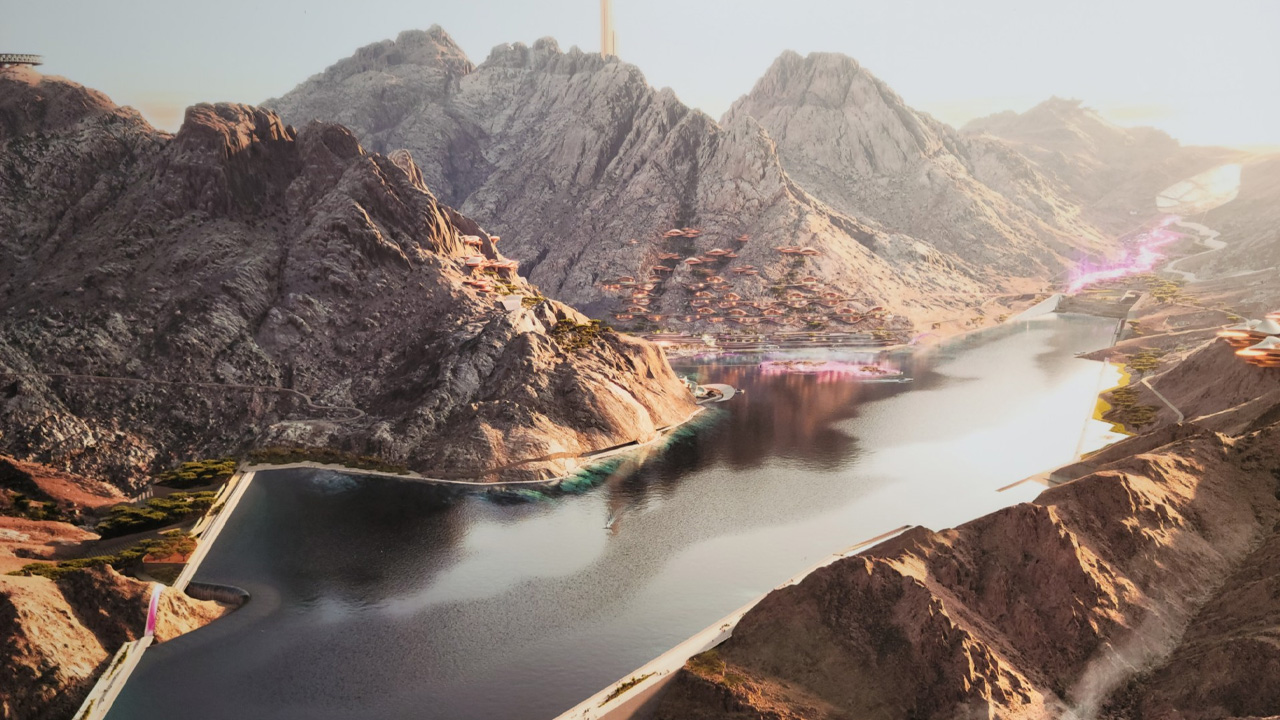
Recent years brought change. Vision 2030 pushed desalination efficiency, renewable integration, and private sector participation. New plants now achieve lower energy consumption per cubic meter than older thermal systems. Projects tied to NEOM aim to use solar and wind power to operate desalination with reduced emissions.
Even with improvements, water remains expensive. By the time desalinated water reaches households, the real cost approaches five US dollars per cubic meter. Governments heavily subsidize this price. In regions with rivers, water costs pennies. In Saudi Arabia, water holds higher strategic value than oil because no alternative exists.
Building Pipelines That Cannot Fail
Desalination solves only half the problem. Freshwater production means nothing unless the water reaches people inland. That responsibility falls on pipelines that rival oil infrastructure in scale and complexity.
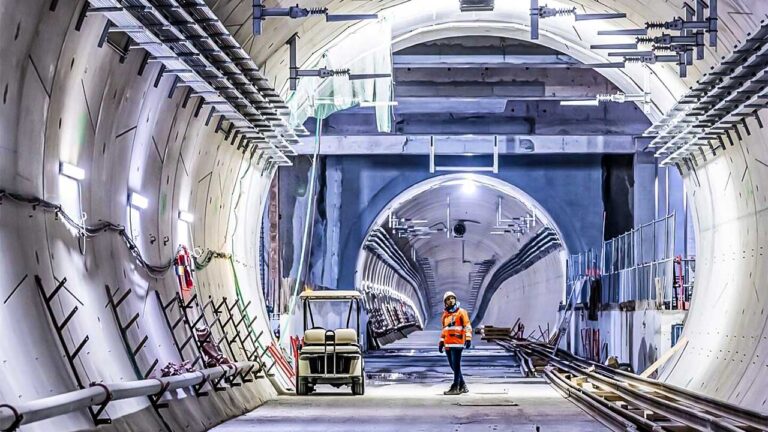
Engineers design these pipelines using high strength carbon steel similar to crude oil transmission lines. Pipe diameters approach two meters in key corridors. Wall thickness increases to withstand internal pressure, external loads, temperature expansion, and shifting sands.
Each kilometer can cost several million dollars before pumping stations and monitoring systems enter the equation. Failures are unacceptable. A single rupture could shut down water supply for entire regions.
Precision Starts in the Factory
Manufacturing begins with flat steel plates cut to exact dimensions. Rolling machines bend them into cylinders under strict tolerances. Longitudinal welding seals the seam, creating a continuous pressure vessel. Rapid cooling controls microstructure inside the steel to prevent fatigue cracking decades later.
Each pipe section receives internal epoxy lining to reduce friction and prevent corrosion. External coatings protect against soil chemistry and moisture. Serial numbers track every segment from factory floor to burial location.
Inspection teams test weld integrity using ultrasonic scanning that detects microscopic flaws invisible to human eyes. If a defect appears, the section does not leave the factory.
Crossing a Hostile Landscape
Transport introduces another layer of difficulty. Pipes weighing tens of tons move across hundreds of kilometers using specialized trailers. Convoys travel on strict schedules because delays ripple through the entire project. Idle weld crews burn money by the hour.
Survey teams lead construction long before excavation starts. They use GPS, laser scanning, and geotechnical analysis to find stable paths. Routes avoid shifting dunes, flood-prone wadis, and weak subsoil. Construction corridors stretch up to forty meters wide so excavation, welding, coating, and inspection can proceed in sequence.
Under ideal conditions, crews advance about one to two kilometers per day. In summer heat, schedules slow. The desert dictates pace.
Welding Under Open Skies
At the trench, precision matters more than speed. Hydraulic internal clamps align pipe ends perfectly. Automated welding systems move around the circumference with consistent heat control and penetration.
A single pipeline spread can involve eighty workers and dozens of machines. Crews complete more than one hundred welds per day on large diameter pipe. Each weld undergoes immediate ultrasonic testing. No joint proceeds without passing inspection.
Once approved, workers apply field joint coatings to maintain corrosion protection continuity. Side boom tractors lift the pipe gently and lower it into the trench with synchronized control. Surveyors verify alignment and elevation continuously.
Burying Stability Into the Ground
The trench receives fine bedding material that cushions the steel. Backfill proceeds in layers, compacted to prevent settlement. Desert soils behave unpredictably over time. Engineers compensate with conservative safety margins and strict compaction standards.
Once buried, the desert erases nearly all visible signs of construction. Pipelines disappear, but their role never pauses.
Where Water Begins Its Transformation
Desalination starts offshore. Intake pipes extend into the Red Sea, anchored to resist currents and corrosion. Screening systems block debris and marine life.
Water enters treatment halls where gravity filters remove sand and particles. Chemical dosing controls biological growth and binds fine contaminants. Cartridge filters provide final protection before membranes take control.
Removing Salt Molecule by Molecule
Reverse osmosis drives the process. High pressure pumps push seawater to roughly sixty bar. Under that force, water molecules pass through membranes with microscopic pores. Salt and contaminants remain behind.
Second stage filtration removes remaining ions. The resulting water reaches near laboratory purity. Engineers then reintroduce minerals and adjust pH so the water behaves safely inside pipes and human bodies.
Brine, the concentrated salt waste, returns to the sea under strict environmental controls to limit thermal and chemical impact.
A National Grid That Never Sleeps
Freshwater flows into a national distribution network that operates every hour of every day. Pumping stations manage elevation changes. Control rooms monitor pressure, flow, and quality in real time.
This grid feeds cities, industrial zones, and limited agriculture. Most residents never see it. Pipes run beneath highways and empty desert plains, carrying survival itself.
If pumps stop, cities stop. That reality drives constant redundancy and maintenance.
Also Read: Inside California Forever: Billionaires’ $900M Secret City
Engineering Against Nature
Saudi Arabia does not wait for rain. It replaces nature with engineering. Steel, pressure, energy, and planning overcome geography that once denied permanence.
This system carries risk and cost. It also carries proof that civilization no longer depends purely on rivers and climate. It depends on decisions, discipline, and infrastructure that allows zero failure.
When I examine this network, I see more than pipes and plants. I see a nation choosing to exist where nature said no, and enforcing that choice every single day through engineering.