
Why the U.A.E. Is Building a $5 Billion Casino in the Gambling-Free Gulf
In a nation that has banned gambling for generations, the decision to move forward with the Middle East’s first major casino signals a shift that goes far beyond entertainment. A global resort giant, Wynn, is investing more than $5 billion into a project unlike anything the Gulf has ever attempted. Rising from the shores of Ras Al Khaimah, Wynn Al Marjan Island represents a new chapter in the United Arab Emirates’ tourism strategy, one built on bold engineering, luxury development, and a calculated move into a sector that has remained untouched across the region. I remember standing near the island last year and feeling the scale of ambition in the air as cranes carved out the skyline of what will become a defining landmark.
A High-Risk Bet Backed by Global Power
Wynn Al Marjan Island sits on a four-island artificial archipelago stretching into the Arabian Gulf, about an hour north of Dubai. The resort’s golden tower will rise more than 300 meters and reshape Ras Al Khaimah’s silhouette. Behind that tower lies a massive supply chain: steel, glass, imported marble, advanced geotechnical systems, and marine engineering that stabilizes man-made land in open water.
The resort will contain more than 1,500 rooms, nearly 300 suites, and 22 waterfront villas. Engineers designed its podium to support a vast entertainment district with restaurants, bars, theaters, and retail spaces. Wynn has confirmed a gaming area, but the company continues to use language such as “comprehensive entertainment” to avoid revealing final details before the UAE’s full regulatory approval.
The construction footprint covers over 250,000 square feet of gaming and entertainment, 130,000 square feet of retail, and nearly 150,000 square feet of meeting and event space. The engineering team designed multiple swimming pools, a marina for yachts, and an integrated landscape that blends desert aesthetics with waterfront design.
By early 2025, much of the tower’s core structure had already reached significant height, and new satellite imagery shows rapid progress on the podium levels where the gaming and entertainment district will sit.
Also Read: $5.7B Gordie Howe Bridge: The Mega Project Replacing the Aging Ambassador Bridge
Why Ras Al Khaimah Became the Chosen Ground
Dubai and Abu Dhabi dominate global headlines, yet the UAE selected Ras Al Khaimah for the region’s first major casino. The choice reflects strategy rather than chance. Ras Al Khaimah’s economy is smaller, tourism-driven, and less dependent on oil, which gives it more room to position itself as a destination that feels different from its neighbors.
The emirate attracted around 1.3 million visitors in 2023 and has a stated target of 3.5 million by 2030, backed by the Ras Al Khaimah Tourism Development Authority. Its rugged mountains, beaches, and outdoor attractions already give it a strong identity, but hotel capacity remains limited. The island currently has six resorts with roughly 3,000 rooms. Plans show at least nineteen more developments under construction or in design, many of them backed by international brands.
The average visitor spends more than $1,400 on a trip here. Wynn aims to push that number much higher, tapping into a segment of global travelers who expect premium experiences, private villas, high-level dining, and access to resort-exclusive entertainment.
Ras Al Khaimah wants to shift from regional tourism to a global model. Wynn gives it that chance.
The Gulf’s New Entertainment Strategy
In 2023, the UAE created the General Commercial Gaming Regulatory Authority (GCGRA)—a federal body designed to oversee gaming regulations. Wynn received the first license of its kind, securing exclusive rights in Ras Al Khaimah for fifteen years.
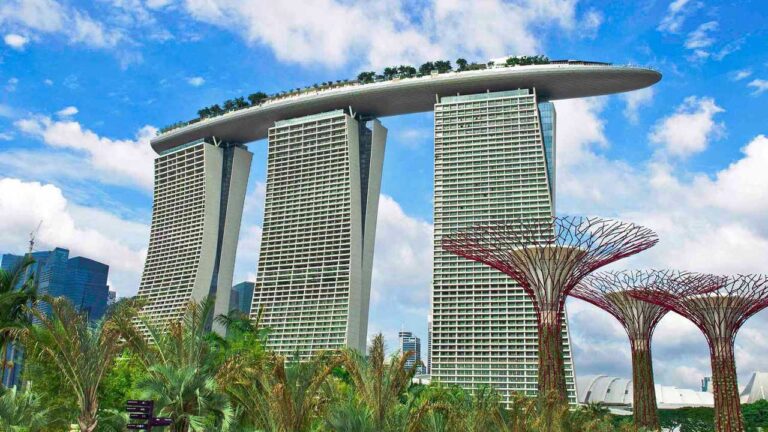
This single move opened the door to a new economic sector. Analysts at major financial institutions now estimate that the UAE could generate over $8.5 billion in annual gaming revenue once multiple properties become operational—a figure large enough to rival Singapore’s Marina Bay Sands.
The announcement triggered a wave of interest. MGM is developing a $2 billion project in Abu Dhabi with designs linked to Bellagio and Aria. Las Vegas Sands has filed trademarks for possible future developments under the Venetian brand. These moves signal that the Gulf is emerging as a new frontier for casino-driven resorts, with Ras Al Khaimah pioneering the model.
This strategy aligns with the UAE’s broader goals: diversify revenue, strengthen entertainment tourism, and establish itself as a global leisure hub.
Financing a Mega-Resort Built on Risk and Precision
Wynn’s investment is structured through a $2.4 billion debt facility, which was oversubscribed by international lenders. That response underscores investor confidence in both the resort and the UAE’s regulatory direction.
Wynn holds a 40 percent stake. The remaining 60 percent is shared by two Ras Al Khaimah government-backed entities: RAK Hospitality Holding and Al Marjan Island LLC. Wynn has already contributed more than half a billion dollars in cash, and final equity commitments should reach nearly $875 million before completion.
Projected annual gaming revenue ranges from $1 billion to $1.6 billion, and total operating revenue could reach $1.9 billion. Margin estimates above 40 percent place this resort among the strongest performers in Wynn’s global portfolio if forecasts hold.
These numbers highlight what the resort means for Ras Al Khaimah: more jobs, stronger tourism inflows, and a powerful signal to international investors that the emirate is ready for large-scale hospitality ventures.
Unease, Opportunity, and Local Pressure
Even with rising optimism, local concern remains part of the story. Gambling touches sensitive cultural and religious lines in the UAE. Many residents wonder how a project this large will reshape the emirate’s identity.
Job applications show that most candidates come from abroad, prompting questions about how much local employment the project will truly create. Ras Al Khaimah faces pressure to expand healthcare capacity, transportation links, and public services as thousands of workers move in. Locals also worry about housing costs as land values continue to climb.
The emirate’s leadership insists that strict regulations will manage everything from behavior to financial oversight. They emphasize that gaming will remain confined to designated properties rather than entering public life. Still, this remains uncharted territory, and residents are watching closely.
A Cultural Shift in the Middle East’s Entertainment Future
Wynn is building more than a casino. Its plans include a major theater commissioned for Wynn-produced shows, international concerts, and immersive resident productions. The company wants to bring the same artistic quality that helped define its Las Vegas and Macau resorts.
Across the UAE, new performance venues, arenas, and dedicated entertainment districts are emerging. Abu Dhabi’s Etihad Arena, Dubai’s Coca-Cola Arena, and upcoming mega-venues linked to entertainment giants highlight a broader regional trend: the Middle East is ready to host global performances at a scale once limited to Europe and the United States.
Wynn Al Marjan Island enters this environment as a catalyst. It signals that the region no longer relies solely on shopping tourism, beaches, or theme parks. It is entering a new tier of entertainment powered by high-value visitors, long-stay tourism, and cultural programming.
How One Resort Transformed Real Estate Overnight
The ripple effects began long before the first guest checked in.
Land prices on Al Marjan Island have climbed from about 300 dirhams per square foot to close to 900. Real estate firms now describe the island as one of the fastest-rising luxury markets in the Gulf. Villas once valued at 6 million dirhams often sell for far more today, and branded residences can reach 40 million or higher depending on design and placement.
Developers such as Aston Martin Residences and “Source of Fate” have committed more than $2.7 billion to new projects near the resort. Investors cite Wynn’s presence as the single biggest driver of property demand.
What was once a quiet stretch of reclaimed land has become a magnet for global capital, construction firms, and high-net-worth buyers seeking waterfront properties.
Also Read: Inside Saudi Arabia’s $75B Mega Entertainment City
A Turning Point for Ras Al Khaimah
A coastal emirate once known for its mountains, pottery, and quiet tourism economy is entering a new era that blends engineering ambition with a high-stakes economic strategy. Wynn Al Marjan Island reflects a nation willing to push into new territory and build the infrastructure needed to support it.
If the resort succeeds, Ras Al Khaimah could stand beside the world’s top entertainment hubs and attract millions who might never have considered visiting the northern emirate. If it fails, the project will become a cautionary tale about rapid expansion and the risks of entering a sensitive sector.
For now, the cranes keep moving, the tower keeps rising, and the world keeps watching. The outcome will define more than a single resort; it will influence the direction of the entire Gulf’s tourism economy.